Nature
 PUBLISHED


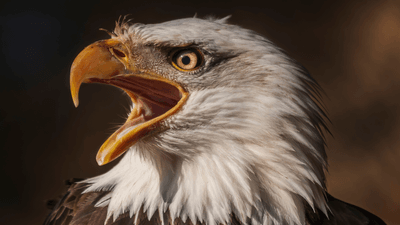


Fancy a game of pin the ears on a bird? Alright then, big shot, where are they? Birds use sound as one of their key senses for navigating the environment, but most of them are a bit secretive about where they're storing them. Working out the positioning can depend on the species, and some have special adaptations to achieve super-sensitive hearing.
Do birds have ears?
Birds do have ears, but they don’t have external ears. So, unlike humans and our big ear flaps (that came from gills, dontcha know?) they have, well, just a hole really. They’re not out in the open for all to see, covered by “ear coverts” or auricular feathers that shield the orifice and may improve hearing by directing sound into the ear.
Beneath their ear coverts are funnel-shaped openings that lead to the ear canal, and outer, middle, and inner ear. A similar set up to humans, really, but the big difference really comes to that lack of an external ear. In mammals, it's crucial for pinpointing the source of a sound – so how do the super-listeners of the avian world do it?

How do birds hear?
Identifying where sound is coming from in a three-dimensional space is crucial to birds’ survival. Just look at owls, those silent assassins that can swoop down on a small mammal in the snow with incredible precision.
We know they can work out whether a sound is coming from their left or right because they have ear holes on each side, but how do they tackle the up-and-down that’s typically thought to require ear flaps to deduce? A 2014 study looked into it, and discovered that the shape of a bird's head naturally alters the way they receive sound, providing clues about the source’s elevation. This means birds can locate sounds above or below them, even though they lack external ears.

Where are birds’ ears?
So we come to that big question, the ear-off in my imaginary game. Where should you pinpoint the ears on a bird?
Generally speaking, the ears of a bird can be found sitting on either side of the head, slightly below the eyes, but there are some exceptions. For example, owls have asymmetrical ears with one sitting higher than the other. This wonkiness makes it possible for them to work out with even greater precision where a sound is coming from, helping them to become the incredible predators we see today.
The Natural History Museum, London, helpfully shoved a pencil in the ear of an owl on display to demonstrate to visitors where they sit in relation to the rest of the skull. Don’t try to do the same with a living one, mind, because not only is it cruel, but with hearing like that, you don't stand a chance.
And on the topic of things we’re not entirely sure birds have, did you know that only a special few have penises?