Humans
 PUBLISHED


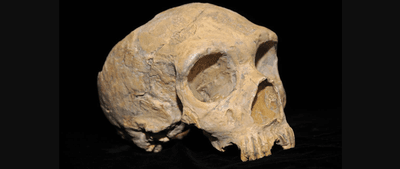


The term Homo neanderthalensis was officially coined by Irish geologist William King in 1864, yet the scientific community had some trouble accepting the notion of an extinct human species. At a time when evolution as a theory was still in its infancy, many searched for alternative explanations for the discovery of the first Neanderthal skeletons, some of which are truly laughable.
In fact, the first couple of Neanderthal finds were completely missed, as people simply weren’t able to recognize their significance. The earliest of these was unearthed in Belgium in 1829, yet it took until 1936 for this skull – belonging to a young child – to be formally classified as an archaic hominin.
A second specimen was discovered in Gibraltar in 1848, yet it wasn’t until another Neanderthal turned up in Germany’s Neander Valley eight years later that people started trying to explain these strange bones.
The first such attempt was made by the quarry laborers who found the Neander specimen, and was pretty pathetic. Assuming the skeleton belonged to a cave bear, the workers simply tossed the bones down to the quarry floor, where many were lost or damaged.
Yet when local schoolteacher Johann Carl Fuhlrott came to examine the surviving fragments, he suggested that the creature was in fact an ancient human that existed in the days before the Celts and the Germans, when “wild races” roamed northern Europe. And while parts of this narrative might seem crude and outdated, Fuhlrott’s idea was in fact way ahead of its time, given that he came up with it two years before Charles Darwin published On the Origin of Species.
It was this influential book that provided the conceptual framework for human evolution. At the time of the Neander discovery, however, the idea that species emerge through incremental mutations and alterations was completely unheard of.
Unsurprisingly, then, many scholars pushed back against the idea of the Neanderthal Man. Among the most vociferous of these was the German anatomist August Franz Josef Karl Mayer, who insisted that the skeleton actually belonged to a “Mongolian Cossack” who crawled into the cave to die after being driven from his homeland by the Russians in 1814.
According to Mayer, the creature’s bow-legged stance was a result of a life spent on horseback, while the peculiar shape of the skull could be explained by various diseases. And while this idea was soundly rejected by British biologist Thomas Huxley – nicknamed Darwin’s Bulldog – others were apparently on Mayer’s side.
The influential German pathologist Rudolf Virchow, for instance, claimed that the specimen from the Neander Valley was nothing but a miserable Homo sapiens whose bones had become warped by a range of illnesses including rickets and osteoarthritis.
By the time that King assigned the specimen to Homo neanderthalensis in 1864, then, the debate had caused a significant rift within European anatomical circles. Slowly but surely, however, his idea was adopted by his peers, paving the way for the classification of other members of the genus Homo.

 1
1