Humans


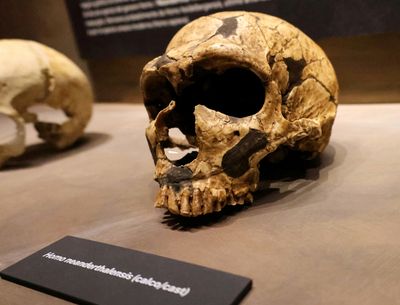


A small pocket of northwestern Spain may have been home to one of last Neanderthal populations ever to exist, just as the species was beginning to be replaced by anatomically modern humans. Limited to a dwindling patch of forest, these late Neanderthals struggled to find a year-round home, and may have spent part of their nomadic lives sheltering in a cavern that also harbored hibernating cave bears.
Evidence for the existence of Neanderthals in the Cantabria region of northern Spain continues until around 40,000 years ago, although no such traces had been found in neighbouring Galicia. As such, it had been assumed that this ancient hominin disappeared from this part of the Iberian peninsula at an earlier date, as climate change led to the replacement of forest habitats with dry, open grasslands, where Neanderthals were less capable of survival.
However, researchers have now discovered traces of Neanderthal occupation within a Galician cave called Cova Eirós. Dated to around 39,000 years ago, the assemblage consists of stone tools representing the Mousterian industry – which is strongly associated with Neanderthals – and the remains of small mammals that were presumably hunted by these ancient hominins.
Notably, all of these prey species are forest-dwelling animals, while species that occupy open plains – like horses and rhinoceroses – are virtually absent from the collection. This suggests that at least part of Galicia may have remained forested, even as the wider region became dominated by grassland, and therefore provided a final refuge for these very late Neanderthals.
“The last Neanderthals survived at this site between [42,000 and 39,000 years ago] owing to the favourable environmental conditions offered by this area, which may have functioned as a refuge,” write the study authors. “The importance of these habitats was fundamental for the Neanderthal groups that inhabited the Iberian Peninsula, favouring the occupation of these wooded valleys over the open, dry areas with much more limited resources.”
However, the fragmented nature of the finds at Cova Eirós indicates that the site was not used as a permanent residence, and was probably occupied sporadically and for short periods by these Galician Neanderthals. Based on the presence of other animal remains within the cave, the researchers paint a picture of Neanderthal incursions “alternating with the use of the site as a cave bear hibernation den and the sporadic presence of other predators.”
Ultimately, the evidence presented by the researchers shows that even though Neanderthals were clearly struggling as their habitat disappeared, they did manage to hang on slightly longer than expected. “Our study shows that Neanderthal communities were present in an environment still favourable for occupation after this presumed habitat impoverishment,” write the authors.
Significantly, the discoveries at Cova Eirós post-date the supposed disappearance of Mousterian technologies in northern Iberia, and are also younger than the region’s earliest Aurignacian tools – which signal the arrival of Homo sapiens. This means that Neanderthals were still present in parts of Galicia at a time when they were previously thought to have been replaced by modern humans.
The fact that they had to hide in a bear cave, however, indicates that they may well not have been doing so well by this point.
The study is published in the journal Quaternary International.