Humans
 PUBLISHED


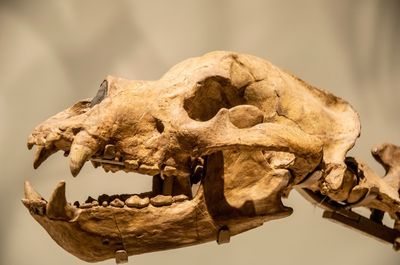


High-altitude mountain passes were not the kind of place to sleep out in the open during the Ice Age, and Neanderthals couldn’t afford to be picky when choosing a shelter while crossing the Alps. For one group, this meant huddling for warmth in a cave that was frequently used by an enormous species of extinct bear.
Located at 1,450 meters above sea level (4,760 feet), the so-called Caverna Generosa contains numerous cave bear skeletons, indicating that these prehistoric creatures had very much made the place their own. However, stone tools produced by Neanderthals have also been found at the site, suggesting that archaic humans may have shared the space with these furry yet terrifying tenants.
Based on the relatively small number of lithic utensils, researchers say the cave probably wasn’t used as a permanent residence by Neanderthals, but provided a temporary shelter during excursions into the mountains.
“With the updated investigations at Caverna Generosa, it has become increasingly evident that the lithic assemblage reflects one or more sporadic episodes of Neanderthal presence, best described as isolated incursions into what was primarily a cave bear hibernation den, occupied by Ursus spelaeus from winter through late spring,” they write in a new study.
“This cave also served as a critical reproductive shelter, where female cave bears gave birth and raised their cubs.”
It’s unclear if Neanderthals occupied the cave during these seasons or if they dovetailed with the bears, entering the site in summer or fall when it was vacant. However, the fact that the stone tools show evidence of having been trampled and crushed by cave bears attests to the fact that both species used the cave at around the same time.
This finding adds to our understanding of Neanderthal survival strategies, indicating that they were capable of conducting short-term forays into the freezing Alps. The types of tools found at the site contribute to this emerging picture, as it appears that these ancient humans didn’t bring any heavy stones with them or do any knapping in the cave, instead carrying only finished, lightweight “Levallois” flakes that could easily be retouched while on the move in order to maintain the sharpness of their edges.
“Levallois flakes, blades, and points within 'bear caves,' often associated with mobile toolkits, would represent curated, high‐investment products selected for their functional effectiveness and versatility,” write the researchers. “Such pre‐prepared blanks were particularly suited to be incorporated into the mobile personal toolkit of Neanderthal groups,” they add.
This, in turn, suggests that the Neanderthals who occupied the cave were probably on a highly targeted high-altitude mission, and planned to move fast in their pursuit of a particular resource. For instance, they may have hiked into the mountains to access a prized lithic material or to hunt ibex, mountain goats, or other alpine mammals.
According to the study authors, no valuable mineral deposits are to be found near Caverna Generosa, suggesting that the Neanderthals were more likely to have been on a hunting expedition than a quarrying run. However, the lack of butchered animal carcasses within the cave complicates this theory somewhat, making it impossible to determine exactly what these hominins were doing in a high-altitude bear cave.
Interestingly, however, prior evidence has hinted at a possible “bear cult” among some Neanderthal groups, who may have used the bones of these prehistoric beasts in symbolic or ritual activities. It’s important to stress that there’s no indication that this type of behavior occurred at Caverna Generosa or that the Neanderthals entered the cave for religious reasons, although the new findings do help to expand our understanding of the close interactions between Paleolithic humans and cave bears.
The study is published in the Journal of Quaternary Science.


 1
1