Nature
 PUBLISHED


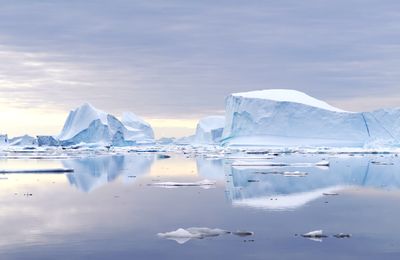


The world’s largest national park also happens to be one of the remotest and harshest places on planet Earth. Located within the Arctic Circle, the Northeast Greenland National Park is more than twice the size of the next biggest protected hotspot and consists mostly of frozen tundra.
Established in 1974, the park was expanded 14 years later to its current size of 972,000 square kilometers (375,000 square miles). Much of this area is covered by the Greenland Ice Sheet, although some ice-free destinations can be found along the coast.
Incredibly, the Northeast Greenland National Park is larger than all but 30 of the world’s countries, yet is completely uninhabited by humans. In addition to being the biggest, it’s also the northernmost national park on the planet.
Despite a lack of human residents, the park is still policed by the elite Danish naval unit known as the Sirius Dog Sled Patrol. Keeping order within this supposedly crime-free wilderness is presumably not the most difficult job, but surviving the conditions and the terrain is a serious challenge, which is why only the hardiest of recruits are accepted into this burly unit.
The rules of the park ban motorized transport, which means it must be patrolled using dog sleds. Tourists, meanwhile, can reach the park on cruise ships, which dock at the coastal settlement of Ittoqqortoormiit.

Those who make the trip usually come with hopes of spotting some of the charismatic polar animals that live within the park, such as polar bears, arctic foxes, the Greenland wolf, narwhals, and walruses.
The world’s next biggest national park is the somewhat more inviting Great Barrier Reef, which covers 343,966 square kilometers (132,806 square miles) of land and sea in Australia. North America’s largest reserve is the Wrangell-St. Elias National Park and Preserve in Alaska, which has an overall size of 53,419 square kilometers (20,625 square miles).


 3
3