Nature
 PUBLISHED


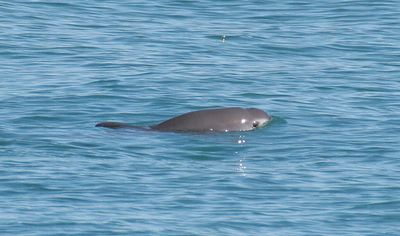


The threat of extinction is becoming all too real for the mammals that live in our oceans, but one unfortunate species takes the top spot as closest to that danger: vaquitas. With less than 10 left on the planet, let’s look at what’s led vaquitas to this point and, importantly, what’s being done to prevent the loss of these unique creatures.
Vaquitas (Phocoena sinus) are the smallest of the cetaceans – the group of animals including whales, dolphins, and porpoises – averaging between 4 to 5 feet in length and weighing an estimated 65 to 120 pounds.
Their size isn’t the only thing that’s small about them; they also have the smallest range out of all the cetaceans, living exclusively in the northern part of the Gulf of California. It’s thought to be human activities in this area that have led to the decline of the vaquita population, which has dropped by 20 since 2017.
There are plenty of human threats to marine mammals out there: habitat destruction, pollution, and ship strikes are only a few. But in the case of vaquitas, it’s fishing and specifically, the widespread use of gillnets in the Gulf. Vaquitas can get wrapped up in the nets accidentally, which can lead them to drown.
The situation has been made worse by the illegal fishing of another endangered species, totoaba, for their lucrative swim bladders. As vaquitas are a similar size to totoaba, they’ve often ended up caught in the crossfire.
As a result, there are now thought to be only 10 vaquitas remaining on the planet, leading the International Whaling Commission (IWC) to issue its first-ever extinction alert in August 2023.
“Despite nearly thirty years of repeated warnings, the vaquita hovers on the edge of extinction due to gillnet entanglement,” reads a statement from the IWC at the time. The statement explains that in that timeframe, the vaquita population has dropped by 560.
The solution? “The extinction of the vaquita is inevitable unless 100% of gillnets are substituted immediately with alternative fishing gears that protect the vaquita and the livelihoods of fishers,” said the IWC. “If this doesn’t happen now, it will be too late.”
Efforts to try and stop the use of gillnets have seen the Mexican government putting a blanket ban on them, teaming up with actor Leonardo DiCaprio, and the navy using concrete blocks to create a “zero-tolerance area” for illegal fishing.
The IWC argues that efforts need to be 100 percent effective in order for vaquita numbers to start recovering, but what’s been done so far seems to at least be keeping the population stable. The number of vaquitas seen hasn’t declined since 2018, and they’ve even been spotted with calves in tow.
“There is at least one brand new baby vaquita,” Dr Lindsay Porter, the vice-chair of the IWC’s scientific committee, told The Guardian. “They haven’t stopped breeding. If we can take away this one pressure, the population may recover. We can’t stop now.”