Nature
 PUBLISHED
 8
8




When we think about living fossils, most of us likely think about crocodiles, alligators, sharks or some other primeval creature that has roamed the world for millions of years. But what about trees? There is one tree, often referred to as the “dinosaur tree” that used to be nibbled on by the “terrible lizards” of the Jurassic period. Long assumed to be extinct, this ancient conifer was rediscovered by chance in 1994 and is among the rarest trees in the world. But conservation efforts are now trying to bring this living link to the prehistoric past back from the brink.
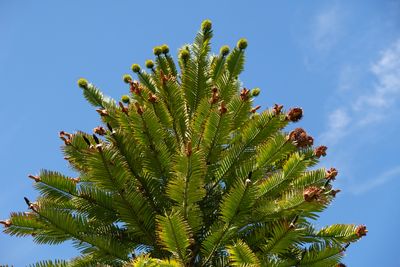
Wollemi pines (Wollemia nobilis) are part of the Araucariaceae family, which includes monkey puzzle trees. They are evergreen coniferous trees that appear as light green with needle-like leaves. The trees can grow to around 40 meters (130 feet) in height and their bark is deeply furrowed and rough.
They earned their nickname from the fact that the fossil record contains specimens that are around 200 million years old and thrived alongside the dinosaurs. For a long time, it was assumed these ancient trees had gone extinct around 70 to 90 million years ago; however, in 1994, David Noble, an Australian explorer and botanist, discovered a group growing in an isolated gorge in the Wollemi National Park, New South Wales, Australia.
To say this was an important botanical achievement would be an understatement, but these trees are exceptionally rare. Ever since their rediscovery, they have been placed on the IUCN’s Red List for critically endangered species.
The trees are increasingly at risk of diseases and wildfires. In fact, the 100 specimens still growing in the wild were nearly destroyed during the wildfires that burnt more than 10 million hectares of land in eastern Australia in 2019-2020.
Because of this precarious situation, conservationists have been trying to breed genetically diverse Wollemi pines. They have now reached the stage where the first samplings are being given to botanic gardens across the world, based on the location’s suitability. The hope is that this “metacollection” – the combined holdings of a group of collections that, although owned by different organizations, can be studied and cared for collaboratively – will help protect the species from climate change.
The results of this approach are already starting to appear. In April this year, a Wollemi pine that was bought by a retired couple in Malvern Hills in England in 2010 has borne fruit for the first time. The couple originally bought the sapling for £70 ($90), but now the adult tree is producing seeds that could be used to grow the next generation of this ancient species.