Nature
 PUBLISHED


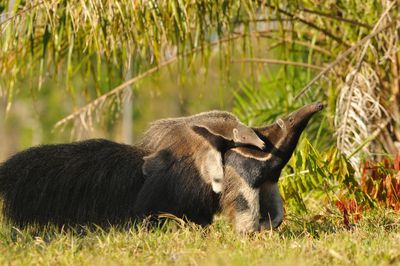


Take a trip with me, if you will, down through Central and South America to the home of the giant anteater. These large and honestly quite ridiculous-looking animals are spread throughout this area, from Honduras down into Bolivia, Paraguay, and northern Argentina. While their long snoots and funky appearance makes them popular, just what do you call an anteater baby?
Anteaters are in the suborder Vermilingua, which consists of four species of anteaters that all eat insects through a long thin snout – in fact, none of the four species have any teeth. The four species are the giant anteater (Myrmecophaga tridactyla) which is probably the best known; the northern (Tamandua mexicana) and southern tamanduas (Tamandua tetradactyla), the latter of which is also called the lesser anteater; and the silky anteater (Cyclopes didactylus), which may not be just one species after all.
While the three former belong to the family Myrmecophagidae, which means “ant-eating” in Latin, the last species, which is the smallest, belongs to its own family, Cyclopedidae.
What are baby anteaters called?
Giant anteaters are typically solitary and only come together to breed in the mating season. The offspring are called pups and will stay with their mothers until they are fully grown at around the age of 2 years, according to the San Diego Zoo Wildlife Alliance. Baby anteaters can often be seen hitching a ride on their mothers' backs through the grassland.
What do baby anteaters look like?
Fully grown giant anteaters can reach over 2 meters long (8 feet) from the tip of that long snout to the end of their bushy tail. Baby anteaters are mini versions of their parents. The Royal Zoological Society of Scotland writes that they are born with their eyes closed, which open about six days later, and with all their gray and black fur. Their tails are around 20 centimeters (7.8 inches) long, with the body only a bit longer at 33 centimeters (12.9 inches)

Conservation
The IUCN Red List has put giant anteaters in the Vulnerable category, as they face a major threat of habitat loss. While they can be found in rainforest, wetland, and grassland habitats, sugar cane growers sometimes burn areas of sugar cane to make harvesting easier, affecting not just the habitat but the anteaters themselves, writes National Geographic.
Rewilding programs have worked hard to protect these habitats and even monitor individual animals like the albino giant anteater Alvin, to learn more about how to conserve this enigmatic species.