Nature
 PUBLISHED
 2
2



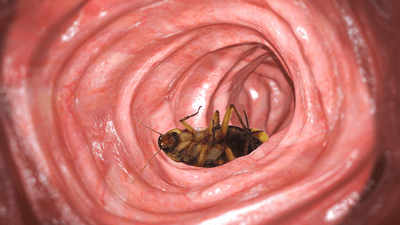


It’s a beautiful day to remember that the human body is but a series of tubes. The one you’re probably most familiar with is that which connects the mouth to the anus through a marble-run-like series of twists, turns, and sphincters – the digestive tract. Anything found along its course has to have entered the body through one of those two orifices, a fact that had doctors scratching their heads after finding a cockroach during a man’s colonoscopy.
That is the story told in a 2025 study in the Mexican Journal of Gastroenterology. At IFLScience, we read a lot of journal papers, and we've noticed that few come with exclamation marks in the title. In this case we're willing to concede it seems appropriate: An unusual finding during colonoscopy: A cockroach!
A colonoscopy is a diagnostic procedure in which a thin, flexible camera is inserted into someone’s bottom so that doctors can get a good look at their large intestine, consisting of the colon and rectum. It’s an effective way to search for polyps, tumors, and sites of bowel diseases, but as the researchers note: “When performing a colonoscopy, we must be prepared for anything.”
And so begins the story of a 38-year-old man who presented to an outpatient clinic for a colonoscopy. The procedure hoped to rule out an inflammatory disease, and so the patient was sedated and the colonoscopy began.
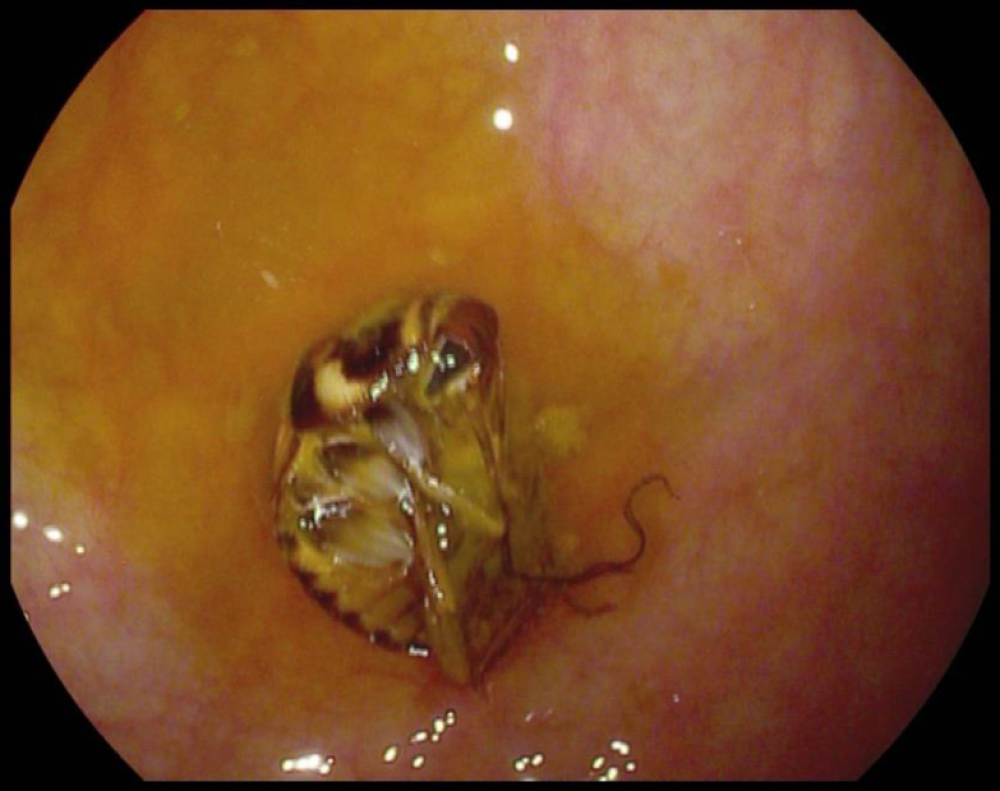
When doctors reached the level of the ileocecal valve (a sphincter that connects the small intestine to the large intestine), they spotted something strange. There, stuck to the uncooked-chicken-pink lining of the patient’s intestine, was an insect.
They were able to get it out in one piece using a bit of equipment called a Roth Net® retrieval basket. Upon closer inspection it became clear it was a cockroach. One that was remarkably intact.
Before having a colonoscopy, patients are given a kind of bowel preparation that effectively clears out the intestine. This gives doctors the best chance of spotting any abnormalities, as there won’t be any feces blocking their view of the intestinal lining. The bowel prep also speeds up the transit of anything in the bowel, which may explain why the cockroach was still so well preserved.
A surprise finding for the doctors, and an even bigger shock for the owner of the colon they were inspecting.
“When the patient awoke from the sedation, he was told of the finding,” wrote the authors. “His reaction was one of astonishment, and he could not understand how it got there.”
Finding insects on colonoscopy, while unusual, is certainly not unheard of. A ladybird made a similar appearance during the colonoscopy of a 59-year-old man.
Insects represent a good source of protein in parts of the world, but the patient’s astonishment would indicate they hadn't consumed any cockroaches on purpose. While it’s true that the whole “we eat eight spiders a year” thing is a myth, it is possible to eat bugs in your sleep, and certainly a more probable hypothesis than an insect as large as a cockroach voluntarily sneaking in through the other entrance.
There are some insects that do see certain holes as an entrance, however. Curse you, earwigs.