Nature
 PUBLISHED
 2
2


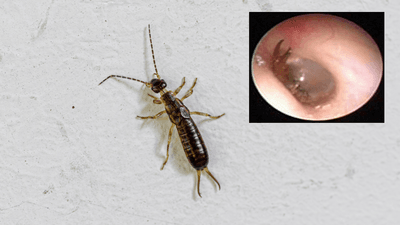


This morning, I awoke to find my cat staring intently at something on the carpet. I’ve noticed this about him – he’s a bit of an entomologist at heart. Very good at finding insects, but unlike previous cats of mine he doesn’t eat them. Just observes.
“What have you got there,” I said, and then spotted something I haven’t seen in years. Slender and many-legged, with two probing antennae and a sizable pair of butt pincers. It was an earwig.
It reminded me of an old fear I used to have back when I was still living with my parents as a child. We used to get earwigs inside all the time, and I was forever scared that they might crawl inside my ears like the old story goes.
It got me wondering – do earwigs go in your ear? According to at least one case study, yes (albeit extremely rarely), and it can be very painful.
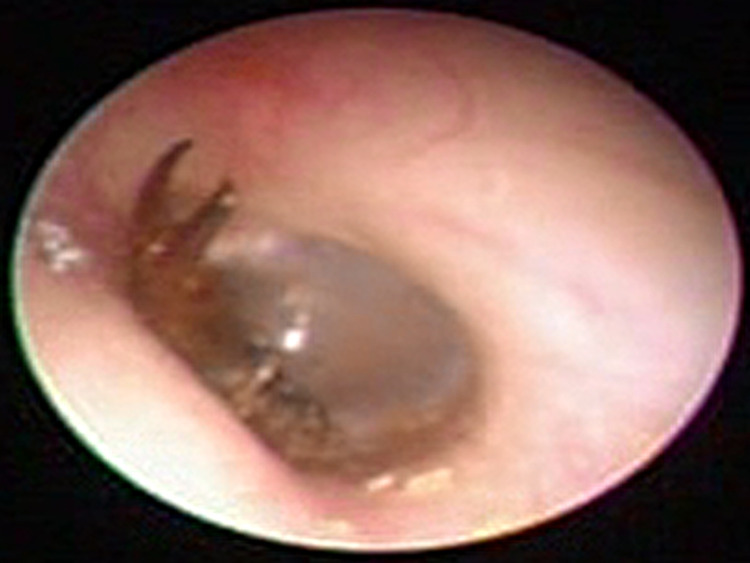
The authors of the 2021 paper describe the discovery of an unusual source of pain in the ear of a 24-year-old man at their outpatient clinic. He presented with pain and tinnitus (hearing a ringing that isn’t really there) in his left ear, but the cause was unknown.
So, as any good doctor would, they took a look inside. Using an otoendoscope, they were able to peer deep inside his ear canal, and discovered a earwig sitting snugly at the bottom.
"The Encyclopedia Britannica describes that the name 'earwig' is derived from the Anglo-Saxon word meaning 'ear creature,' probably because of a widespread ancient superstition that earwigs crawl into the ears of sleeping people," wrote the authors. "Although the above-mentioned superstition about earwigs has been found to be groundless in the modern world, the present study reports a case of the crawling earwig in the ear of a 24-year-old man."
Bravo, earwig. Way to reinforce a stereotype earwig PR will never recover from.
A surprise finding, then, and one that the 24-year-old couldn’t risk carrying around with him. The human eardrum (or tympanic membrane) is a delicate structure that’s well-supplied with nerves, making it highly sensitive and not something you want a pincer-wielding earwig anywhere near. The doctors knew the earwig had to go, but getting it out wasn’t easy.
“A brilliant illumination was flashed to attract the insect out of the ear, but it kept crawling in his external auditory canal,” they said. “So, the earwig was carefully taken out with ear forceps.”
Remarkably his inner ear showed no signs of trauma from the unfortunate encounter, and testing revealed his hearing was unaffected. It sure gives fresh meaning to the name "earwig", though.
“Although an ancient myth that earwigs burrow through the external auditory canal and eat sleeping persons’ brains is considered unfounded, these bugs sometimes do enter the ear, causing severe ear discomfort,” concluded the authors.
So, one crisis averted. Now onto the case of the "crawling sensation" inside a man's head that turned out to be something even weirder.