Nature
 PUBLISHED


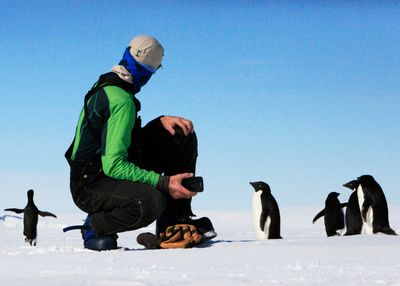


Dozens of countries across the world offer automatic citizenship to anyone born within their borders. What happens, though, if you happen to start your mortal journey through life in Antarctica? Do you get an especially rare passport? Can you claim to be an Antarctican or South Polareese?
During the 1970s and '80s, some countries were especially keen to find out what happened when a person was born on the southernmost continent in a bid to settle the question of who controls Antarctica.
Surrounded by treacherous waters and home to deeply hostile conditions, Antarctica is the only continent without a native human population. This put it in an unusual spot in the 19th century, an age defined by colonialism and exploration, when many of the world’s powers vied for influence in Antarctica, eager to plant their flags in the ice.
Post-World War II, there was growing momentum to establish a proper legal framework for this gigantic Terra nullius to avoid conflict and preserve the region. The continent’s governance was formalized under the Antarctic Treaty of 1959, which froze all territorial claims and declared the region a zone dedicated exclusively to peaceful scientific research.
While this meant no country can officially “own” any part of Antarctica, several have attempted to formally claim slices of the continent, including Argentina, Australia, Chile, France, New Zealand, Norway, and the United Kingdom.
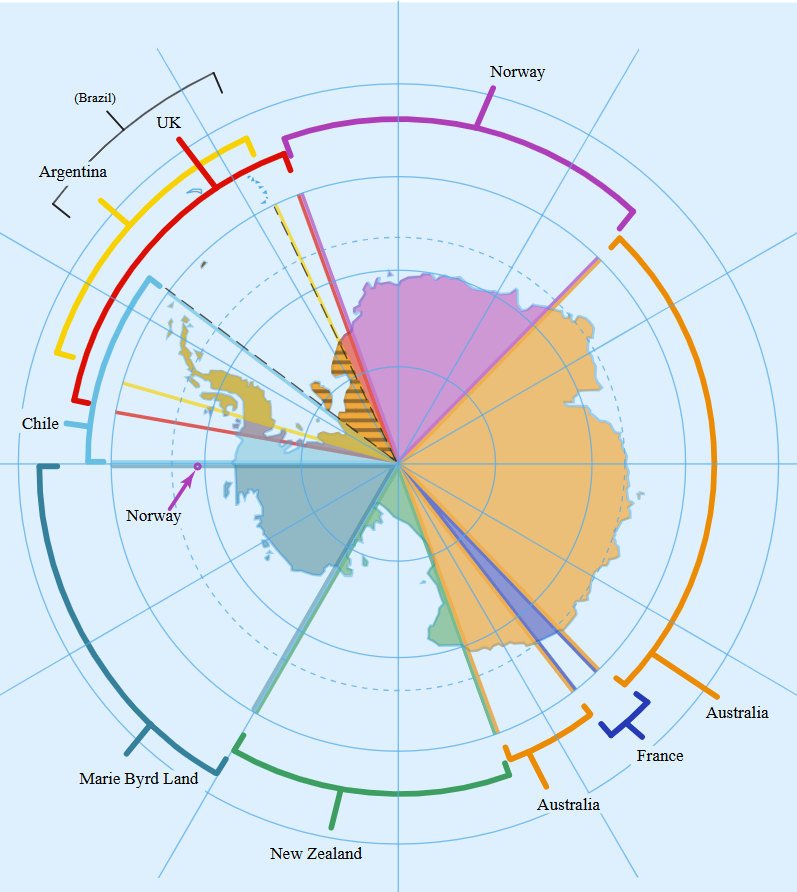
As one of the closest nation-states on the map, Argentina felt it had the most legitimate claim – and was keen to assert it. In 1976, the country fell under the rule of a ruthless military junta led by General Jorge Rafael Videla, who was determined to elevate Argentina’s honor on the international stage. What better way, he and his cronies thought, than to make a bold move for Antarctica?
Towards the end of 1977, the Argentinian government airlifted the heavily pregnant Silvia Morello de Palma to the country’s Antarctic Esperanza Base for the sole purpose of bearing a baby there. Two months later, on January 7, 1978, she gave birth to Emilio Marcos Palma, the first person in recorded history born in Antarctica.
Since Emilio, 10 more babies have been born on the continent, all to parents from either Argentina or Chile, another nearby nation with an eye on the icy continent. The births were subtly symbolic, demonstrating a continuous human presence through childbirth in a place that no human has ever truly called “home.”
Legally, however, the impact was limited. Under international law, birth in Antarctica does not automatically confer citizenship, and the 11 Antarctic babies simply inherited the nationality of their parents.
Besides, flying pregnant women to remote, dangerous scientific bases did not prove much to the international community, so attempts to maintain a permanent population on the Antarctic continent through childbirth stopped in 1985.
Nevertheless, this brief period of polar history did enrich Antarctica with an unlikely record in global health. All 11 babies survived, meaning the continent has a zero percent infant mortality rate – the lowest anywhere in the world by a long shot.