Nature
 PUBLISHED


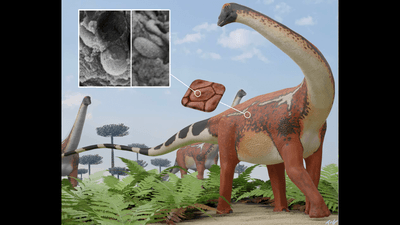


What did dinosaurs look like? It’s not easy to figure out when all you have to go on is scant fossil evidence, but every now and then a rare find gives us a fresh glimpse into the past.
Most recently, that includes some fossilized Diplodocus skin that has preserved evidence of melanosomes – specialized organelles in the skin that give it pigmentation; the first ever to be found from a sauropod dinosaur. Scientists saw evidence for two potential types of melanosomes in the fossil, but one variety was a bit bizarre...
The Diplodocus fossils used for the study were retrieved from Mother’s Day Quarry in Montana, a site that’s previously yielded samples that demonstrated how diverse these dinosaurs’ scales were. For this latest research, a team of scientists dug into three-dimensionally preserved skin samples and found melanosome groups dispersed throughout.
Melanosomes are the organelles that create pigment in skin by producing types of melanin. It’s rare to find in fossilized remains, but these fossils are so intact that the outermost layer of dead skin cells (known as the stratum corneum) has been preserved as aluminum silicates (see images here). Locked within that layer is where they discovered preserved evidence of – you guessed it – melanosomes!
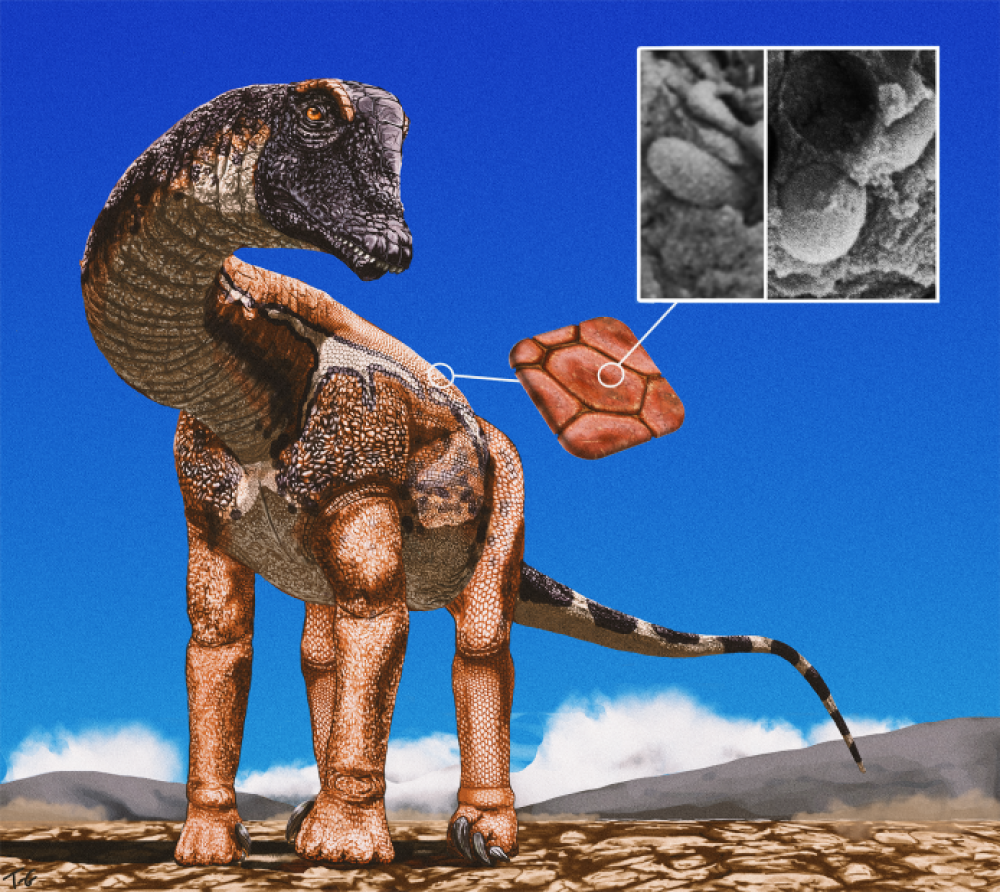
Those melanosomes weren’t all alike, however. Melanosome impressions showed some were oblong in shape, while others were shaped like rods. However, while there were melanosome molds of the oblong ones, they didn’t find any molds of rod-shaped melanosomes.
The only other type of mold they did find were flat, disk-shaped objects that are hypothesized to be melanosomes. These could have been responsible for those rod-shaped impressions, but their "bizarre shape" raises interesting questions about what color the scales were. Flat melanosomes in fossils are typically associated with light reflectance (AKA, iridescence), but – sadly – nobody is suggesting that Diplodocus was iridescent.
Lots of mystery, then, but here’s what we do know: Diplodocus had diverse scales and could create more melanosome morphologies than previously thought, putting them on par with modern birds and mammals. There was at least some speckles of pigment across their hexagonal scales, but as for how numerous or clustered these were, we can’t say just yet.
A good thing, then, that lead author Tess Gallagher says the team is just getting started.
"The next steps for my research are to investigate the cellular anatomy on more sauropod skin outside of Diplodocus," she told IFLScience. "I can confirm that more exciting discoveries are to come, my last two papers are just the tip of the iceberg!"
*Rubs hands together gleefully*
The study is published in the journal Royal Society Open Science.