Nature
 PUBLISHED


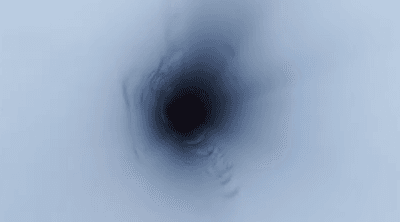


Watch as researchers drop a camera into a deep borehole within West Antarctica’s Thwaites Glacier, one of the most volatile and significant ice masses on Earth.
Scientists from the British Antarctic Survey (BAS) and the Korea Polar Research Institute (KOPRI) recently set out to capture the first-ever direct measurements of the warm waters eroding the glacier from beneath. To reach the underbelly of the ice, the team used water heated to 80°C (176°F) to drill a borehole roughly 1,000 meters (3,300 feet) deep.
As you can see in the footage, a journey down into the hole reveals the countless layers of ice, as well as unusual cave-like burrows, that exist in the glacier’s depths.
This work could have huge implications. Thwaites is often dubbed the “Doomsday Glacier” because its total collapse could trigger a catastrophic and rapid rise in global sea levels. Even now, it accounts for roughly 4 percent of the planet's annual sea-level rise, with some sections already teetering on the brink. As climate change accelerates, the warm waters flowing beneath the ice are driving its decline, hence why scientists are so keen to understand it.
But working in these conditions isn’t easy. On top of dealing with brutal weather, the borehole itself is a moving target. Bitter temperatures cause the shaft to begin refreezing almost immediately, and the entire glacier shifts up to 9 meters (30 feet) a day, causing the borehole to warp.
Unfortunately, the elements won this round. Facing a worsening forecast, dwindling supplies, and the departure of their research vessel, the Araon, the team had no choice but to abandon the attempt. Their instruments were lost to the ice, and the mission was cut short.
This marked the second unsuccessful attempt to reach the underside of the Thwaites Glacier, following a 2022 expedition that was blocked by impassable sea ice.
However, the team remains undeterred. Using the lessons learnt from this season, they’re aiming to return to Thwaites Glacier for future field campaigns to unlock the secrets behind one of the most critical regions of Antarctica.
“This is not the end. The data show that this is exactly the right place to study, despite the challenges. What we have learned here strengthens the case for returning,” Professor Won Sang Lee, principal research scientist at KOPRI, said in a statement.
“Failure is always an option when you are pushing at the limits of scientific exploration,” added Peter Davis, BAS oceanographer and member of the drilling team. “We know heat beneath Thwaites Glacier is driving ice loss. These observations are an important step forward, even though we are disappointed the full deployment could not be achieved.”