Nature
 PUBLISHED





Did you know that a warm-blooded fish lives hundreds of meters below the sea? It’s a strange thought, but scientists have shown that the opah, AKA moonfish, is the only fully warm-blooded fish known to science.
Fish and cold-bloodedness
Just like a mammal, the opah circulates heated blood through its entire body, and the trait has many benefits for a fish that lives in the deep.
It makes sense for a fish to be cold-blooded because of the way they breathe. Rather than extracting oxygen from air they get it from seawater passing over blood vessels in their gills. The ocean is cold, so it figures that a fish’s blood would run at the same temperature.
Not so, says the moonfish.
Why the moonfish breaks the rules
The discovery comes from a 2015 study, in which scientists investigating moonfish noticed that they were consistently warmer than the water in their environment. The warmth wasn’t specific to movement and was consistent throughout their bodies, including the heart.
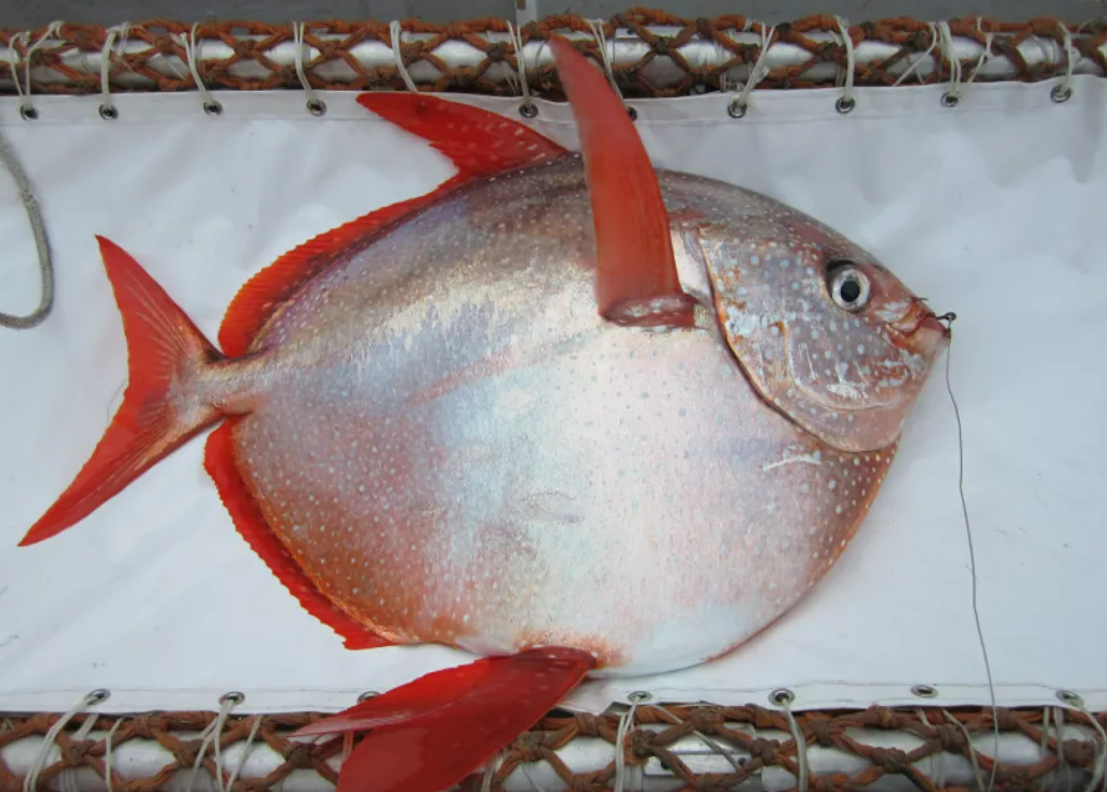
To get to the bottom of it, they looked at the fish’s anatomy and physiology and discovered something curious in their gills. A network of vasculature essentially creates a kind of countercurrent heat exchange within their gills’ blood transfer, meaning warm blood leaving the body heats the cold blood returning from the gills.
"There has never been anything like this seen in a fish's gills before," said fisheries biologist Nicholas Wegner of NOAA Fisheries' Southwest Fisheries Science Center in a statement. "This is a cool innovation by these animals that gives them a competitive edge. The concept of counter-current heat exchange was invented in fish long before we thought of it."
This prevents heat loss from oxygen exchange, enabling the moonfish to be fully endothermic and maintain a blood temperature in its muscles, heart, and brain that’s around 5°C (9°F) warmer than the surrounding water.
It marked the first time we’d ever found a fish that was fully warm-blooded.
Other fish were known to generate heat in parts of their body due to energy generated during movement, but none were known to have this kind of full-body endothermy.
The advantages of "warm blood"
The discovery also gave the moonfish a bit of a reputational makeover. Maintaining warm blood means it swims faster and sees better compared to its deep-sea neighbors.
"Before this discovery, I was under the impression this was a slow-moving fish, like most other fish in cold environments," explained Wegner. "But because it can warm its body, it turns out to be a very active predator that chases down agile prey like squid and can migrate long distances."
We’ve yet to discover any other fish that are fully warm-blooded like this, but in 2018 we did discover that moonfish are more complex than previously recognized. Rather than representing just one species, there appear to be at least five species, but only Lampris guttatus is known to have fully warm blood.
Bravo, you toasty wonder.
An earlier version of this story was published in January 2026.