Nature
 PUBLISHED
 1
1



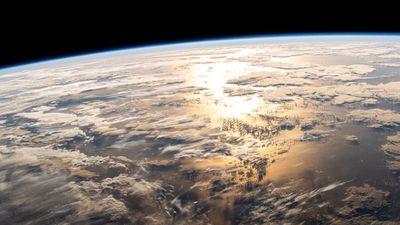


Water, water, everywhere, nor any drop to drink – unless you drill deep enough. In a global first, scientists have documented and sampled a vast system of "freshened" water under the seafloor just off the US East Coast.
The project, known as IODP³-NSF Expedition 501, was a major undertaking involving 40 scientists from 13 countries. The team sailed off the coast of New England south of Cape Cod, drilled into the seabed, and scooped out core samples from what lies beneath.
What have scientists found under the Atlantic seabed?
This revealed a layer of sediment roughly 200 meters (656 feet) beneath the seafloor, saturated with freshened water (that’s seawater whose salinity has been dramatically reduced).
Think of it like a sub-seafloor sponge, not unlike the aquifers found on dry land, which are vast bodies of underground, water-saturated rock that can serve as viable freshwater reserves.
Scientists have hypothesized that these underground structures could be found offshore for decades, and more recent evidence has indicated that they exist, but this is the first time one has been thoroughly documented and sampled.
“We were excited to see that freshened water exists in multiple kinds of sediments – both marine and terrestrial. Freshened water in such different materials will help us understand the conditions that emplaced the water,” Brandon Dugan at the Colorado School of Mines said in a statement.
Into the unknown
There still are many unknowns, however. Researchers have yet to determine the age of the groundwater, how much of it exists in total, or how it interacts with the surrounding seawater. Microbial communities almost certainly dwell within it, but there’s little idea of what they are and how they sustain themselves.
There’s also the big question of where this water came from. It might have become trapped here during a period when sea levels were around 100 meters (328 feet) lower than they are today. Alternatively, it could have originated beneath an ice sheet or a pro-glacial lake during one of two glacial periods, roughly 450,000 or 20,000 years ago.
“The researchers will continue to work on and with the samples to decipher more – for example, to date the groundwater more accurately, which is critical to advancing our knowledge,” added Rebecca Robinson at the University of Rhode Island.
.jpg "Scientists analyze the core samples from below the Atlantic using the Munsell Soil Colour Chart.")
Could this water save the world?
Another open question is just how widespread these freshwater systems are across the globe. If they turn out to be common, perhaps they could be used for drinking water or agriculture, like onshore aquifers.
It's a particularly timely discovery as the world edges toward a new era of water scarcity. Currently, around half of the world’s population experiences some level of severe water scarcity for at least part of the year.
As climate change dries up surface supplies and the global population continues to swell, it is expected that this pressure will only intensify – with some proposing it will lead to more water conflicts, violent disputes over shared rivers, and the mass displacement of people from drought-stricken regions.
There's no guarantee these subseafloor systems will offer any kind of solution to these mammoth problems, but given the scale of the brewing crisis, they may be well worth exploring.