


 Nature
 PUBLISHED


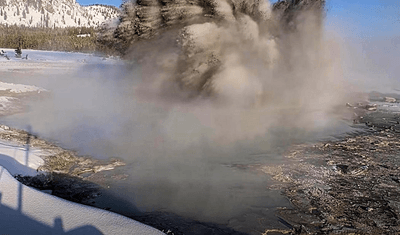


A webcam at Yellowstone National Park has captured a so-called dirty explosion throwing a mix of superheated water, mud, and anything else handy 10-12 meters (30-40 feet) into the air above Black Diamond Pool. The explosion is one of several that have happened after a much larger explosion wrecked a boardwalk last year, but the first to be caught by the webcam.
Yellowstone is famous for its beloved geysers hurled into the air when nearby magma heats water to boiling point, and for being the site of a once and (probably) future supervolcanic eruption. There’s a lot of space in between those when it comes to the energy and danger of explosions, and sometimes sites at Yellowstone let off some energy at the lower end of that intermediary range.
On July 23, 2024, an eruption at Black Diamond Pool, part of Biscuit Basin in Yellowstone, forced tourists to flee. Fortunately no one was hurt, but considerable damage was done to the nearby boardwalk.
Once the mud had settled, the National Park Service (NPS) released a statement noting that rocks the size of grapefruit had been sent hundreds of feet into the air. Unlike some other large explosions at the site, there had been no earthquake activity beforehand to trigger this event. Instead it was attributed to water that is normally hot, but well below boiling point, rapidly turning to steam.
According to the United States Geological Survey (USGS) Volcanoes Facebook page, “Ever since that time, dirty eruptions reaching up to 30-40 feet in height have occurred sporadically from the pool.” Between the danger and the damage to the boardwalk, the whole of Biscuit Basin has been closed to visitors.
Naturally, the park are keen to monitor the site, both for scientific reasons and to know when they can put a major tourist attraction not far from Old Faithful back in service. They installed a camera, with audio and seismic monitoring in September. However, their attempts to film an explosion were foiled by either dark of night or ice blocking the camera. There are audio records of the events, but no good visuals.
That changed on the morning of December 20, with what the USGS calls a “kablooey”. At 9:23 am under clear blue skies the pool gave those monitoring it an early Christmas present.
In response to a question on the page, an anonymous representative of the USGS replied, “The initial explosion on July 23, 2024, seems to have been caused by the hot spring's plumbing system becoming blocked by silica, which precipitates out of the water (that conclusion is based on an analysis of the rocks that were thrown out by that event). Since that time, the smaller eruptions may be tied to the recovery/readjustment of that plumbing system after such a major disruption.”
“Black Diamond Pool has had other periods where it experiences dirty eruptions, most recently in the mid-2000s to mid-2010s.”
The USGS does not believe the explosion is indicative that a larger explosion is on its way, and stresses the magma chamber beneath Yellowstone that drives gigantic eruptions is not in a phase to do anything within a human lifetime.



 1
1