


 Space and Physics
 PUBLISHED



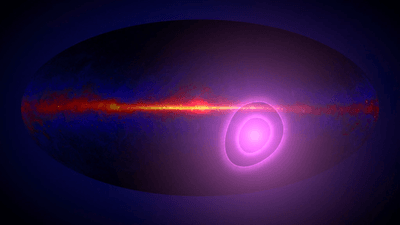


Our solar system is not still in space; it moves around the galaxy at 370 kilometers per second (230 miles per second). This means that part of the universe looks like it is coming towards us, while the opposite side moves away from us. This effect is seen, for example, in the Cosmic Microwave Background (CMB), the light echo of the Big Bang. Researchers expected to see a similar effect if they were to look in the gamma-ray sky – but they discovered something very different.
The CMB is incredibly uniform, so the difference amounts to measuring about 0.12 percent hotter towards the constellation Leo (more microwaves than average) than on the other side of the Sky. The gamma-ray background comes from unresolved energetic events from across the universe, so it was expected that it would look roughly similar, though the difference enhanced given the fact that gamma rays are a billion times more energetic than regular light.
But this dipole, as it is technically called, looks nothing like that of the CMB; it is in a different place and much more intense than expected. While not matching the CMB dipole signal, it does match what has been observed for the most energetic cosmic rays.
"It is a completely serendipitous discovery," said Alexander Kashlinsky, a cosmologist at the University of Maryland and NASA's Goddard Space Flight Center, in a statement. "We found a much stronger signal, and in a different part of the sky, than the one we were looking for."
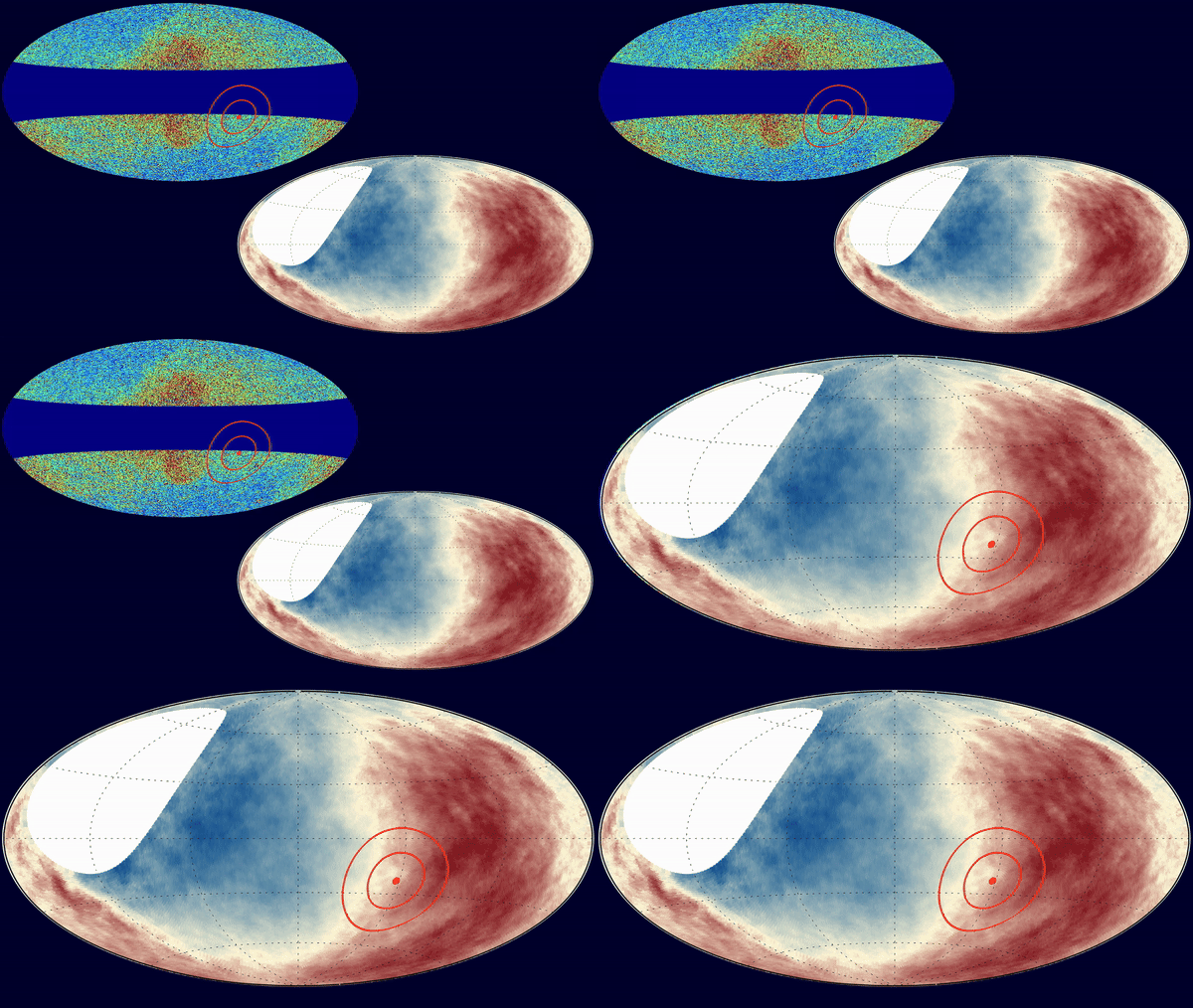
"We found a gamma-ray dipole, but its peak is located in the southern sky, far from the CMB's, and its magnitude is 10 times greater than what we would expect from our motion," said co-author Chris Shrader, an astrophysicist at the Catholic University of America in Washington and Goddard. "While it is not what we were looking for, we suspect it may be related to a similar feature reported for the highest-energy cosmic rays."
Ultrahigh-energy cosmic rays carry even more energy than gamma rays – a billion times more, in fact – and scientists do not know where they come from. However, there is an excess of these particles from the same region where there is an excess of gamma rays, and so researchers think that these two phenomena are related.
The study is published in The Astrophysical Journal Letters and was recently presented at the 243rd meeting of the American Astronomical Society in New Orleans.


 1
1