Nature
 PUBLISHED


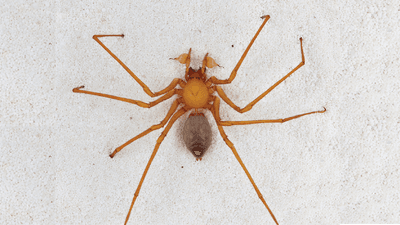


Spelunkers in Oregon risk encountering a group of cave robbers, famous for their hook-like legs used to snatch prey out of the air. Known as Trogloraptor, this genus of cave spiders has only been found deep within caves, where it lies in wait ready to pounce with two sets of teeth.
Trogloraptor cave spiders were first reported in a 2012 paper, after scientists discovered a new species and genus of spiders lurking in caves in southwestern Oregon's Siskiyou Mountains back in 2010. They’re big boys compared to most cave spiders, with a leg span of around 7.6 centimeters (3 inches).
They exhibit a rare trait for spiders: hooked claws on the end of their legs that they use for hunting prey. Anything they snatch is made short work of thanks to multiple rows of teeth, another unusual trait among spiders.

These cave spiders are classed as troglobites, which is the name given to animals that have evolved specialized anatomy and super senses that enable them to thrive exclusively in cave environments. In the deepest darkest stretches of cave systems, you can’t afford to play with your food, so being an adept hunter is crucial.
It’s thought they hang on the roofs of caves from a few silk strands for a web, snatching passing prey out of the air. However, exactly what’s on the menu for these cave spiders isn’t clear.

In captivity, Trogloraptor were observed eating moths, crickets, and other spiders, reports the National Park Service, but they died – seemingly from starvation – within two weeks. Further research showed they have venom glands, so what is it they’re eating down in those caves?
We still have much to learn about these deep-dwelling cave spiders, but the lead author behind their discovery, Charles Griswold, suggests they may have retreated to these habitats when redwood forests in the regions began shrinking. And they’re not the only predatory arachnids who made this move.
Spiders the size of softballs lurk deep inside abandoned mines in Mexico, just one of a host of impressive mine spiders that have capitalized on human-made environments that have since been abandoned.
The most impressive was first identified in an abandoned mine in Baja California Sur, Mexico, where scientists found an “abnormally big” exoskeleton shed in the cracks of a rock overhang. Named the Sierra Cacachilas wandering spider, Califorctenus cacachilensis, it is a relative of the notoriously venomous Brazilian wandering spider, Phoneutria fera.
And yes, that is the boner spider.


 1
1