Nature
 PUBLISHED
 3
3


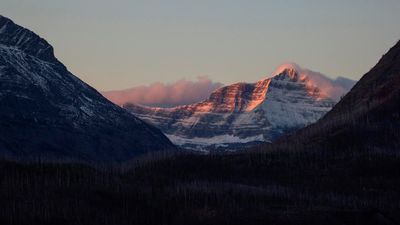


Among North America’s Rocky Mountains is a peak that can boast a peculiar hydrological quirk: water that falls in different directions can ultimately drain into three major oceanic basins.
Triple Divide Peak is a mountain in Montana’s Glacier National Park, which is part of North America’s Continental Divide. This is a mountainous hydrological boundary that extends from Alaska down to Mexico, separating various watersheds that drain into different oceans. As its name suggests, Triple Divide Peak is positioned in such a way that it serves as a triple divide, or “hydrological apex”, a rare high-altitude point that sends water into any one of these three oceans, depending on where it lands on the mountain.
For instance, rain or snow that falls on the mountain’s eastern side flows through the Missouri-Mississippi river system towards the Atlantic Ocean, while water on its western side makes it way towards the Pacific Ocean via the Columbia River. Water that falls onto its north side can eventually enter the Saskatchewan-Nelson river system where it reaches Hudson Bay, which is classified as part of the Arctic Ocean.
It is worth noting that this last claim is slightly contentious as not everyone classifies Hudson Bay as being part of the Arctic Ocean. This is because most of its waters flow into the Atlantic Ocean, with only some of its freshwater making its way into the Arctic Ocean. However, the International Hydrographic Organization does recognize it as such, which is one basis to accept the triple divide phenomenon.
The mountain’s rare position means it provides a large proportion of headwaters for a large area of the continent. But it is not the only peak to offer this triple flow. A little farther to the northwest is Canada’s Snow Dome, which also straddles the same three watersheds. As with Triple Divide Peak, depending on where water or snow lands, the water has a chance to reach the Pacific Ocean via the Columbia River, the Arctic Ocean via the Athabasca River, and Hudson Bay via the North Saskatchewan River.
Both of these mountains support diverse life that grows up by the rivers, streams, and lakes that form from the waters. Various species of animals and plants, including some threatened species, are reliant on the rivers or meltwaters to survive in the alpine ecosystems.
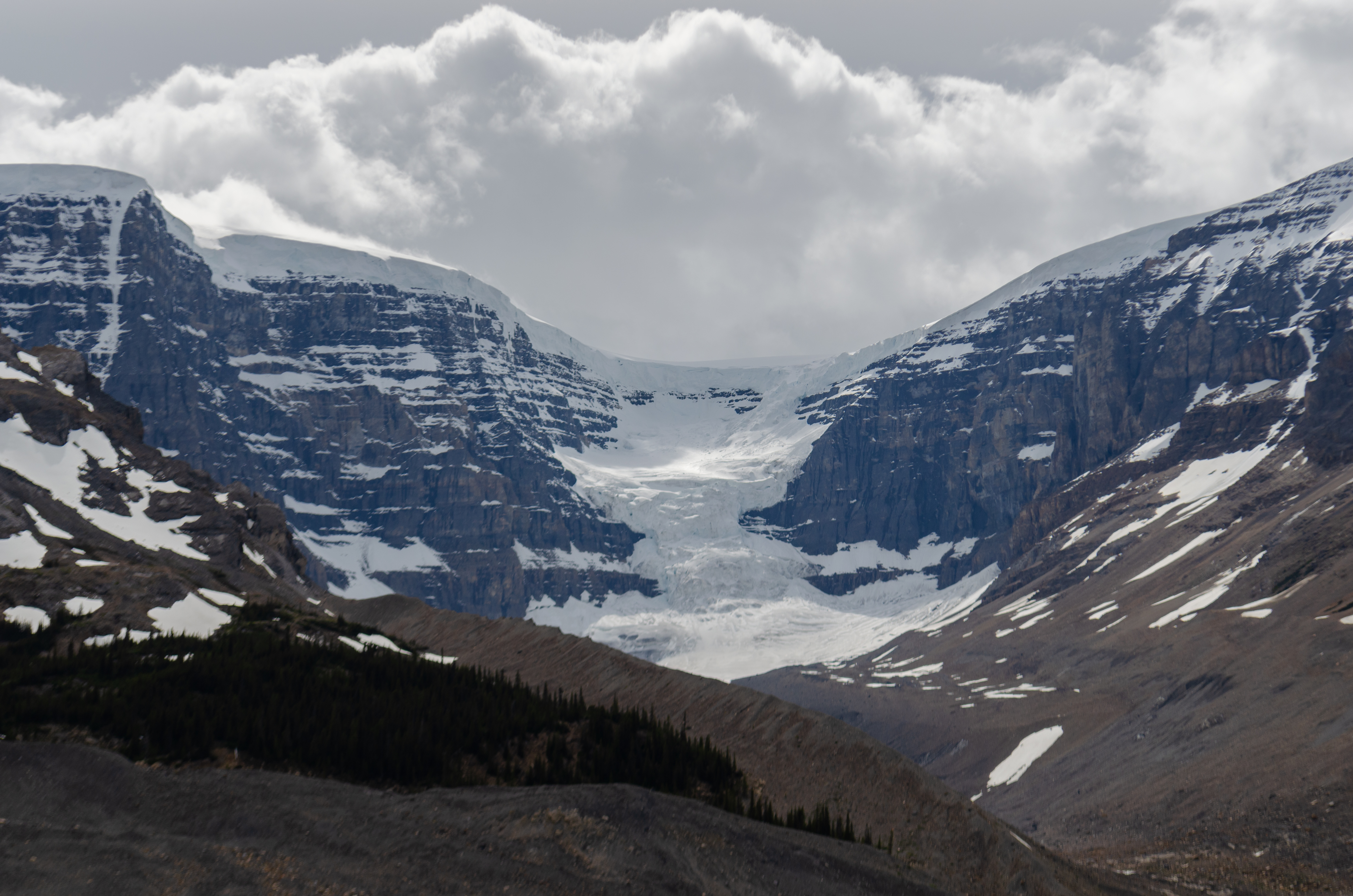
Triple Divide Peak and Snow Dome may be rare finds, but there are plenty of other examples of watery weirdness on our planet.
Ever wondered, for instance, what would happen if a river were to flow backwards? It does happen, as Australia’s Murray and Goulbourn Rivers and even the mighty Amazon can attest, and for a few different reasons.
The Mississippi temporarily flowed backwards during Hurricane Isaac but quickly went back to normal. The Yellow River, on the other hand, has undergone a number of avulsions in its time – where rivers change direction and carve out a whole new route – which had deadly consequences for those living along its banks.
If it’s not the rivers being weird, it’s the waterfalls. In Minnesota, a waterfall splits in two, with one route heading down to Lake Superior and the other falling into a mysterious abyss known as Devil’s Kettle.
And with all this talk of the oceans, you may be interested to learn what goes on at the point where the Atlantic and Pacific mix.