Nature
 PUBLISHED


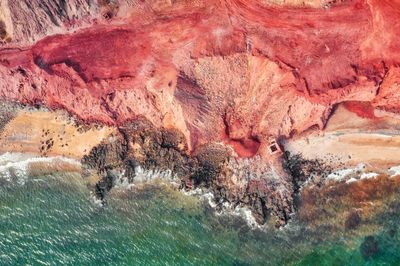


Iran’s Hormuz Island is a curious place indeed, famous for its salt rock and striking red ocher soils. Locally, the red stuff is known as Gelak, made up of a mixture of hematite and iron hydroxides. Not only does it give the island a dramatic shade of blood red (just wait until you see what happens when it rains), but it’s been mined as an ingredient in paints and cosmetics.
The island, located in the Strait of Hormuz in the Persian Gulf off the southern coast of Iran, is an active salt dome that from satellite imagery looks like a teardrop with raised layers. A salt dome is a kind of geological formation where underground salt deposits continuously move upward.
This movement occurs because salt is less dense than surrounding rock layers, allowing it to push through overlying sediments. The process of salt rising and deforming the Earth's surface is known as diapirism, and active salt domes often end up with a rough surface as a result, covered in hills, ridges, and even small mountains.
According to NASA Earth Observatory, Hormuz Island’s features are mostly made of gypsum, anhydrite, and halite – a kind of rock salt. What gives it that otherworldly red hue is a mixture of hematite and iron hydroxides, but that redness doesn’t really shine until it gets wet.
The ancient deposits that make up the island have risen to the surface over thousands of years, and because there’s not much in the way of groundwater and rainfall to dissolve its salty constituents, it’s been able to maintain its distinctive shape. That’s not to say it never rains, however, and a recent video shows quite how dramatic the transformation can be when a downpour comes to Hormuz Island.
As the water hits the ground, it picks up the red iron oxide, turning the downpour blood-red. The unique structure of the island means the water flows off the salt dome towards the sea, creating impressive red streams worthy of a horror flick, but fear not. It’s just a quirk of this salty “rainbow island”.
Hormuz is not solely composed of salt, however. It also contains layers of clay, carbonates, shale, and iron-rich volcanic rocks. Despite being such a dry and salty place, several species of lizards, insects, and birds have set up camp here. Off island, visitors can spot dolphins, sea turtles, and snorkel among colorful coral reefs.
In local cuisine, you’ll find Gelak used as an ingredient in sauces and a kind of bread called "tomshi,” and it’s been used like this for centuries. However, a 2023 study raised concerns about the soil’s heavy metal content, warning that exposure through consumption could carry some health risks.
There have also been concerns raised about the sustainability of current mining practices, which, combined with the impacts of tourism (up until the US-Iran war, that is – the Strait of Hormuz is not a prime tourist destination right now), are placing a strain on the island environment. In response, conservation initiatives have set out to protect Hormuz Island's natural beauty so that it can be enjoyed by future generations.
This article first appeared in Issue 34 of our digital magazine CURIOUS. Older issues of CURIOUS are free for all users. To access new issues, become an All Access Member.


 2
2