Nature
 PUBLISHED
 1
1


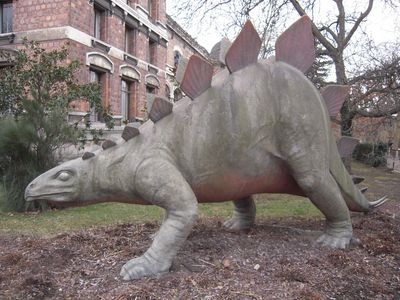


Two giant forelimbs have been found from a Stegosaurus, or related species, that are longer than any discovered before. Indeed, the bones are 38 percent longer than the average adult stegosaurid's, suggesting these armored dinosaurs grew to almost sauropod size. Astonishingly, these important finds were made 76 years ago, but palaeontologists have only now realized what they have.
Stegosaurus have a profile somewhat out of step with their likely abundance, thanks to their highly recognizable pointy plates. Stegosaurus themselves have been found only in the western United States and Portugal, although presumably they had a presence in between. The stegosaurid family, to which they gave their name, contains many species that were much more widespread.
However, the Morrison Formation, laid down between 156 and 147 million years ago, remains Stegosaurus central. Not only is it where the genus was first identified, but parts of around 80 individuals have been found there.
One species, Stegosaurus ungulates, reached about 7.5 meters (25 feet) long and is estimated to have weighed 5 tons. With its thagomizer-equipped tail for defense, you’d think that was plenty big enough, but these limb bones throw that into doubt. The formation also contained many other stegosaurid species, some of similar size.
It may be that the curator at that time was a geologist and simply hadn't looked at a lot of stegosaurs.
ReBecca Hunt-Foster
The two humeri (upper front limb bones) are 70 and 74 centimeters, long respectively (2.3 and 2.5 feet), and were found in the Uinta Basin in 1950. The radius and ulna from the dinosaur’s right front limb have also been preserved, along with some toes, and are similarly enormous.
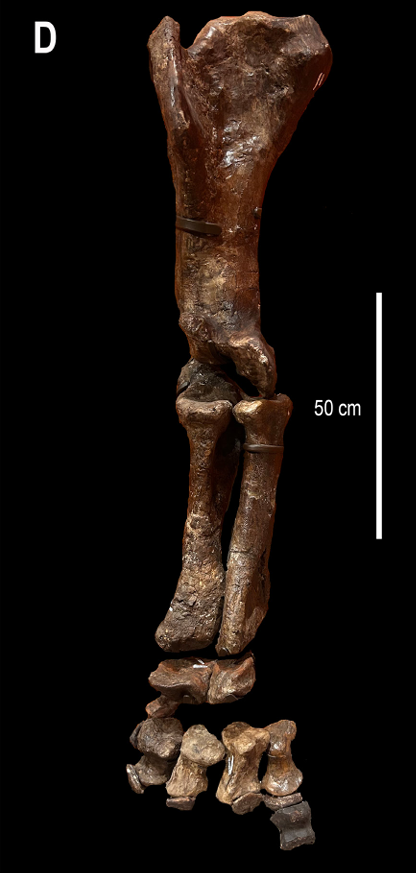
Bones like this might seem hard to overlook, but the Morrison Formation has also yielded plenty of larger dinosaurs, such as Brachiosaurus or Diplodocus. For whatever reason, the bones’ significance was not recognized until a team led by ReBecca Hunt-Foster of Dinosaur National Monument took another look.
“Most of the bones seem to have been correctly identified originally (although one was thought to be a sauropod),” Hunt-Foster told IFLScience. “It may be that the curator at that time was a geologist and simply hadn't looked at a lot of stegosaurs.”
This review noted the dumbbell shape of the bones when seen from the front, and the large crest where shoulder muscles joined the bone that is an identifying feature of the stegosaurid forelimbs. However, without more distinctive parts the team cannot identify a specific genus, let alone species, to which the owner belonged. For many known species we don’t have matching forelimb bones to compare these with – we just assume size by extrapolating from bones in other parts of the body.
“Could be Stegosaurus, but conceivably could also be Hesperosaurus or Alcovasaurus, so stegosaurid is the safest conservative identification with the material we have on hand,” Hunt-Foster told IFLScience.
However, these bones are certainly much larger than the stegosaurid counterparts we do have. For example, only one other stegosaurid humerus ever found even gets close to this size, and at 68 centimeters (2.2 feet), that’s still shorter. Moreover, these bones are relatively thick for their length.
Assuming the dinosaur in question did not have forelimbs out of all proportion to the rest of its body, this beast probably weighed around 7.2 metric tonnes.
The bones have long been on display at the Utah Field House, but presumably most visitors weren’t familiar enough with stegosaurid sizes to note anything unusual.
A new species can’t be named based on so little information, since we still can’t tell if this was a member of known species that just grew exceptionally large.
Although even this stegosaurid was modest in size compared to the biggest sauropods of its day, and the even bigger ones that came later, its size is still remarkable in many ways. Ornithischian dinosaurs didn’t grow as big as the large sauropods, perhaps because they had other ways to defend themselves, or lacked some modifications that helped sauropods grow so big.
Sadly, without other parts to the body, these bones shed no light on the question of whether stegosaurids' distinctive line of plates were to use against predators, for temperature control, attracting mates, or just species recognition. We also can’t settle the question of how stegosaurids managed to have sex without those plates causing fatal damage.
The study is published in the New Mexico Museum of Natural History and Science Bulletin.