Nature
 PUBLISHED


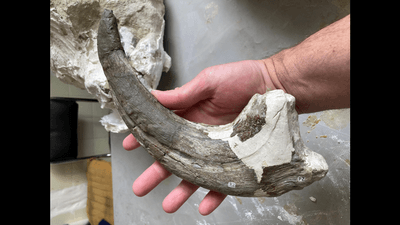


A new species of predatory dinosaur has been described from fossils found in South America, and to say they are intimidating is an understatement. With a thumb claw that makes the human hand look puny, it’s safe to say that Joaquinraptor casali would’ve been much feared in its ecosystem, back when it was munching crocodiles around 70 million years ago.
How do we know it was munching crocodiles? Well, this individual’s jawbone was found pressed against the leg bone of a crocodile. While that can’t be claimed as direct evidence, coupled together with its intimidating physiology, it’s certainly coming together to paint a picture of a top predator.
The new-to-science species got its name, Joaquín, as a tribute to the firth author’s son, while raptor is the Latin for "thief", and casali is in recognition of Dr Gabriel Andrés Casal who has made many contributions to our knowledge of the Cretaceous palaeontology and geology of central Patagonia, including naming the formation where this megaraptorid was recovered.
The partial skeleton was found in the uppermost Cretaceous stratum of the Lago Colhué Huapi Formation of south-central Chubut Province in central Patagonia, Argentina. That tells us that this creature must have lived during the Cretaceous period between 70 and 66 million years ago.
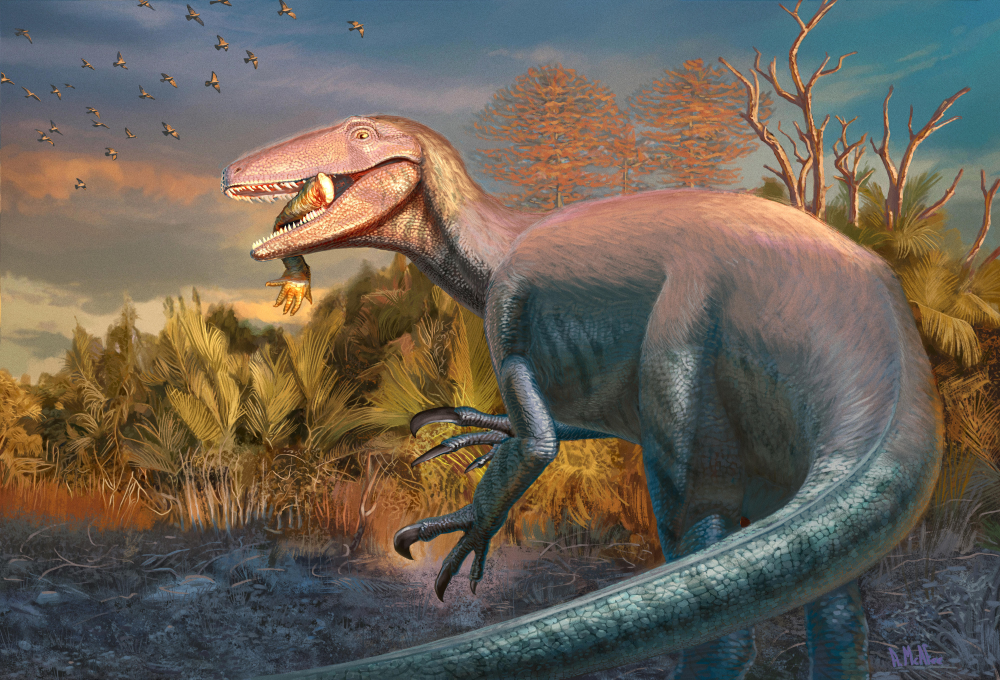
As well as that enormous thumb claw and powerful forearms, it also had an elongated skull like other megaraptorans, making it a top predator of its time. Megaraptorans have been found across Asia, Australia, and South America, but our understanding of their behavior and anatomy has been limited by incomplete fossils.
That’s partly what makes this new discovery so exciting. J. casali is particularly well-preserved and even partially articulated, helping us to put together the puzzle pieces of its skeleton the team were able to recover. That includes much of the skull, the fore- and hindlimbs, as well as the ribs and vertebrae. It’s thought to have been an adult but not yet fully grown, at around 19 years old (ever wondered how long dinosaurs lived?).
By piecing together what we know of J. casali and comparing it against other megaraptoran remains, the team have estimated that it was probably about 7 meters (23 feet) long and weighed over 1,000 kilograms (2,205 pounds) – that’s one chunky dinosaur. It would’ve spent its days hunting in a hot and humid floodplain environment, which is why it’s not surprising – though rather impressive – to find that crocodile might’ve been on the menu. However, more research is needed to cement its behaviour and ecological role within this ancient ecosystem.
What we do know is that it would’ve sat safely at the top of the food chain as one of the most recent megaraptorans known to science. Still, being top dog wasn’t enough to save it, as we all know who came and crashed the party 66 million years ago. Way to spoil everything, Chicxulub.
The study is published in the journal Nature Communications.

 1
1