Nature
 PUBLISHED


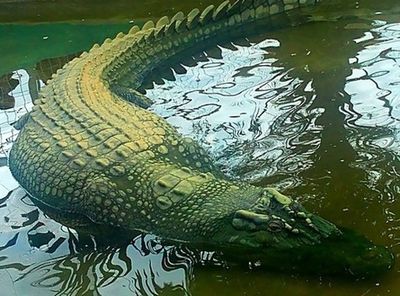


Measuring 6.17 meters (20 feet and 3 inches) from snout to tail, Lolong was the largest crocodile ever caught, measured, and placed in captivity.
The male saltwater crocodile (Crocodylus porosus) was officially measured in November 2011, according to the Philippines’ Department of Environment and Natural Resources. This was just a few months after the animal was captured from the wild in September 2011.
The croc was pursued not simply for his size, but because he was considered a threat. Authorities suspected him of involvement in at least two fatal attacks in 2009 – one on a young girl and another on a fisherman – as well as numerous incidents of livestock predation. While it was never conclusively proven that this particular crocodile was responsible for the deaths, Lolong nevertheless bore the blame.
The capture was no small feat: it reportedly took professional hunters and the local government unit three weeks, the efforts of 100 villagers, and even a crane to extract the lumpering reptile from a marsh in Bunawan, on the southern Philippine island of Mindanao.
He was named in honour of a local hunter, Ernesto “Lolong” Conate, who died of a stroke while orchestrating the capture.
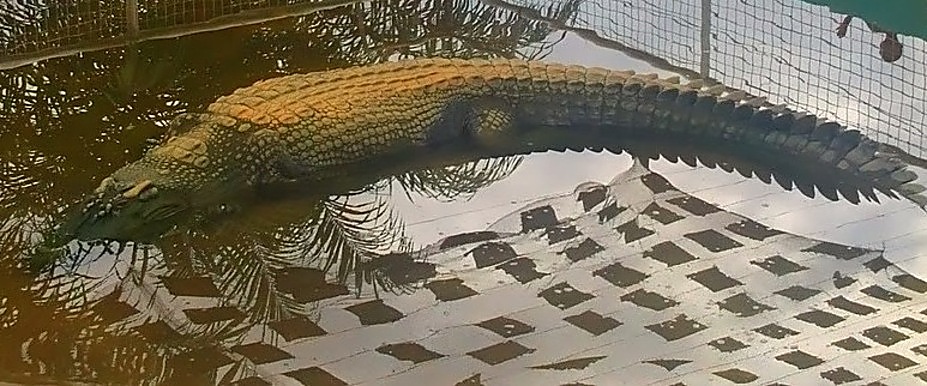
After his capture, Lolong was taken to a nearby town and placed in a specially built pen where it consumed over 17 kilograms (37.5 pounds) of pork every five days. The hungry giant quickly became the town’s star attraction, drawing around 500 visitors a day to the remote community of 27,000 people.
When the measurement was officially logged by the Guinness World Record, Lolong swiped the title of the “world’s largest crocodile” from an Australian croc known as “Cassius Clay”, measuring 5.48 meters (17 feet and 11.75 inches). This colossus, captured in the 1980s and estimated to be over 110 years in age, died in November 2024.
Unfortunately, Lolong did not live long (so to speak) in captivity. He died on February 10, 2013, less than two years after being captured.
Animal rights group PETA Asia claimed the animal’s necropsy suggested the crocodile was forced to live in a concrete pen with a shallow pond, which contributed to his death from late-stage pneumonia, cardiac failure, multiple organ failure, and non-adaptive stress response.
Crocodiles are incredibly tough and hardy animals, but even a mighty giant like Lolong proved vulnerable when removed from their natural habitat.