Nature
 PUBLISHED
 1
1


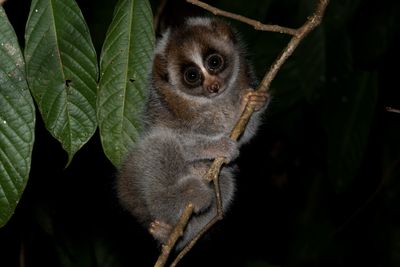


Primates – ourselves included – usually rely on a blend of brains and brawn to get things done. However, there is one notable exception that brings toxins to the table. The slow loris is the only known primate that is venomous, placing it in an elite club of venomous mammals alongside the platypus, certain shrews, the European mole, and a handful of others.
The slow loris is a genus (Nycticebus) made up of several species, all of which are typically found hanging around the trees of Southeast Asia at night, using their big eyes to hunt bugs and other animals under the cover of darkness. Their size varies by species, typically measuring between 20 and 38 centimeters (8–15 inches) in length.
Slow loris venom
While undeniably cute, slow lorises can be fiercely territorial and, when threatened, they will unapologetically deliver a venom-spiked bite to their adversary.
Before it launches the attack, the puny primate must lick its armpit to obtain an oily substance from its brachial arm gland. Once this chemical is combined with saliva, it forms a potent venom and fills the grooves on their canines. The slow loris will then administer the venom with a bite strong enough to penetrate bone. Ouch.
Oddly, slow lorises don't just use their venom on predators and prey – they also use it on each other. A study published in the journal Current Biology explains how researchers captured 82 Javan slow lorises, around 20 percent of which had fresh wounds inflicted by other lorises. This competitive use of venom within their own species is exceptionally rare among all animals, most of which use it to attack or defend against other species.
"This very rare, weird behavior is happening in one of our closest primate relatives," Anna Nekaris, lead author on the study and then a primate conservationist at Oxford Brookes University, told the New York Times in 2020. "If the killer bunnies on Monty Python were a real animal, they would be slow lorises — but they would be attacking each other."
However, slow lorises will also use their venom to harm other species, including humans. Their bite can be surprisingly nasty. Along with causing significant pain, the wounds tend to linger and can easily become infected or lead to nerve damage and skin complications if not treated immediately.
Can slow lorises kill humans?
In some cases, the reaction is far more severe. A paper in BMJ Case Reports detailed a man in his 30s who was bitten on the finger in rural Indonesian Borneo. He arrived at the hospital in the throes of anaphylaxis, suffering from nausea, lip numbness, breathlessness, and profuse sweating. It was a life-threatening allergic reaction, made all the more surprising because the man had no history of allergies.
Due to the venom's ability to induce anaphylactic shock, a slow loris can kill a human with its bite.
Because of their adorable appearance, people often forget that slow lorises are dangerous, wild animals. This misplaced affection has fueled a devastating illicit wildlife trade. Driven by social media trends, many people seek them out as exotic pets, despite the practice being illegal in most countries.
The consequences of ignoring their wild nature can be fatal. In another medical case report, a 37-year-old woman in Japan was bitten by her pet slow loris and fell into severe anaphylactic shock. The case is a good example that shows these little beasts are not meant to be kept as pets – they have the venom to prove it.