Health and Medicine
 PUBLISHED
 1
1


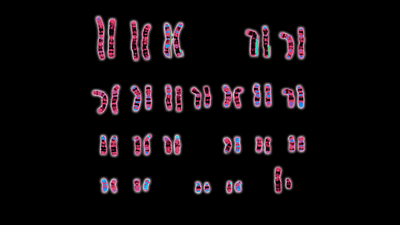


It was January 20, 2026 – the very same day he re-entered the White House – that President Donald Trump issued Executive Order 14168. Welcomed by fundamentalists, radicals, and designated hate groups, and condemned by most everyone else, the order purported to rigidly and scientifically define two sexes based on a single, albeit misunderstood, characteristic.
The US government aren't the only ones who’ve tried to tie sex and gender to various immutable characteristics – and, in fairness, it’s not always done with the evident ideological motivation of the Republican party. Biologists of all stripes often need to categorize animals and plants by sex, after all, and will generally choose some sensible definition to do so. Sometimes they choose gamete size – that’s the criteria EO 14168 was clumsily aiming for. Others may prefer to go by chromosomes, or behavior, or just how the organism looks.
But most often of all, scientists are using some kind of hodgepodge of all four. See, the trouble with biology is, it’s messy – it’s a world where everything exists on a spectrum, and even the most basic concepts are fuzzy around the edges.
Now, as scientists and politicians alike scrabble to find a single and unproblematic definition of biological sex, a new paper takes the opposite approach. Such a goal is, the authors argue, impossible – and you know what? That’s OK.
A biological puzzle
What defines an organism’s sex? Whatever answer your brain just offered, it’s wrong – or, at least, lacking. Put simply, there’s no criterion you can pick – or even any collection of characteristics – that is free from any limitations or exceptions.
Take gamete size, for example – that is, whether ova or sperm are present. You might think that’s a safe bet – many people do, including plenty of working scientists. But use it as the sole arbiter of biological sex, and you inevitably run into problems: maybe you’re looking at an individual with neither option present; maybe both are there.
And more likely than either option is this: that you don’t actually know which gametes are present at all. “We do not refute the gametic definition, it remains a useful and widely applicable framework,” says Madeline Eppley, a PhD Candidate at Northeastern University’s Marine Science Center, and Andy Lee, who recently completed a PhD at Purdue University, who are the co-first authors of the paper.
“[It] is conceptually clear, [but] becomes complicated in practice because scientists rarely observe gametes directly,” they tell IFLScience. “Instead, proxies are assumed to be predictors of gamete size.”
These proxies – behavior, or appearance, or something else – are often accurate, but far from foolproof. A scientist may observe a hummingbird with a short beak and bright plumage under its chin, for example, and assume that means it creates sperm. They never actually check – taking a sample can be difficult in the field – and so an egg-laying bird, which by the biologist’s own definition should be classified as a female, is recorded as male. “Using an ultimate criterion is that it requires assumptions when that trait is not directly measured,” Eppley and Lee explain.
Okay, you may think, so perhaps we use some other trait to define sex. But here, too, you run into problems, and perhaps even bigger ones than with the gametic definition: “in our paper we highlight multiple examples across diverse groups where traits like gametes, phenotype, and behavior do not neatly align with expectation,” Eppley and Lee point out.
Inevitably, scientists will end up favoring one criterion over the others – and what happens when two different papers prioritize different traits? Can their work be compared? What if one paper relies on a trait that the other’s species doesn’t even have?
All these questions really matter – and not just for academic purposes. “In conservation biology, incorrectly inferred sex can negatively impact breeding programs and management strategies,” Eppley and Lee caution.
What to do about it
It seems no clean answer presents itself – so perhaps the key is to stay messy. By all means, use proxies and correlations to measure biological sex, the paper suggests, just make sure you’re clear about what you’re doing.
Scientific discussions on biological sex are separate from human gender concepts.
Madeline Eppley and Andy Lee
“For scientists, we have identified an opportunity to improve accuracy in how we report biological sex,” Eppley and Lee tell IFLScience. “Gametes should be directly observed when using the gametic definition. If proxies are used, limitations and assumptions must be explicitly stated.”
The paper offers six recommendations for future scientific manuscripts: to claim the gametic definition only when gametes are directly observed; to make clear when proxies are used, and state the inherent assumptions and limitations; to specify which categories were – and were not – used to define sex; to acknowledge sex variation, particularly noting when it limits data collection; to explicitly state why you chose the traits you did to define sex; and finally, to avoid conflating sex with gender.
“We […] agree with many that sex and gender are different concepts,” Eppley and Lee stress, “and the debate on how we define biological sex is entirely separate from discussions of human gender diversity.”
“Scientific discussions on biological sex are separate from human gender concepts,” they tell IFLScience.
Embracing the mess
The definition of biological sex is hardly uncontroversial at the moment – but while the authors of the new paper are evidently aware of the potential for trouble, they’re not trying to court it.
For questions with particularly harmful implications, it is both acceptable and necessary to resist the desire to have an answer or land on a single definitive one.
Madeline Eppley and Andy Lee
“One of our primary goals is to improve specificity and accuracy in scientific reporting of sex,” Eppley and Lee say. “Our paper is ultimately about improving scientific accuracy by recognizing limitations in how scientists operationalize gametic sex and highlighting recent developments of multivariate sex frameworks.”
Nevertheless, it reflects a picture of science that can be disconcerting to a non-specialist. While we usually see science as dealing in facts and precision, the truth is that definitions and concepts are often fuzzy around the edges, shifting as we learn new information or change perspectives.
That’s not a bad thing. “Debates are common in biology; good science requires discourse and re-evaluation,” Eppley and Lee say. More than that, they argue, “science does not always need to produce a definitive answer to every question.”
“We propose that answers sometimes fall outside of traditional boundaries, and ambiguity or refusal to neatly resolve tensions is inherently valuable,” they tell IFLScience. “Many topics in science are hotly debated and we contend that it is not necessary to have a consensus.”
When clear-cut definitions are so hard to find, and scientific misinformation and misunderstandings abound, perhaps the smartest, safest bet is to hold back. What constitutes “biological sex” is complicated, and that needs to be made clear; it certainly doesn’t prescribe how we should treat other humans.
“For questions with particularly harmful implications, it is both acceptable and necessary to resist the desire to have an answer or land on a single definitive one,” Eppley and Lee say. “Moving forward, we are interested in continuing to reflect on how to make biology more accurate, transparent, and socially responsible.”
The paper is published in the journal Ecology Letters.