Nature



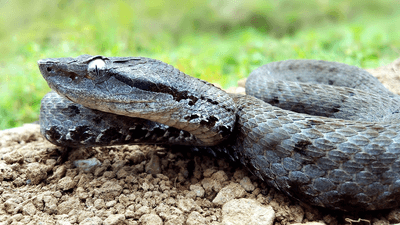


New species are being discovered all the time, from deep-sea freaks to glowing spiders. Sometimes they were hiding in remote areas, while others were right under our noses. In one such case, new research has looked closely at a kind of pit viper and concluded there are five species where previously we thought there was only one.
The Himalayan pit viper (Gloydius himalayanus) was first discovered in 1864 and was thought to be a single species prevalent over much of Pakistan, India, and Nepal. However, looking more closely at the distribution and genetics of these vipers, researchers have made the case they actually belong to five distinct species.
The point at which one species becomes another is somewhat difficult to define, as things get a bit fuzzy when you're talking about very similar populations of animals. For that reason, researchers argue for the existence of new species by presenting evidence that two populations have enough differences in their appearance, genetics, behavior, and other factors to count as distinct from one another.
A research team with members from Pakistan, Slovakia, Germany, and India studied specimens of pit vipers on the ground and in museum collections and published its results last month. This included seven samples collected from surveys between 2015 and 2023 and 11 from museums. Looking closely at the snakes' genetics and subtleties of their appearance indicates that there are five species, the researchers argue, of which three are new to science:
- The Himalayan pit viper (Gloydius himalayanus) - the species that had previously been the catch-all, now argued to exist exclusively in the Indian Himalaya, where it lives under leaf litter with logs, stones, and crevices to hide under. G. himalayanus can also live near human habitation and is prone to swarming.
- The Chamba pit viper (G. chambensis) - another species that was already known about, but to which some specimens previously thought to be G. himalayanus have been reassigned. Endemic to the western Himalaya and Kashmir Valley, where it lives in alpine scrub and pine forests.
- The Hazara pit viper (G. hazarensis) - this new species is likely to be found in the Kashmir Valley but so far has only been seen in Northern Pakistan. Not much is known about its ecology, writes the team, but it prefers a cooler habitat with a monsoon season and winter snowfall. A previous paper, in which the snake was classified as Gloydius himalayanus, reported that it had been seen catching small birds.
- The Hindu Kush pit viper (G. hindukushensis) - this new species is known only from a few places on the border with Afghanistan and the Indus River, most likely confined to the eastern slopes of the Hindu Kush. It lives at high altitudes, write the researchers, and in habits that have cool humid conditions and snow in winter.
- The Nepali pit viper (G. nepalensis) is found in western and west-central Nepal in dry areas of high elevations, usually alpine meadows or shrublands. The diet of this species includes frogs, lizards, and rodents, and it can hibernate for seven months depending on altitude and local conditions.
The team thinks the mountain and the surrounding major mountain river valleys provide barriers between the species, allowing them to diversify into their specific habitat niches. The persistence of the assumption that there was only one species reflects the inaccessibility and political upheaval that has prevented further work from being carried out in these areas.
This isn't the first time snake species have been split; the world's longest snake was split into four distinct species after similar work, including DNA and mitochondrial testing, in 2024.
The paper is published in ZooKeys.


 1
1