


 Nature
 PUBLISHED


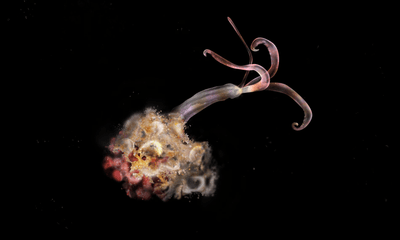


It’s appropriate, at Halloween, to be learning about a creature nicknamed “the bone devourer” – which is honestly somehow less troubling than its proper name: the zombie worm.
But the scariest thing of all? They seem to be vanishing.
“Basically, we’re talking about potential species loss,” said Fabio De Leo, senior staff scientist with Ocean Networks Canada (ONC), adjunct assistant professor with the University of Victoria’s (UVic) Department of Biology, and co-leader of the new research project, in a statement this week.
“This was a remarkable observation in such a long-term experiment.”
So what’s the story? Well, it starts with a big old humpback whale carcass.
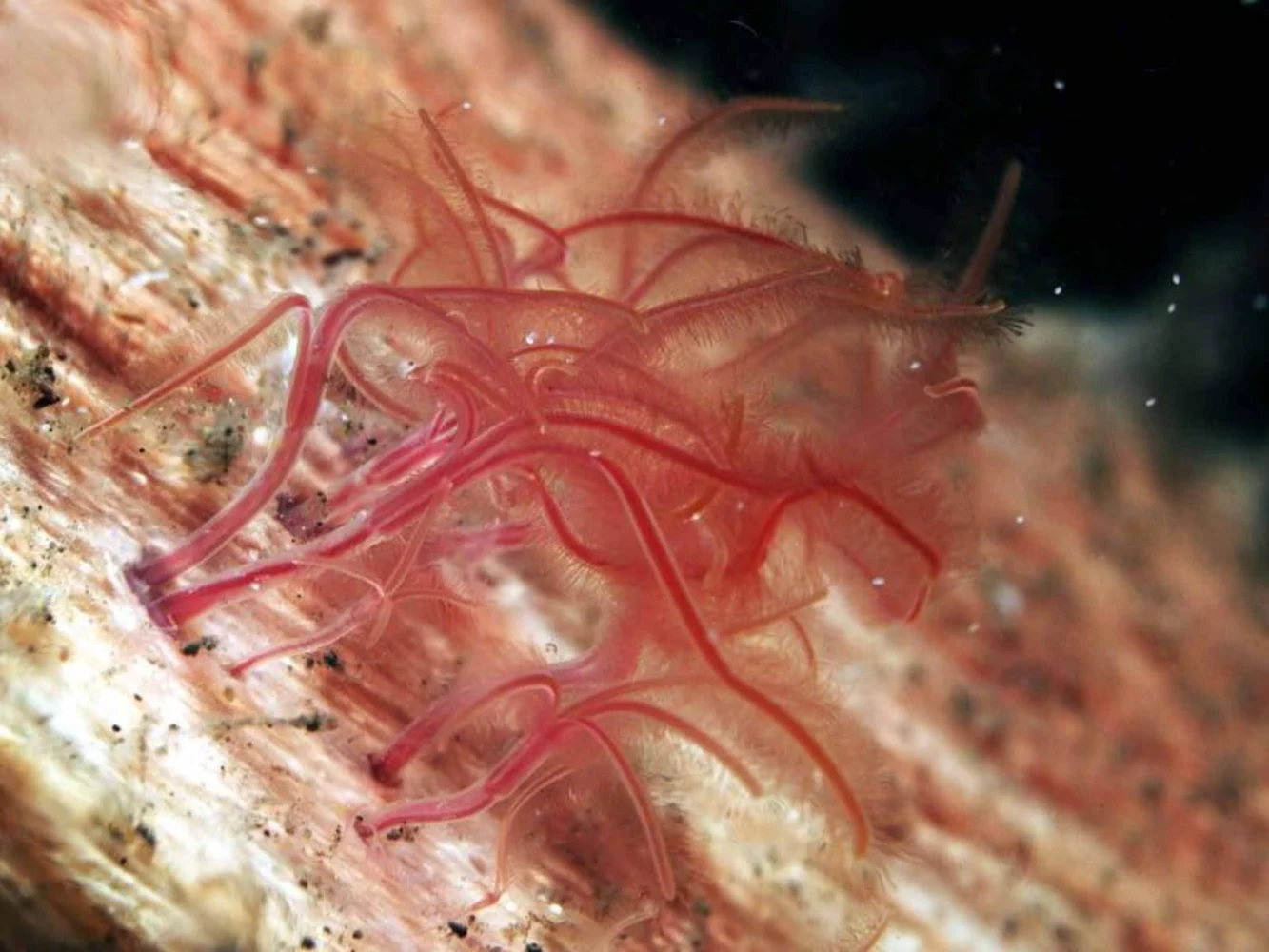
If you’re a zombie worm, life isn’t thrilling. You’ve no eyes; no mouth; no digestive tract and no anus – but what you do have is an insatiable hunger for whale bones. In lieu of chomping, you guzzle down those delicious cetacean nutrients by boring into the bones with your specialized root tissues and oozing acid into the holes. Symbiotic bacteria then digest this bone-acid goop, allowing you to somehow – scientists aren’t actually sure how it’s done – slurp up the fuel and continue your vermicular un-life.
It’s all very gruesome, and, like many of nature’s grossest phenomena, totally vital for the surrounding ecosystem. “By burrowing into the bone, the Osedax [zombie] worms alter the habitat, allowing more organisms representing different species to colonize the whale skeleton,” explained Ashley Marranzino for Oceanbites. “By making holes in the bone, the structural complexity of the bone is increased and these ecosystem engineers enhance the biodiversity of these important deep-sea communities.”
“While scientists still have much to learn about these bizarre zombie worms, it is clear that they are important components of whale fall communities,” Marranzino wrote.
For them to suddenly go missing, then, is bad news. And yet, that’s precisely what De Leo and his team’s experiment seems to show: after leaving the bones of a humpback whale on the floor of Barkley Canyon – a naturally-occurring low-oxygen zone off the coast of British Columbia, frequented by humpback and grey whales due to its place on the animals’ migration routes – the team found no zombie worm colonization at all.
Over an entire decade.
It’s not just bad news for biodiversity in Barkley Canyon. Whale falls are “almost like islands,” De Leo said. The adult worms burrow into the bones and spread their larvae far and wide, sending them to populate carcasses even hundreds of kilometers away. It’s a vast web, in other words – and if nodes start dropping, it could bring down the whole structure.
“This connectivity, these island habitats, will not be connected anymore,” De Leo said, “and then you could start losing a diversity of Osedax species across regional spatial scales.”
So, what could the culprit be? De Leo has one idea: the extremely low oxygen levels in the area. But that’s more of a symptom than the disease – which, in this case, is our old friend climate change.
The expansion of oxygen minimum zones, or OMZs, is, quite simply, “a consequence of ocean warming,” explained Craig Smith, professor emeritus from the University of Hawaii, who co-led the experiment.
“It looks like the OMZ expansion […] will be bad news for these amazing whale-fall and wood-fall ecosystems along the northeast Pacific Margin,” he said.
The study is published in the journal Frontiers in Marine Science.

 1
1