Nature
 PUBLISHED


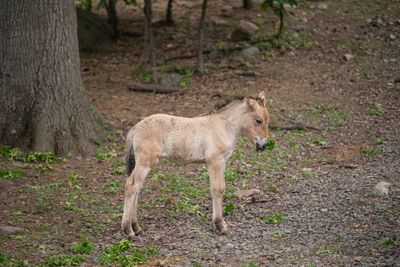


Want to see something super cute and super rare? Luckily for you, the Bronx Zoo in New York has got the goods: an adorable new Przewalski’s horse foal.
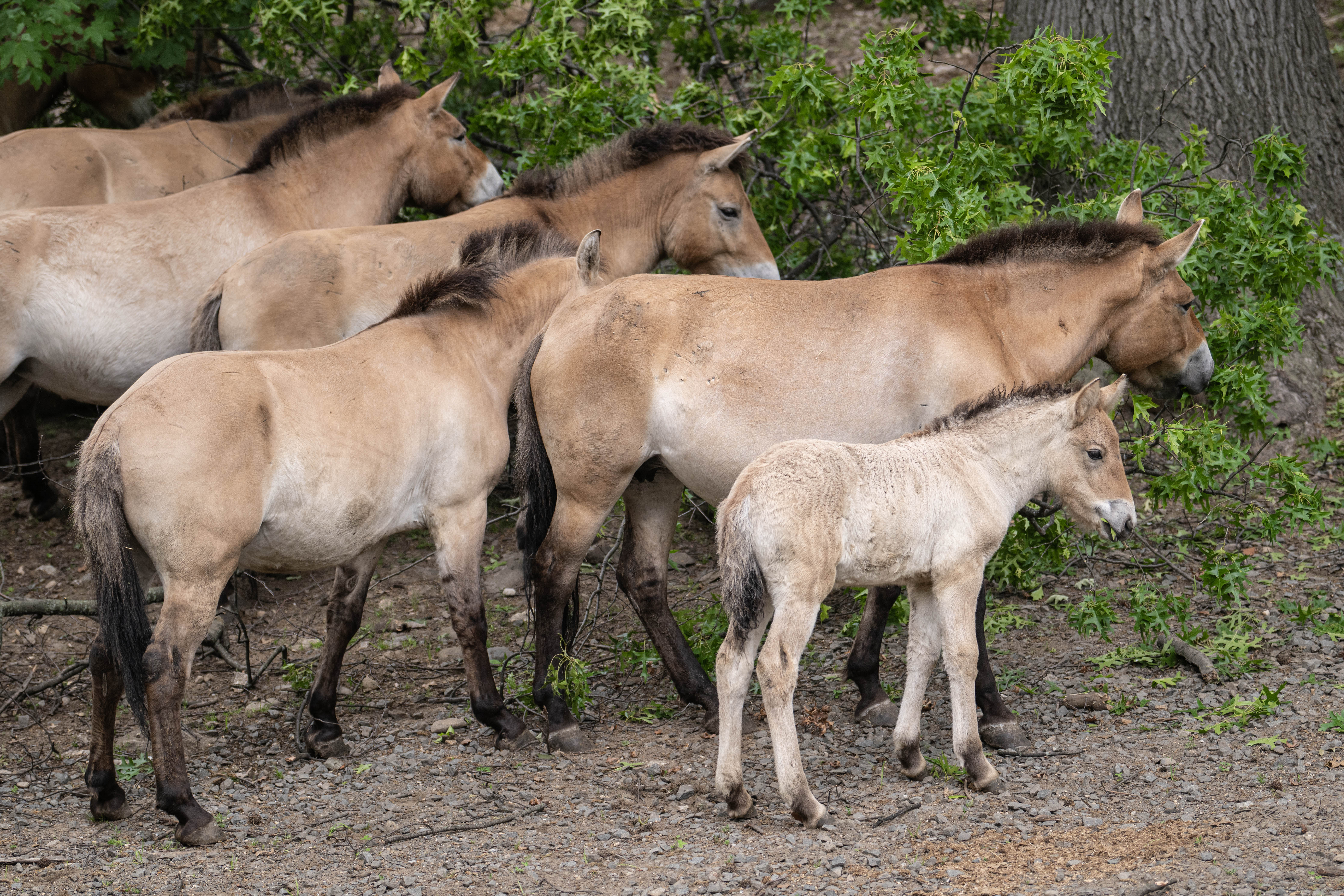
Przewalski’s horses (Equus ferus przewalskii) are a rare species considered to be the last truly wild horses, having never been domesticated. They look different from their domestic counterparts too, with a stockier body, upright manes that give off donkey vibes, and shorter legs – although this latest addition still manages to look endearingly gangly.
Born on April 21, the foal, described by the zoo as a “playful youngster”, can now be seen trotting about with the rest of the herd in the Wild Asia Monorail exhibit. The zoo also called the birth of the foal “a cause for celebration”, and they’re not wrong. It marks a high point in what has been quite the rocky history for Przewalski’s horses.
Having first been mentioned in a written account from Tibet all the way back in the ninth century, the species appears to have once thrived throughout the Russian Steppes and into Kazakhstan, Mongolia, and northern China – at least, that is, until the late 18th century.
After that point, the population rapidly spiraled into decline due to climate change, loss of habitat, competition with livestock for resources, and hunting. By the 1960s, Przewalski’s horses were declared to be extinct in the wild.
If the situation were left unattended, the species may have gone extinct entirely, but it survived in captivity through 12 horses caught from the wild. Since that time, breeding programs like the one that the Bronx Zoo participates in have helped to rebuild the population.
The goal of this breeding was not just to keep the species in existence, but to eventually reintroduce it – and that’s exactly what happened in 1992 when 16 Przewalski’s horses were successfully released into their native Mongolia. They’ve since been reintroduced to China, Kazakhstan, and even the Chornobyl Exclusion Zone, where recent research suggests they’ve had something of a boost.
“We conducted fieldwork in 2020 to 2021, right after massive forest fires in the Chornobyl Exclusion Zone. However, the lush vegetation that emerged after the fire on the forest floor attracted ungulates, including the Przewalski's horse,” lead study author Svitlana Kudrenko told IFLScience, with the horses having been spotted on camera traps over 1,000 times.
But the species isn’t out of the woods just yet; it’s estimated that there are fewer than 2,000 Przewalski’s horses across the world, and the IUCN still considers them to be endangered. Continuing to maintain the horses’ genetic diversity will be key to their survival, keeping them healthy and better able to adapt to any future changes that the environment they’re reintroduced to throws at them.
Keeping an eye on this was made a whole lot easier in 2024, when scientists mapped the entirety of the species’ genome for the first time. Cloning could play an increasingly important role in their conservation too, after the first successful Przewalski’s horse clone was born in 2020.
There’s still a place for more conventional conservation methods though, and as the Bronx Zoo’s new foal shows, the results aren’t just good for biodiversity – they’re oh so cute too.

 1
1