Nature
 PUBLISHED




If you met him on a good day, Robert B. Banner would come across as a pretty stoic guy. Polite; reserved; so unwilling to stand out that even the best trackers rarely notice he’s there; you might even call him repressed – unless you’ve seen him reach his emotional limit. Then, out comes The Hulk: a giant, unstoppable being of rage and destruction, unleashed upon whatever and whoever is unlucky enough to be in the vicinity.
The Hulk is usually considered Marvel’s answer to Dr Jekyll and Mr Hyde – but he could just as easily be reimagined as an anthropomorphism of the Earth itself. Our planet, too, is usually pretty understated: its crust moves slowly, plates ripping apart or butting up against each other at almost imperceptibly slow speeds.
It’s only when the pressure of these ultra-slow collisions builds up past a critical point that we feel their effect first-hand – but when that happens, it can be catastrophic.
Case in point: the 1906 San Francisco earthquake, which killed thousands of people, destroyed more than 80 percent of the city, and shifted parts of California by more than 2.5 meters (8 feet) in a matter of seconds. The culprit: the San Andreas Fault, where the Pacific plate meets the North American plate.
It’s here, underneath the US’s most populous state, that the two tectonic plates have been locked in a grudge match on a geological scale: each fighting against the other as they try to move in opposite directions across the globe. The pressure of this push-and-pull has built up, and up, and up – and eventually, just as it did in 1906, it’s going to explode. The big question is… when?
The surprise importance of Cajon Pass
We’ll break the news quickly: the new study doesn’t give an exact date for the next Big One. What it does do, though, is give an idea of how the Fault is feeling right now – and what it might take for the whole system to blow.
“The model tracks how each earthquake changes stress on neighboring fault segments, how stress accumulates during the quiet intervals between events, and how the deeper layers of the crust slowly relax following large ruptures,” explained Dr Liliane Burkhard, a researcher in the Division of Space Research and Planetary Sciences at the Physics Institute of the University of Bern and lead author of the paper, in a statement. “This […] allows us to understand how stresses in the fault system build up over centuries.”
The team constructed a detailed physics-based model of the California geology, feeding it with data from the past 1,000 years of earthquakes in the region (it’s not as far-fetched as it sounds: you can find evidence of even very ancient earthquakes if you know what to look for).
The team focused particularly on the Cajon Pass, northeast of Los Angeles: the area is “[a] key area of concern,” the team wrote, as it’s a tectonically complex junction “where the two fault systems meet and could potentially rupture together.”
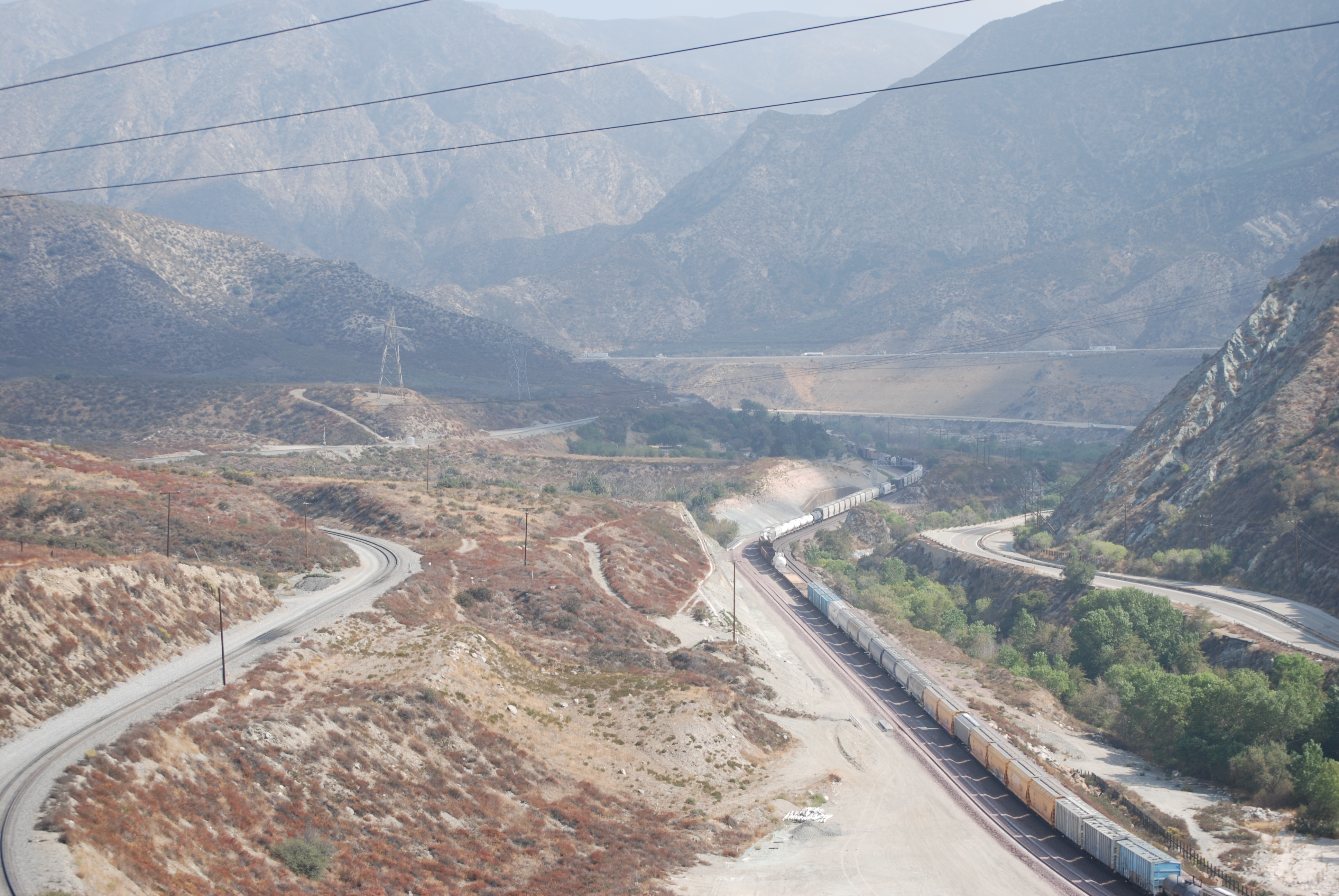
If that sounds bad to you, then you’re right – it’s exactly what happened in the 1812 San Juan Capistrano earthquake, one of the largest in the area after the 1906 quake. But the team found an interesting nuance to the situation: “Cajon Pass doesn’t simply block or channel earthquakes,” explained Burkhard. “It responds to stress conditions, and those conditions change over centuries.”
In other words, Cajon Pass is what’s known as an “earthquake gate” – a junction which controls how massive the earthquakes that pass through it can get. “An earthquake gate is like someone directing traffic at a one-lane construction zone,” explained Dr Nicolas Barth, an Associate Professor of Geology at the University of California, Riverside, who was not involved in the new paper, back in 2021.
“Sometimes you pull up and get a green 'go' sign, other times you have a red 'stop' sign until conditions change.”
Around the tectonically active San Andreas Fault, this results in most earthquakes staying relatively minor – without enough stress in the system to push it through that gate, any seismic activity is kept to the fault line it started on. It’s only once a specific threshold of stress is passed that the gate opens, allowing the quake to propagate through both systems at magnitudes far larger than we’ve been used to over the past century.
All of which leads to the obvious question: how close are we to that point?
Unprecedented stress
Predicting exactly when The Big One will occur is basically impossible – earthquakes don’t have obvious warning signs that we know of, even in the last moments before they begin. That’s why models like this one are so important: they measure the amount of stress in the system, how it’s building up, and when it’s likely to reach its limit and blow.
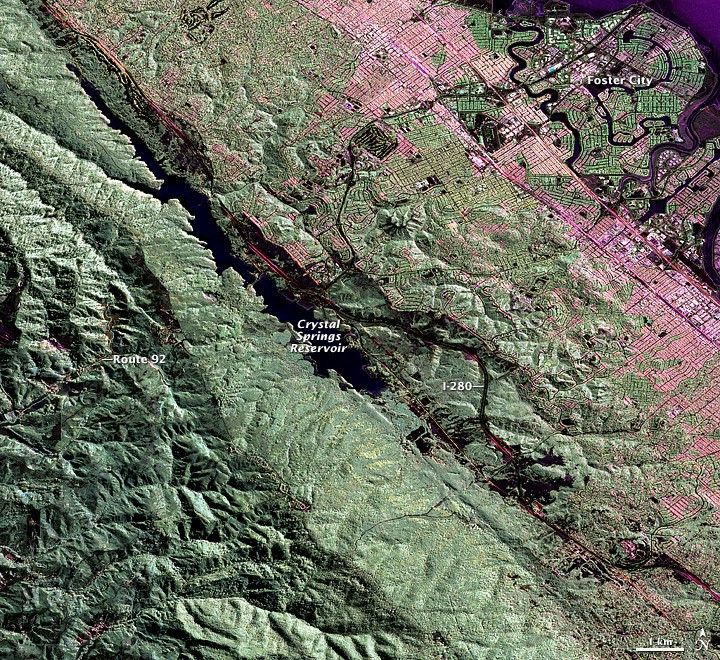
It’s an especially important problem in a place like California, where tens of millions of people live within 50 miles of the San Andreas Fault.
“The question of when and how the next major earthquake will occur in this region is one of the most pressing problems in applied geoscience,” said Burkhard. “Our results provide a clearer, physics-based picture of the current stress state of the fault system.”
So it’s probably not great news that the new model found levels of tectonic stress at Cajon Pass higher than any seen over the past millennium.
That’s the case for multiple parts of the fault line – but worse than that, it’s true to very similar extents over many of them. The San Jacinto-Bernardino section, for example, is currently under about 3.6 MPa (522 psi) of stress, while the neighboring Mojave South section is at 2.8 MPa (406 psi) – a combination that has made a joint rupture possible since as early as 1930, according to the model.
“Not only is it concerning that the stresses are reaching historic highs,” Burkhard pointed out, “but also that the relative stress conditions between the two fault systems are approaching the range we associate with major ruptures crossing both faults simultaneously – and that is a scenario with much larger consequences for the region.”
Planning for the future
Overall, it’s probably not the result the people of California were hoping for. “The study is not a prediction of when an earthquake will occur,” Burkhard said, but “[w]hat we can say is that the system is critically stressed.”
But that just makes studies like this all the more critical. “Physics-based models like ours give a clearer picture of the range of scenarios we should be prepared for,” pointed out Burkhard. “This information is important for hazard assessment, infrastructure planning and emergency preparedness.”
“The framework we developed is not just applicable to California,” she added, “but also for other complex fault junctions worldwide.”
The study is published in the Journal of Geophysical Research: Solid Earth.