Nature
 PUBLISHED




It’s often said that we know more about the surface of the Moon or Mars than we do our own oceans, and at first that seems unbelievable. After all, we live here – all we have to do is look around, and there it is: big, blue, plastic-filled, and increasingly hot and acidic.
But then you hear about things like blue holes, and you realize just how bananas everything about the ocean really is. And occasionally, we mean that almost literally.
Mysterious, elusive and hard to study
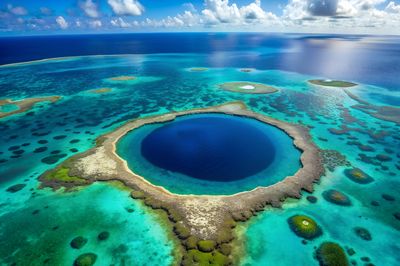
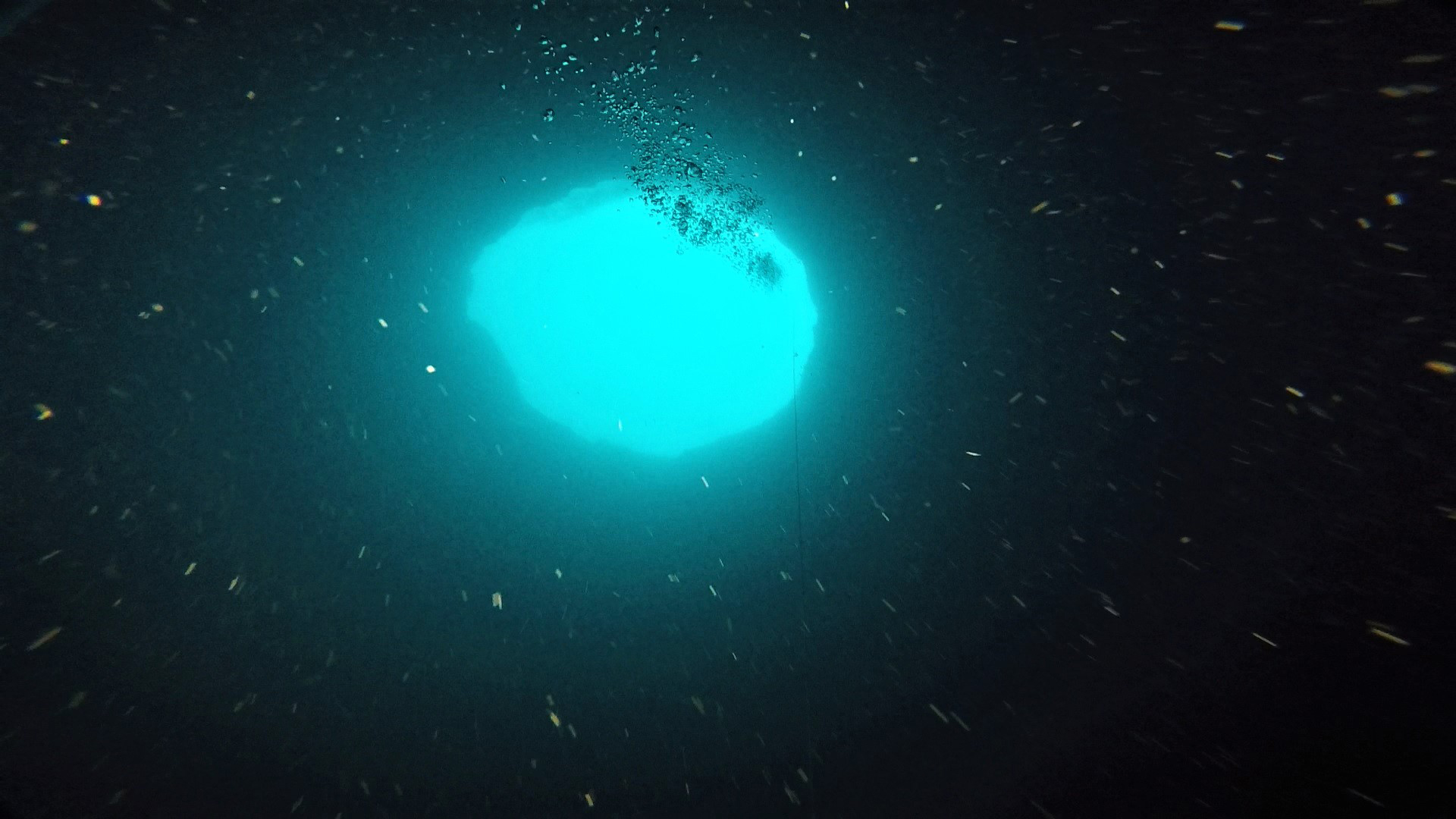
To a certain extent, it’s trivial to describe a blue hole: it’s like a sinkhole, but in the ocean. Past that, however, things get mysterious fast.
“Despite their potential importance to the overall ocean ecosystem, little is known about blue holes,” explains the National Oceanic and Atmospheric Administration (NOAA). That’s partly an accessibility issue – while the holes themselves may be enormous, their entrances are often narrow and hard to find – but it’s also because, frankly, we just don’t know how many are out there, or where.
Aside from a few big-name headline acts – the Great Blue Hole in the Caribbean, Green Banana in Florida; Dragon Hole in China; Taam Ja’ in Mexico, and a handful of others – most blue holes are almost if not entirely invisible from above the water. “The opening of a blue hole can be several hundred feet underwater,” NOAA points out, “and for many holes, the opening is too small for an automated submersible.”
“In fact, the first reports of blue holes did not come from scientists or researchers,” it adds, “but actually came from fishermen and recreational divers.”
In other words, most everything we know about blue holes so far, we kind of lucked into. “You’re in the middle of the Gulf of Mexico and you don’t see anything all around,” Emily Hall, a scientist at Mote Marine Laboratory who led a mission into the Green Banana blue hole in 2020, told the New York Times at the time. It’s not until you’ve been diving for a long time, she explained, that “this hole opens up, and it’s booming with life.”
Life inside a blue hole
Even in places where the water is virtually empty, blue holes stay lush. That’s part of what makes blue holes so intriguing, in fact: they are, Hall said, “oases” in the ocean.
Again, we’re not entirely sure why, but there seems to be something about blue holes that encourages biodiversity, even when the water around them is virtually empty. “If you're swimming further away from the holes [around Florida], it's pretty barren – there's not a whole lot out there on the bottom of the Gulf,” Hall told the BBC in 2020. “But when you get closer you see soft corals and sea grasses, and then when you get to the hole it just explodes with life, it's really amazing.”
It's obvious why divers love blue holes. The water is clear; the wildlife abundant; you can see incredible geological formations hidden from the world at large and, in the end, you’re basically guaranteed to be left wanting more. “We saw maybe 10 sea turtles over the week, large groups of moon jellyfish and schools of barracuda, dolphins, ‘waterfalls’ of fish,” recalled Kristin Paterakis, a professional diver and underwater photographer who went to the bottom of Florida’s Green Banana blue hole back in 2020.
“On the surface we even were visited by an albatross,” she said, “[although] none of us was confident to say they thought it was an albatross until we got back into cell service and were able to confirm it through a quick Google search!”
But there’s a catch. All that life and diversity can only reach so far – and past a certain depth, it all disappears. “You go down to the edge and it's like a reef, where you have many fish,” Jim Culter, an expert diver studying bottom-dwelling marine life for Marine Laboratory Mote, told the BBC. But “as you go down further the diversity of animals and plants decline, and then everything starts to get darker and colder […] it's so different.”
What’s been found at the bottom of a blue hole?
For the vast majority of blue holes, we simply don’t know what’s at the bottom. That’s partly because most blue holes are as yet undiscovered – but it’s also because, as brave or foolhardy as some divers may be, there are some places that are simply too far to go without specialist equipment. “One of the most significant dangers of diving here is the sheer depth,” noted Explore magazine of the Great Blue Hole of Belize – a mid-range blue hole in terms of depth, stretching around 125 meters under the waves.
“For obvious reasons, you can't dive all the way to the bottom, as 400 feet is way beyond human limits,” they warn. “Recreational divers are generally advised to stay within 130 feet [40 meters] at most to minimize the risks of what can happen when going deeper.”
Venture too far down, and you may fall foul of something called nitrogen narcosis – also known as “raptures of the deep” or “the martini effect” because of the specific way it affects you. Exactly how it works is yet one more mystery associated with blue holes, but the basics are this: that as you go further down in the water, the increase in pressure makes the nitrogen in your blood turn your head a little. It’s sort of like being drunk, or high on nitrous oxide – except, of course, that you’re hundreds of feet underwater, with a limited supply of oxygen.
It's not surprising, then – though it certainly is grim – that one of the first things discovered at the very bottom of a blue hole was bodies.
“Mostly it was quiet and dark down there,” Erika Bergman, National Geographic Explorer and submarine pilot, told Newsweek in 2018 after an expedition to the bottom of the Great Blue Hole. “We also encountered the resting place for two of the divers who’ve been lost in the hole.”
“We notified the local authorities, and everyone agreed to leave them undisturbed,” she said. “They are at peace.”
More bloodthirsty by far is the Red Sea Blue Hole, whose jaunty name belies a death toll of at least 40 divers and potentially as many as 200. Sitting off the Egyptian coast, it’s both an extremely popular tourist destination and the deadliest diving spot on Earth.
The deep(er) unknown
Carry on down in the hole, and you eventually reach a place with little to no oxygen at all – at that point, all you can find is microbes, nematodes, and garbage. And of course, humans aren’t the only species to fall victim to the depths: littered among the detritus, providing tasty snacks for the organisms that can eke out a living without abundant oxygen, there are carcasses.
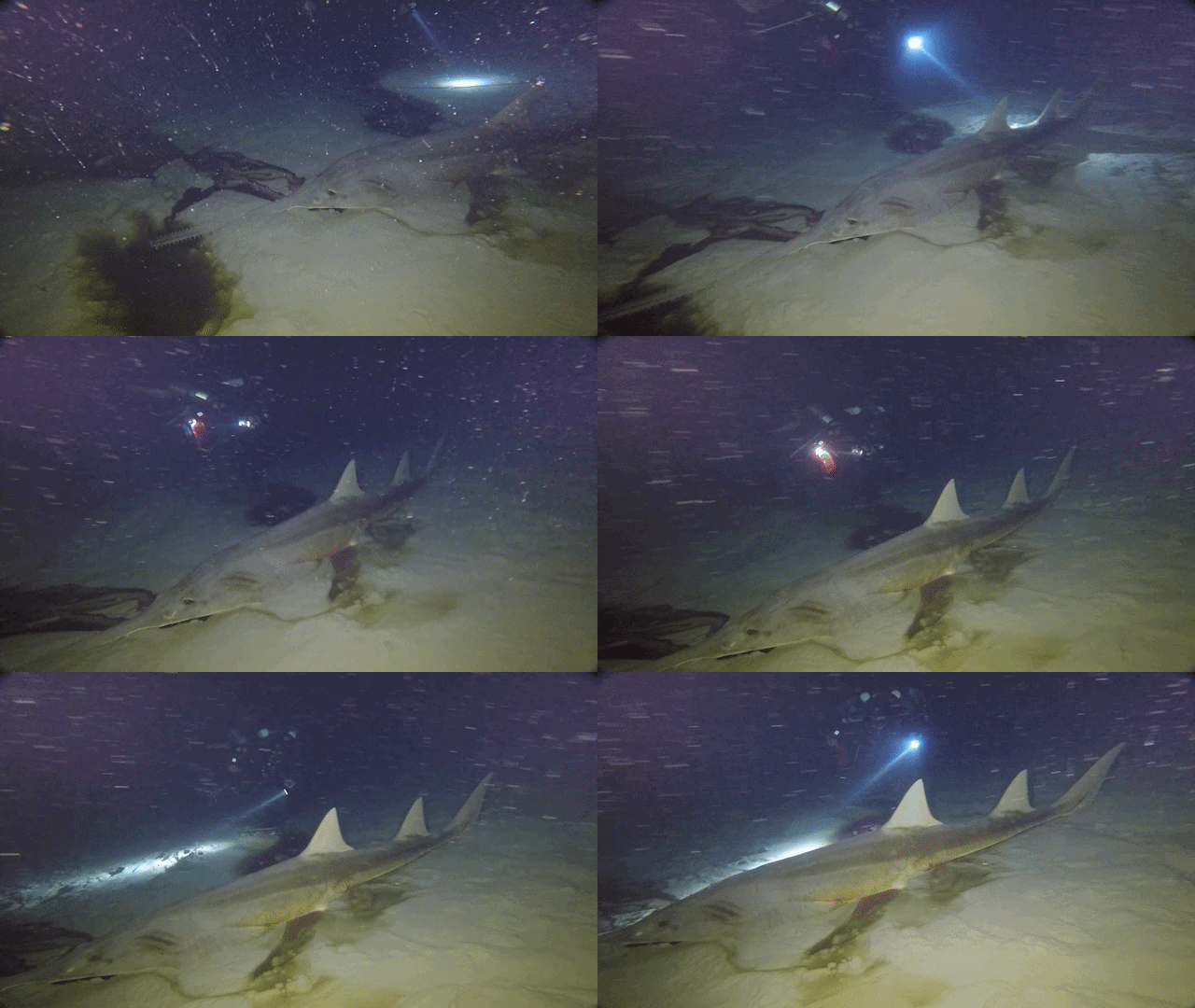
“Divers found two dead sawfish at the bottom of Amberjack Hole,” recalled Nastassia Patin, a postdoctoral associate in microbial ecology and bioinformatics at the University of Miami and NOAA who has ventured to the bottom of both Amberjack and Green Banana, both in the Gulf of Mexico off Florida. “They had no apparent injuries, and likely swam into the hole together and succumbed to anoxia.”
Similarly, the Great Blue Hole has its own “conch graveyard”. “Presumably, unsuspecting conchs (or other conch shell inhabitants) have been going just a little too close to the edge and falling into the hole at this entrance by the thousands,” Bergman wrote in a 2019 post for Southern Fried Science. “We can see each conch with little tracks back up the hill trying to escape, then a slide mark where it slid back down after presumably being asphyxiated in the anoxic environment.”
But as barren as it may seem to the untrained eye, in truth it’s teeming with possibilities. “In Amberjack we discovered an extremely interesting microbial community dominated by a poorly understood Archaeal species at the bottom of the hole,” Patin said. “This microbe has very few genes that would be expected from a low-oxygen and high-sulfide adapted organism, and yet it makes up 60 percent of the community.”
“It opened a scientific question that we hope to answer down the line with additional sampling and experiments.”
A hole lot of questions
What lurks at the bottom is just one among many riddles posed by the oceans’ blue holes – but with each mission into their depths, we get a little closer to understanding the answers. In these deep holes lie clues not only to life at the extremes, but also our planet’s geology; the climate of the deep past; perhaps even the future of the oceans and atmosphere.
It’s all there. We just have to find it.
“These expeditions open up a wide new area of research for microbial ecology, biogeochemistry, maybe even paleoclimate research,” said Patin. “We have only scratched the surface of blue hole life and look forward to learning much more about these systems in the next few years!”