Nature
 PUBLISHED




What you'll discover in this article
- In 150 years of prospecting, nobody had ever found a fossil feather in Hell Creek formation in the Western United States.
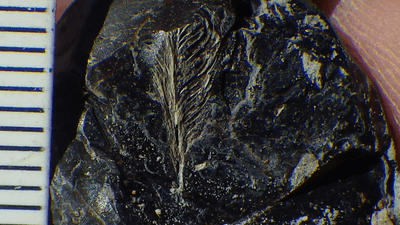
- A remarkably well preserved feather was found inside a rock that scans later revealed to be fossilized dinosaur poop.
- According to study author Dr Jingmai O'Connor, it demonstrates that coprolites are an exciting new avenue to explore when searching for fossilized feathers in regions they're rarely found in.
Dinosaurs didn’t get to be choosy when it came to what parts of an animal they wanted to eat. It meant some of the harder to digest stuff survived the passage through their digestive systems and can be found, near-perfect, tucked inside fossilized poops.
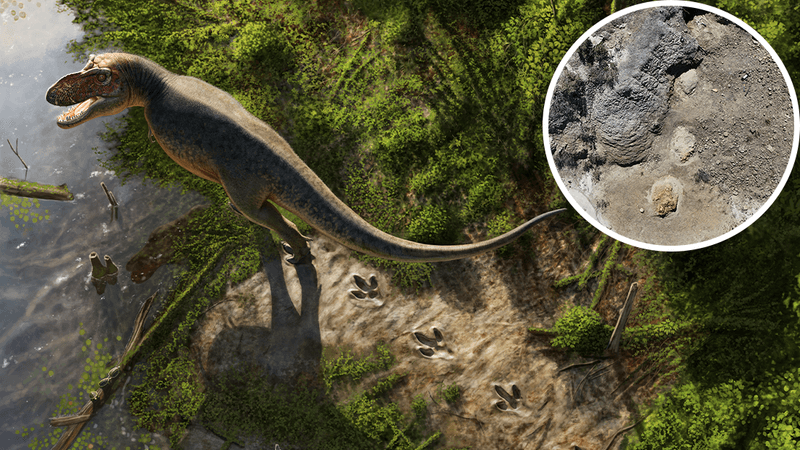
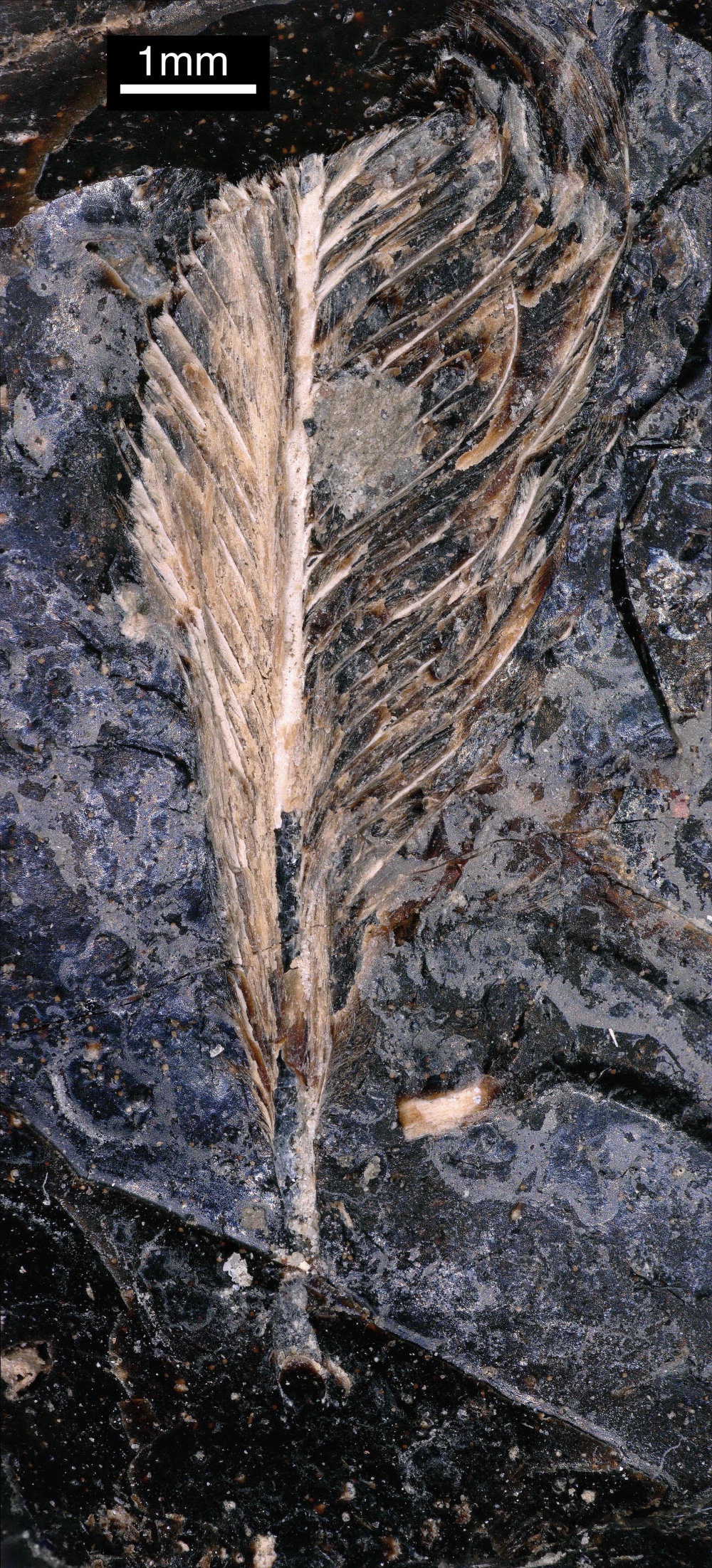
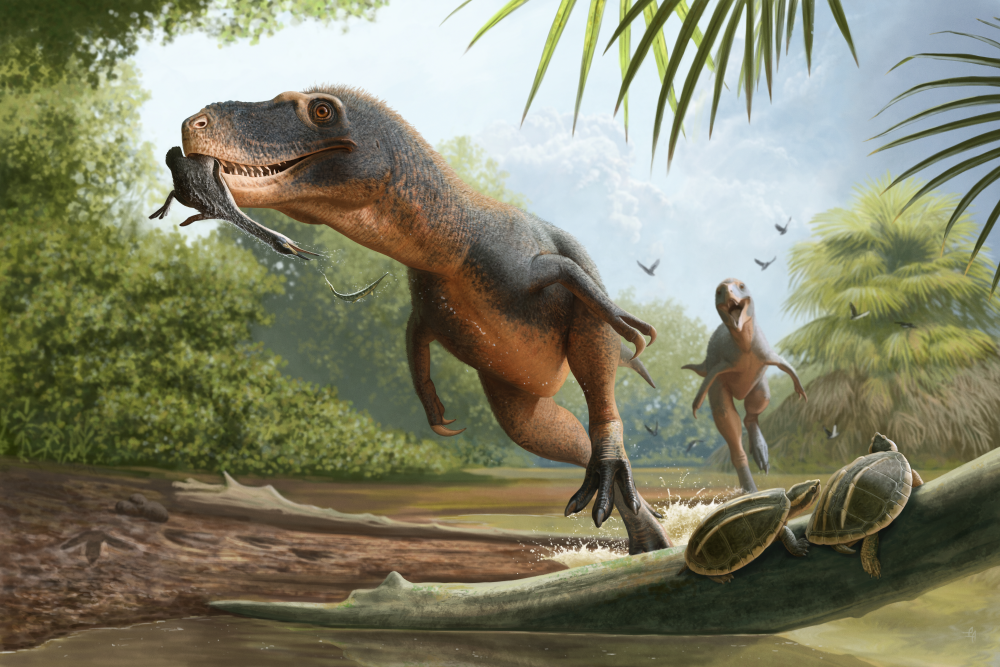
This was the fate of a tiny feather that got chomped up by a dinosaur like T. rex or Nanotyrannus around 66 million years ago. That feather has now become one of the most perfectly preserved ever discovered from the Age of Dinosaurs, and from a most unexpected source.
What’s more, the feather could offer answers to one of the biggest mysteries surrounding the end of the age of dinosaurs: Why didn’t they all die?
As we know, birds are dinosaurs, which makes their success on Earth to this day something of a puzzle. After all, if all the other dinosaurs perished, why did birds survive?
There were other birds alive during the Age of Dinosaurs that did go extinct, but one group – the Neornithes – survived. Every bird you meet today is a living descendent of Neornithes.
Trying to find out what enabled them to hang on during one of the most miserable eras of life on Earth means finding fossils. Any fossils.
We’ve found all sorts of things inside dinosaur droppings (known as coprolites), from bone fragments to teeth and fish scales. Still, it was quite the surprise when research scientist David DeMar, Jr. found a feather in Hell Creek in 2016 because, despite more than 150 years of prospecting here, nobody had ever found one.
Many modern mammalian carnivores poop out small feathers.
Dr Jingmai O’Connor
The feather’s preservation was better than that of feathers found locked in Burmese amber, and yet it seemed to just be an unremarkable lump of rock. It wasn’t until the fossil was put into a micro-CT scanner at the University of Southern California’s medical campus that it became clear what it really was.
“Every hour processing the data revealed another feather, another scale, another bone – in stunning 3D,” Nate Carroll, a co-author of the paper and palaeontologist at the Carter County Museum in Ekalaka, Montana, in a release.
“As someone who had been relying on far-flung amber mines as my main source of 3D feather data, realizing that fossil poop from my home state could yield such exceptional specimens was a game changer.”
An impressive journey for a small feather, but one study author Dr Jingmai O’Connor of the Field Museum in Chicago says isn’t all that surprising.
“Feathers are pretty tough,” she told IFLScience. “Many modern mammalian carnivores poop out small feathers (bird dinosaurs egest them though, more efficient!).”
The coprolite also contained the bones of a bird belonging to the Hesperornithes (a group of aquatic birds similar to loons), suggesting the feathers belonged to this animal. It marks the first time the feathers of this kind of bird have been found, and could reveal fresh clues as to why certain birds survived the end-Cretaceous mass extinction event.
It’s been suggested that Neornithes survived because they lived near water, but so did Hesperornithes and yet they went extinct along with the Enantiornithes. Getting a chance to look at their feathers for the first time could, therefore, provide clues as to differences between Neornithes and Hesperornithes that could explain why one survived while the other died.
The bird appears to have had a combination of modern-looking waterproof feathers along with more primitive feathers typically associated with dinosaurs and enantiornithines. So, it’s possible this combination wasn’t as efficient as the plumulaceous feathers seen in Neornithes.
Further research is needed to be sure, which means finding more fossils. Fortunately, we’ve got a whole new place to search for them.
“This is a potential window for studying soft tissues in geologic units that don't typically preserve such structures (like the Hell Creek),” said O’Connor to IFLScience.
“We'll do a follow up paper talking about the chemistry of the fossilization process and with hints as to what coprolites should be targeted for scanning. I hope it will become an exciting new area of research!”
The study is published in the journal Current Biology.