Nature
 PUBLISHED




What you'll discover in this article
- Ancient squid-like creatures known as belemnites once zoomed around our oceans.
- They were mostly slender and long, leaving behind bullet-like fossils.
- The discovery of a new genus and species from the Jurassic has changed that, representing the "chunkiest" or "fattest" belemnite ever found.
- Its stubby, "girthy" body may have been adapted to hunting at depth, co-author Jessica Lippincott told IFLScience.
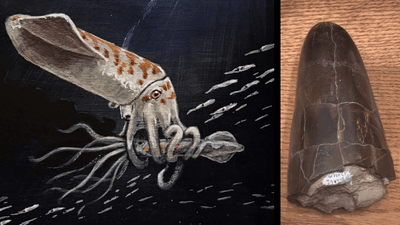
Go digging in landscapes that were once home to ancient oceans and you may find what appear to be giant bullets embedded in the rock. These belemnites are known to fossil hunters as “squid butts”, representing the fossilized remains of a squid-like creature that went extinct around 66 million years ago.
Belemnite fossils aren’t especially rare, but occasionally new discoveries come along that completely alter what we thought we knew about well-studied species. Most recently, that includes the “chunkiest” belemnite on record.
That’s according to a group of researchers who have been studying fossils retrieved in Wyoming. The Sundance Sea Formation is home to millions of belemnites, ranging in size from as small as a few millimeters (we’ve even found them in anthills) to an average size closer to ~7 centimeters (2.8 inches).
Hold my beer, said Wyoteuthis linsterorum.
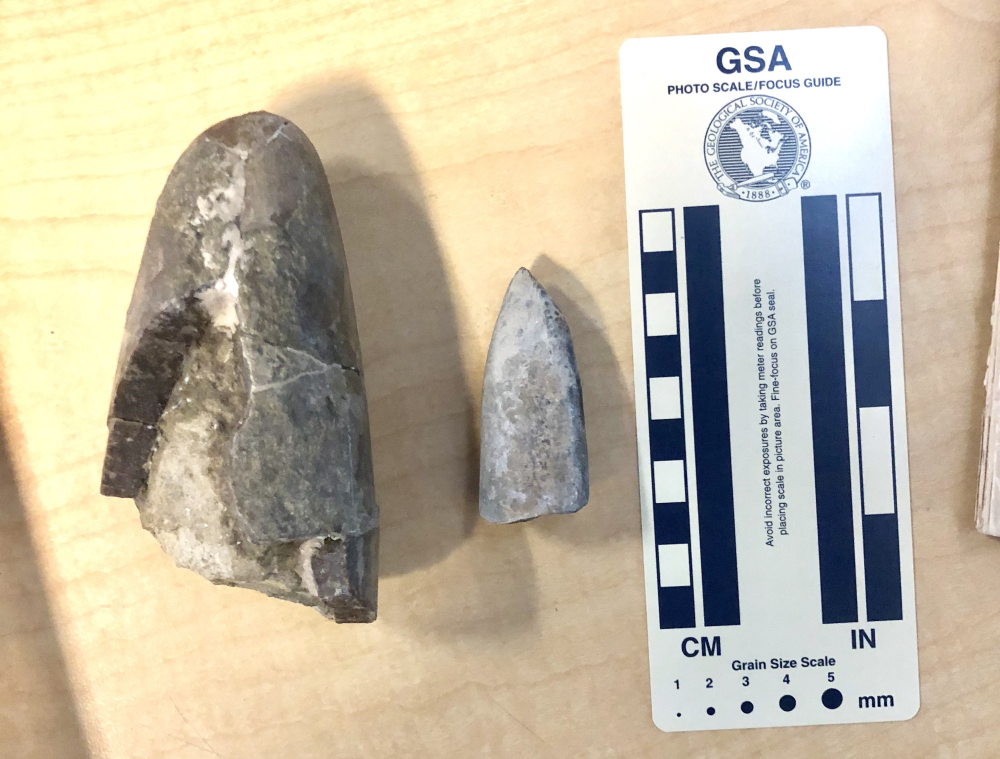
Its barrel-shaped rostrum is around 10 centimeters (3.9 inches) long and 6 centimeters (2.4 inches) across at its widest, making it the thickest belemnite rostra ever found. Named in honor of Cliff Linster, who found and donated the holotype fossils, it’s a new genus and species dating back 160 million years.
The size of Wyoteuthis with the soft parts is only 60 cm long, so it isn't necessarily long in length, but it is essentially short and stocky, or girthy.
Jessica Lippincott
And by all accounts, it’s a bit of a weirdo as belemnites go.
“After spending years fossil hunting in Wyoming and collecting countless fossils of the common Pachyteuthis belemnites here in Wyoming, this one is unlike anything I have ever seen!” said co-author and Wyoming palaeontologist, Jessica Lippincott, in a statement sent to IFLScience.
“It goes to show that we are still finding new species of fossils all the time.”
As Lippincott told IFLScience, only two specimens of the new species have so far been found, suggesting they are rare. Exactly why they were found mixed in among the common Pachyteuthis specimens isn’t clear, but it could be that they were feeding on fish or other belemnites.
And with great appetite comes a healthy waist circumference.
Paleontologists have really only cracked the surface of finding life from millions of years ago.
Jessica Lippincott
“The size of Wyoteuthis with the soft parts (arms, fins, etc.), is only 60 cm long, so it isn't necessarily long in length, but it is essentially short and stocky, or girthy,” Lippincott told IFLScience.
“The shorter, ‘fat’ size of this belemnite may have contributed to buoyancy, or its place in the water column.”
Lippincott says it’s also possible that this girthier body plan made it possible for these belemnites to hunt faster prey in the depths, but even chunky predators could become prey in the Jurassic ocean. The Sundance Sea formation is home to fossils of Megalneusaurus rex, a very large and intimidating pliosaurid.
A short and fat food source, Wyoteuthis could well have been targeted by these large marine reptiles, but we won’t know until we find more fossils.
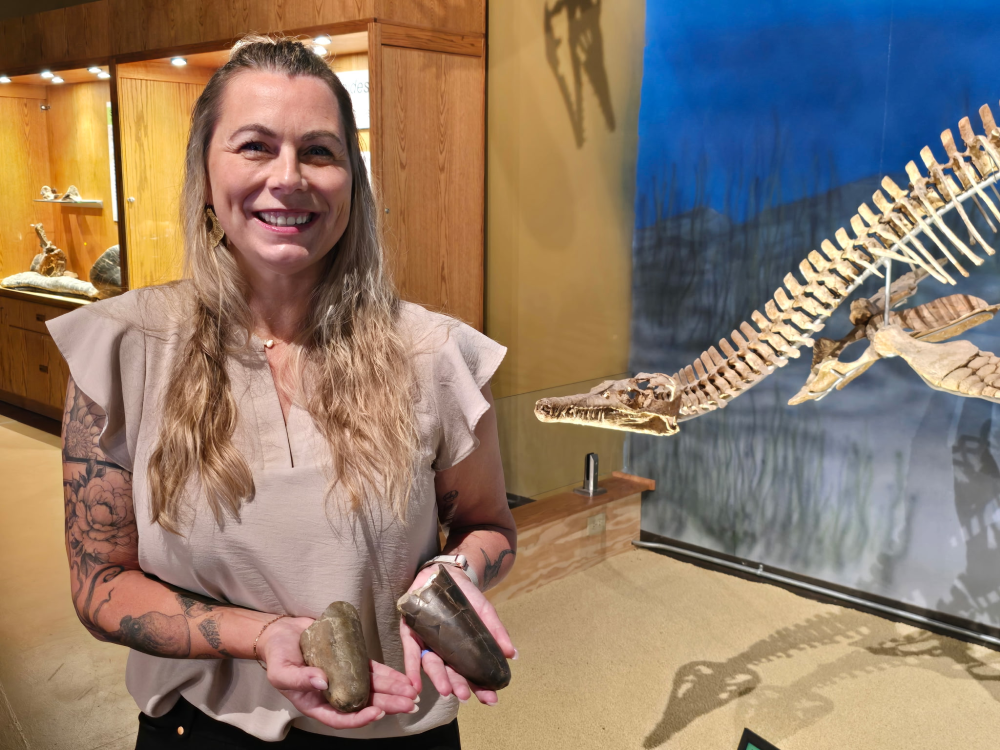
It’s been said that we live in a “golden age” for palaeontology whereby new species are being described all the time, but still, examples such as this are unusual. To find a new species that differs so radically from a well-studied creature remains rare, and should be an encouraging sign to any budding fossil enthusiasts that there’s plenty more to come.
“Paleontologists have really only cracked the surface of finding life from millions of years ago,” said Lippincott.
“There are over 20,000 species of reptiles and birds alive today. Of the 700 or more species of dinosaur that have been identified, we have to assume there has to be way more out there to discover, and some of these finds will be interesting, to say the least.”
The study is published in the journal Papers In Palaeontology.