Nature
 PUBLISHED
 1
1


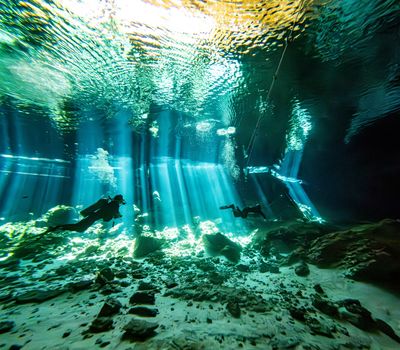


Our species has been roaming the Earth for 300,000 years or so, and yet we know less about this planet than we do about the Moon or even Mars. And the reason for that is big, blue, and full of garbage: “Sixty-six percent of the entire planet is deep ocean,” points out a study from May 2025, and of that “we have visually observed less than 0.001 percent, a total area approximately a tenth of the size of Belgium.”
The result of that is a world of constant surprises. Volcanoes that defy our land-biased expectations; entire tectonic plates lost to the ages; waterfalls that flow upwards, and weird wave phenomena that landlubbers doubted the existence of for centuries; some of the weirdest animal life it’s possible to even imagine, and, every so often, a unique piece of art.
And, in the waters off the Yucatán Peninsula in southeastern Mexico, a vast web of submarine caves that, combined, make up the second-longest known cave system in the world.
Caves of wonder
Today, Quintana Roo, in Mexico’s Yucatán Peninsula, is a hotspot for tourism. It’s not hard to see why: with its beautiful white beaches and sparkling blue seas, it could be called paradisal if not for the intense and destructive hurricanes that hit it on a semi-frequent basis.
But that reputation is younger than you might think. It wasn’t until the 1970s that the area was seen by outsiders as a potential destination, thanks in a large part to an initiative by the Mexican Tourism Council to develop the previously barely touched region into a bustling international resort area. They promised the world Sun, sea, and sand, with a bonus helping of Maya ruins – but pretty quickly, visitors found something equally incredible.
“In the past twenty years, another world, equally spectacular, lying beneath the jungle floor, has begun to come to light,” wrote cave explorer and diving instructor Christophe Le Maillot all the way back in 2003.
“Today, Quintana Roo has [many] explored and surveyed underwater cave systems,” Le Maillot explained. “Most of these are concentrated in a tight perimeter around localities such as Tulum, Akumal and Puerto Aventuras. In fact, four of the largest, Ox Bel Ha, Nohoch Nah Chich, Dos Ojos and Najanral, lie within a 30-mile radius.”
On the face of it, these cave systems are all quite similar. They were born out of the same processes: carved out of the underlying limestone by eons of acidic rainwater eating away at the embedded calcium carbonate, then flooded over by rising oceans at the end of the Last Glacial Maximum. But on closer inspection, each is unique, Le Maillot wrote: “these cave systems, despite their similarities, are worlds of their own, marked by distinctive geologic formations and hydrologic particularities.”
Accessible only by cenotes – natural pits or sinkholes of often stunning beauty, that the ancient Maya considered sacred – these underground and underwater cave systems are often difficult to get to, and harder still to explore. But when divers persevere, treasures may await: in one system alone, archaeologists found almost 200 sites where ancient relics could be found.
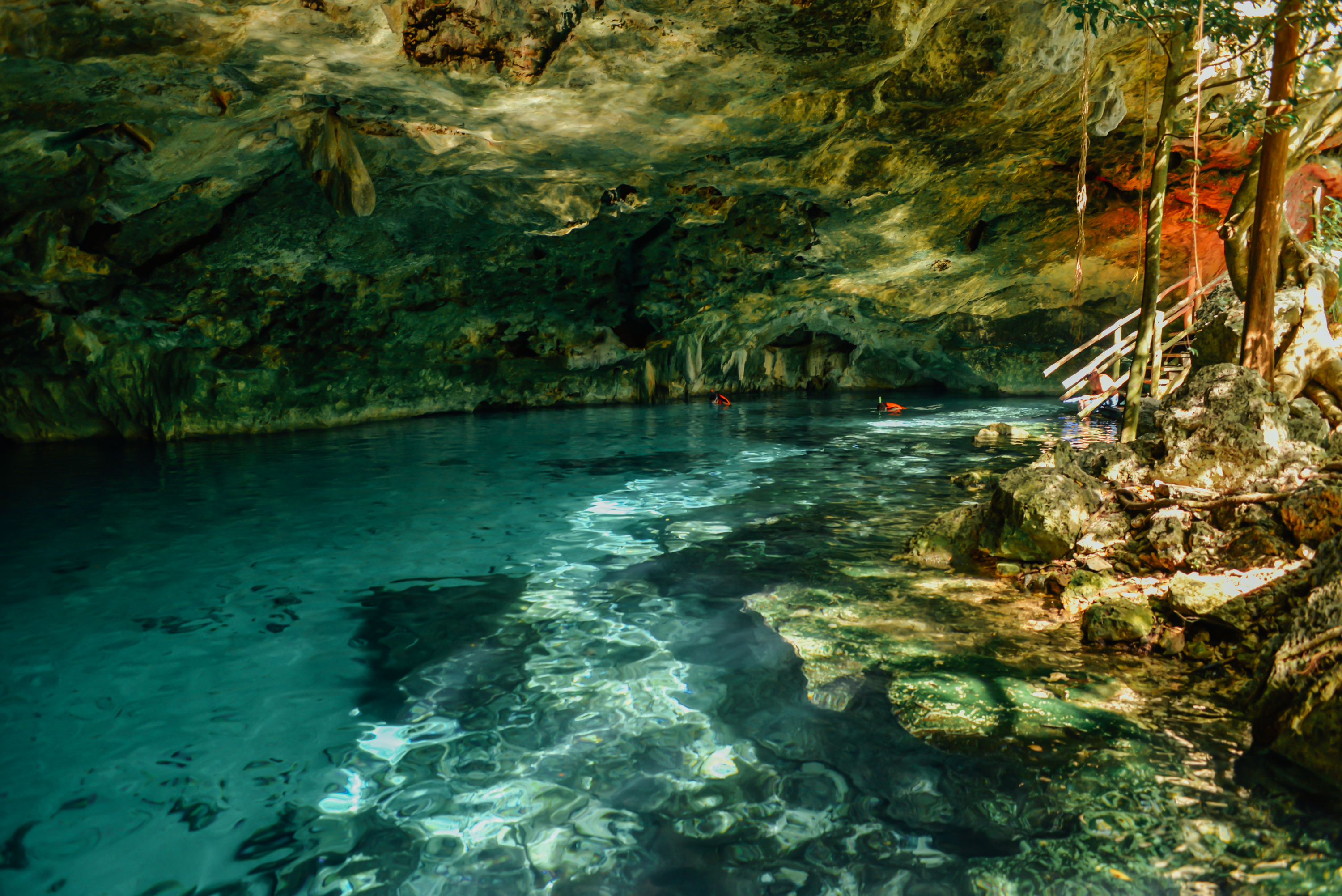
“It is a system incredibly rich in context, depth, and beauty,” underwater archaeologist Guillermo de Anda from Mexico's National Institute of Anthropology and History said at the time. “Without a doubt, it represents one of the last frontiers of exploration in the world, after the oceans […] it [is] the most important underwater archaeological site in the world.”
The endless discovery of Sistema Ox Bel Ha
There are more than 400 known caves and cave systems winding their way underneath Quintana Roo – and out of that vast number, Ox Bel Ha was initially thought to be one of the less interesting options.
“From where it is most easily accessible, a side road, the cave is marked by a group of small, complex and unattractive tunnels,” Le Maillot explained. “This alone was enough to turn away the less determined cave diver, especially since there were a number of highly decorated cave systems under active exploration at the time.”
So it was two years after the cave’s initial discovery that anybody bothered to seriously explore Ox Bel Ha – but when they did, a huge underwater world was revealed. First, it seemed like the cave system stretched dozens of kilometers; then, hundreds. Eventually, it would be discovered that Ox Bel Ha is the longest underwater cave system in the world, easily beating out the second-place titleholder that was the nearby Sistema Sac Actun.
That was, until 2018, when cavers discovered a link between Sac Actun and another cave system, the 84-kilometer Dos Ojos. That put the total length of the combined system at 346 kilometers, and, for a while, Ox Bel Ha was overtaken.
But it didn’t last long: “Although it has been actively explored since 1998 by different groups of divers, [Ox Bel Ha] is steadily growing,” wrote veteran cavers Emőke Wagner, László Cseh and Bjarne Knudsen back in 2021. “New areas are discovered every year, and the exploration process seems unlikely to end anytime soon.”
Longest in the world – again
By the time the trio were exploring the cave system five years ago, Ox Bel Ha was known to be at least 270 kilometers long – but the more they looked, the more they found. “We can’t count on our fingers the number of times we thought the exploration was over, decided to do one more dive, and pushed through a nasty and tight restriction to find a few more kilometers of cave,” they wrote.
Then, in 2023, a breakthrough – literally. After exploring every nook and cranny of the cave system, pushing as far into each tunnel as they could, eventually “we popped into a massive freshwater room with dark decorations and gray-colored sediment hills,” the team recalled. “To our surprise it looked like we were the first ones there.”
With the new additional area, Ox Bel Ha’s total length now stands at a little over 524 kilometers – quite a bit longer than the entire Grand Canyon. It’s firmly back in first place as the longest known underwater cave on Earth – and we probably still have yet to discover.
“A giant cave system like Ox Bel Ha often has a limited number of access points, and many corners of the cave can stay hidden even from trained eyes due to its complex tunnel characteristics,” wrote Wagner, Knudsen, and Cseh.
“The cave has been actively explored by cave divers for more than 25 years, but new discoveries are still made quite frequently, even today.”