Nature
 PUBLISHED
 1
1


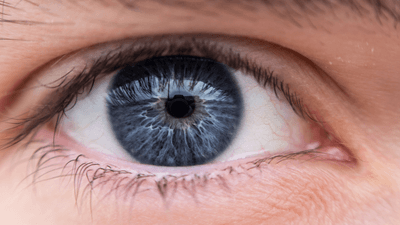


If you pick up a mirror and look at the inner corners of your eyes, you’ll notice some pink stuff. The bigger bit right at the edge is the lacrimal caruncle, a structure that protects the glands that are crucial for keeping our eyes nice and moist. Just next to it is a thin strip called the plica semilunaris, and it may surprise you to learn that it’s a third eyelid.
Or, perhaps we should say, it’s the evolutionary leftovers of the "third eyelid". Now useless, it falls under the category of vestigial structures: things that can be found in an organism that no longer serve their original purpose. We recently discovered vestigial teeth in the world’s rarest whale (and we’ve known for a while that their leftover pelvic bones are sexier than first thought), and there are vestigial structures to be found throughout the animal kingdom.
That includes us.
Today, we’re looking at a strange strip of pink in our eyes, but we’re going to be exploring a few hidden gems across the human body over the coming weeks. The nictitating membrane, or third eyelid, can be found in many animal groups still alive today. Perhaps the easiest to observe it in are domestic cats, and if your cat is as prone to falling asleep with their eyes open as mine is, you’ve likely already spotted the strange film of tissue that comes sweeping across horizontally.
This third eyelid is very prominent in birds, and it effectively acts like a windshield wiper to sweep away any dirt that gets in their eyes. It also helps them to keep their eyes moist, which you can imagine is pretty handy while soaring through the skies.
The list of animals with fully developed nictitating membranes includes fish, amphibians, reptiles, birds, and mammals, but when we get to primates it becomes quite rare. You might think an inbuilt windscreen wiper might be quite useful to a human, too (who among us hasn’t suffered the dreaded wayward eyelash), but at some point in our evolution, the nictitating membrane fell out of use.

Now, the plica semilunaris (also known as the semilunar fold) and its associated muscles are useless, but there hasn’t been enough evolutionary pressure for the trait to disappear completely. By that, we mean having these optical leftovers hasn’t caused us any problems, so they get a free ride despite contributing nothing to daily human life.
Well, at least in most cases. There have been rare case reports of people with nictitating membranes, as seen in this 2017 paper where a 9-year-old girl had her nictitating membrane removed in a simple surgery.
A reminder, then, that our very bodies are a tribute to Homo sapiens’ evolutionary past, and that we can all be unique in the smallest of ways.