Nature
 PUBLISHED


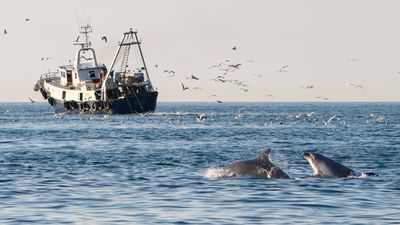


Faced with hard times and exhausted waters, some of the last remaining bottlenose dolphins in the Adriatic Sea have essentially become scavengers by depending on industrial fishing trawlers to obtain their food.
The Adriatic Sea, the strip of water between the Italian Peninsula and the Balkans, is one of the world's most overfished seas, leaving natural prey stocks severely depleted. It was once home to many large apex predators, including a varied cast of sharks and rays, but now all that remains is the bottlenose dolphin – and even this highly adaptable species has virtually disappeared from the region.
In a new study, scientists have shown how dolphins in the Adriatic have resorted to following fishing vessels to get the nutrition they need. Through hundreds of observations over 148 days off the Italian regions of Veneto and Marche, the researchers found dolphins were following nearly one in four trawlers (24.7 percent)
“Long-term, consistent, and deliberate association with trawlers suggests a high degree of reliance on that fishery,” Dr Giovanni Bearzi, the president of Dolphin Biology and Conservation in Italy, and the lead author of the study, said in a statement.
“While dolphins would still need to forage independently when trawling does not occur, on days of trawling they forage predominantly near trawl nets,” Bearzi explained.
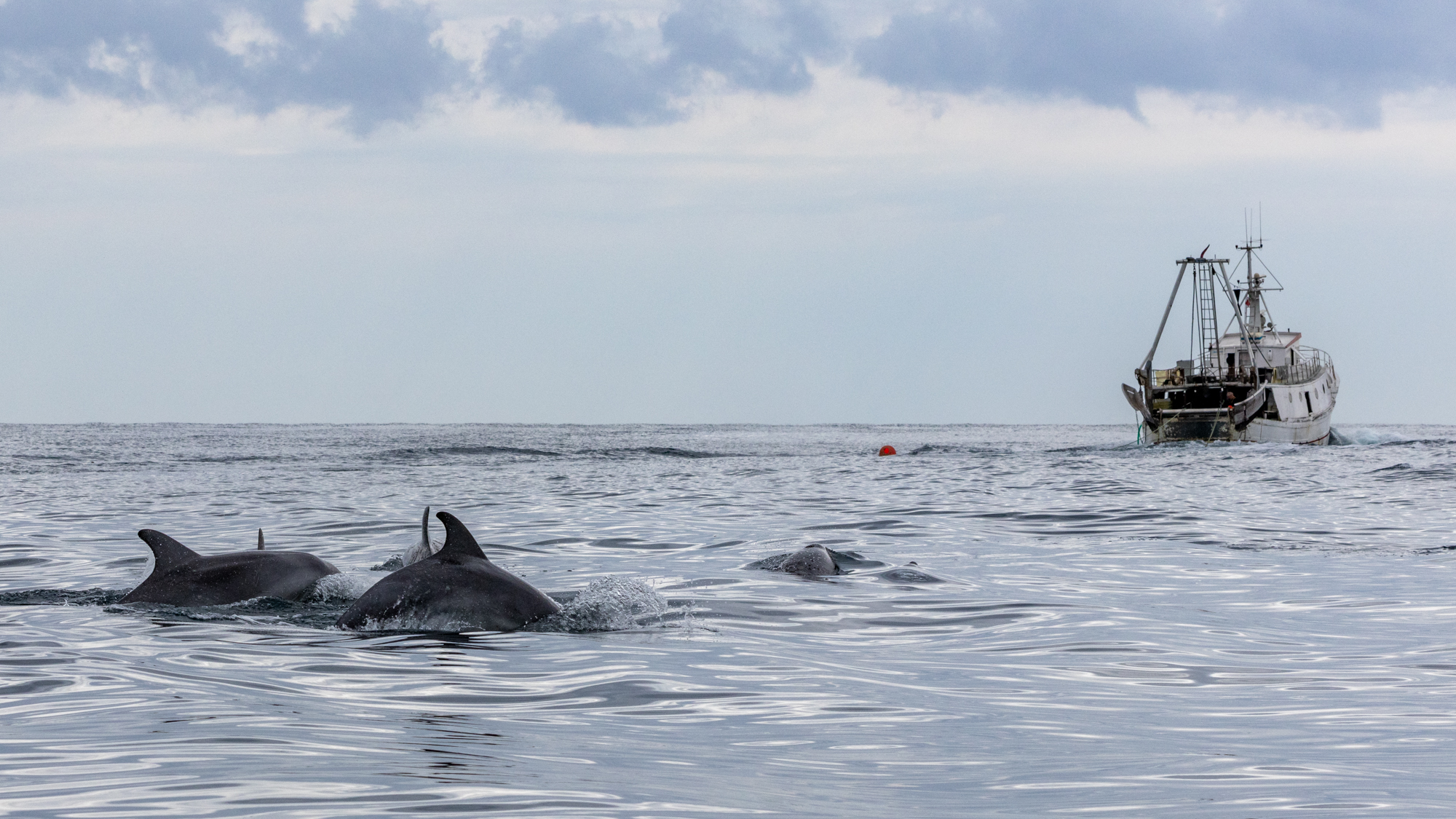
In a short space of time, the dolphins appear to have developed preferences for different types of ship. For bottom otter trawlers – one of the most destructive fishing methods – up to 40 percent of vessels were being followed by dolphins, while just 1.5 percent of the beam trawlers were.
The researchers suspect this has something to do with the type of fish the vessels target and the nets they use. The dolphins seem to understand this and adapt their behavior accordingly.
This opportunistic behaviour is nothing new. Evidence of dolphins following boats dates back to Ancient Greek texts and has likely been part of their lives for thousands of years.
What's new, however, is the intensity of the behavior. A previous study in the late 1990s found that less than 10 percent of trawlers in the northern Adriatic were stalked by dolphins, suggesting the behaviour has dramatically increased in the past decade or so.
Given the backdrop of overfishing in the area, the researchers argue that the dolphins are relying on trawlers more and more out of desperation and hunger.
"These dolphins are not following trawlers by choice. They are doing so because the Adriatic has been so severely depleted by decades of overfishing that natural prey is no longer reliably available," Bearzi said in another statement.
"This is a stark indicator of ecological collapse, not an example of dolphins adapting successfully," he added.
While trawler-stalking might look like a vaguely promising sign that dolphins are adapting to new pressures, it's a risky strategy, and the researchers are unsure whether it's a gamble that’ll pay off in the long run.
“It is known that bottlenose dolphins are occasionally injured or killed by trawl gear, and that foraging behind trawlers can affect dolphins’ diet, social organization, and communication,” said Dr Randall Reeves, the senior author of the study and the Chairman of the Committee of Scientific Advisors at the US Marine Mammal Commission.
“Dolphins may also suffer hearing damage that results from chronic exposure to the noise of trawlers. It is risky behavior. However, finding sufficient prey away from trawlers in an overfished sea may be too difficult. It appears that for these animals, taking the risks is better than going hungry.”
The study is published in the journal Frontiers in Mammal Science.