Nature
 PUBLISHED


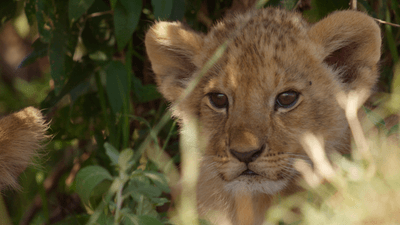


Most lion cubs don’t survive beyond their second year, but those that do go on a great adventure. From their first steps out of the den to their first kill, it’s a journey that transforms them into some of the most powerful predators on planet Earth – but there is so much more to lion life than hunting.
Now, you can follow a cub’s journey like never before in a record-breaking feat of wildlife filmmaking that marked the longest continuous filming of lions in the wild. The crew behind National Geographic's new docuseries LION clocked 1,400 filming days across 52 shoots, and the resulting footage shows a new side to one of Earth's most iconic creatures.
IFLScience chatted with Executive Producer Mike Gunton (Prehistoric Planet, Planet Earth II) about filming challenges, the biggest surprises, whether lions grieve, and what he hopes viewers take away from this amazing filming feat.
Meet Kio
In LION, we follow a cub named Kio born in Kenya’s Maasai Mara. He lives in a pride with his mother Summer and four brothers.
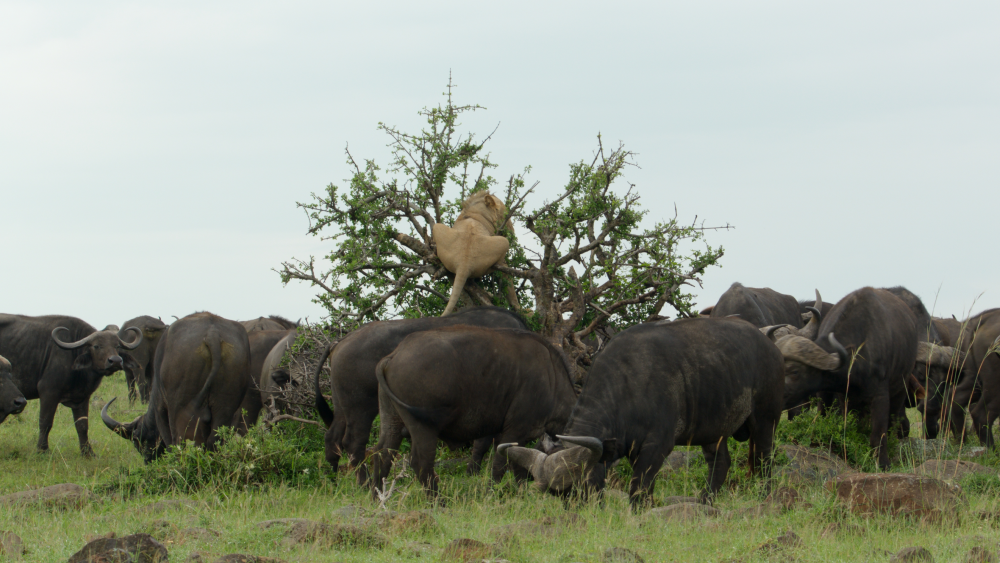
Lion life, it seems, can be quite different to what the movies would have you think. Majestic and powerful as they are, they are playful, too. Sometimes clumsy. Many of the scenes had me thinking about my cat, including a particularly brilliant moment involving a lion stuck on a small tree surrounded by buffalo.
Cue grumpy, impatient, embarrassed-sounding cat noises.
Beating the odds
As TV stars go, Kio is fluffy. He is bold, but he is – undeniably – a bit of a long shot.
Even with a powerful mother like Summer, the statistics surrounding lion cubs are brutal. Only 50 percent survive beyond their second year, so attempting to film a single cub’s journey to adulthood while not knowing if your series lead would survive was a gamble.
Every day in the life of these creatures is a knife edge.
Mike Gunton
Then there’s the fact that, stats aside, even attempting to follow a single lion around the Maasai Mara is a challenge in itself. Being wild animals, lions like to move around.
“In some ways the days are very predictable, and they’re also very unpredictable,” executive producer Mike Gunton, who is the Creative Director at BBC Factual, told IFLScience.
“The predictable thing is someone’s going to shout, ‘it’s time to wake up’ at about 4:30 in the morning, and out you go in the dark to a location, and you try to find the lions – they’re not collared or anything.”
Hard times ahead
The last place you saw them is generally a good place to look, says Gunton, but when that didn’t work, they had a team of experienced guides and drivers with the knowledge to track them down. Still, each day isn’t a guarantee for these animals, and the film captures several difficult moments in Kio’s transition from cub to young lion.
“Lions are really struggling,” said Gunton. “They’re lauded as these great, super-powerful creatures, but they are really struggling.”
The risks are huge but the power of life within them is so strong that it’s awe-inspiring. It’s life-affirming for an outsider.
Mike Gunton
“Their numbers are declining rapidly for all sorts of reasons. Less prey, more pressure from humans, and I think that’s quite sobering because even a [powerful] lion can’t deal with this. We revere them so much and we’re allowing this to happen.”
"The power of life"
It’s an uncertain chapter in these big cats’ history, but LION captures the strength and endurance that has seen them become the kings and queens of the savannah. A story of hope that gives viewers a unique opportunity to witness their world from the inside.
“Every day in the life of these creatures is a knife edge,” said Gunton. “Every single day it could all go wrong.”
“The risks are huge but the power of life within them is so strong that it’s awe-inspiring. It’s life-affirming for an outsider. And you do learn a lot about nature, even though you don’t necessarily learn how heavy a lion is or how many kilos of meat it eats, you do learn about what’s important, which is how this world works.”
LION premieres Thursday, August 20, 2026 on National Geographic, airing in two weekly double bills at 8pm and 9pm. All four episodes stream from August 20 on Disney+.