Nature
 PUBLISHED



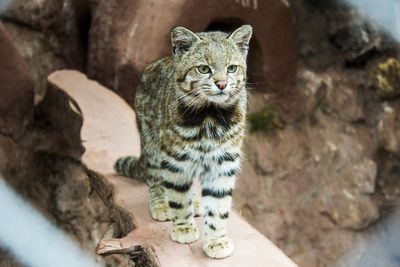


It’s tiny, beautiful, and one of the most endangered cat species in the Americas: meet the Andean cat.
Captured on camera in La Payunia Protected Natural Area in Mendoza, Argentina, this is good news for the elusive species. It's thought that only around 2,200 individuals of the rare Andean cat (Leopardus jacobita) – known as the "ghost of the Andes" – still live in the wild, but for the third year in a row, the Wildlife Conservation Society (WCS) Argentina has managed to document their presence here.
“Every discovery is great news; it confirms that the Andean cat is still present in the area and that conservation efforts are yielding concrete results,” says María José Bolgeri, PhD student in Biology and Regenerative Management Manager at WCS Argentina, in a statement.
“This is an area where we hadn't recorded it before, but we've been monitoring it for years based on the testimony of a farmer who described an encounter with one with remarkable precision.”
Since 2005 the WCS has been studying the distribution of Andean cats, which can help inform conservation strategies. The cats hunt mountain vizcacha, a type of rodent related to the chinchilla, which have been declining in numbers.
Unfortunately the cats also face the threat of being killed by farmers hoping to protect their livestock, as well as being hit by cars.
“Along with scientific work, sightings by local residents and livestock farmers are essential to completing our understanding of the species' distribution and the threats it faces,” Bolgeri adds.
After 20 years of work the team have been able to implement conservation measures helping to ease tensions between the livestock farmers and native wildlife. This has included improvements to corrals, using guard dogs for livestock, and the installations of lights overnight to deter wild cats and other predators.
The results speak for themselves. The team found that 85 percent of the the farmers who adopted these measures reduced their livestock losses and 89 percent of them worked to stop hunting carnivores and scavenging birds.
“To protect La Payunia and the wildlife that inhabits it, we work in collaboration with local governments, communities, livestock producers, the private sector, and conservation and research organizations,” explains Fernando Miñarro, the manager of terrestrial protected areas at WCS Argentina.
“This is a clear example of the key role a protected natural area plays, positively impacting areas far beyond its boundaries.”
Its been a bumper year for endangered South American felines, after the first new cat species for more than 100 years was named from an individual kept at a wildlife Sanctuary.
The team who described the Tilcayo are hoping to use camera traps in a similar method to find out more about the new species' distribution and the threats it faces.