Nature
 PUBLISHED


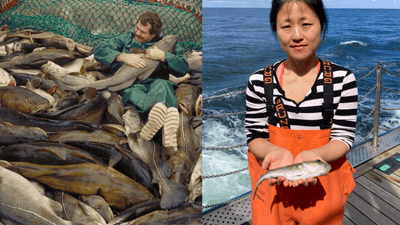


Fishing has been a vital source of protein for humans for millennia, but there was a time you got a lot more meal for your reel. Cod used to be enormous fish, stretching to over a meter (3 feet) in length and weighing up to 40 kilograms (88.2 pounds). Now, a fully-grown adult cod barely fills a plate.
This dramatic shrinking is the phenotypic manifestation of a change to the cod genome that’s been brought on by overfishing. That’s the message from a new study that has demonstrated, for the first time, how decades of intense overfishing can alter the genetic makeup of marine animals over generations, with effects that may become irreversible.
“Selective overexploitation has altered the genome of Eastern Baltic cod,” said Dr Kwi Young Han, first author of the study and a biologist who completed her PhD in the Marine Evolutionary Ecology group at GEOMAR, in a statement. “We see this in the significant decline in average size, which we could link to reduced growth rates. For the first time in a fully marine species, we have provided evidence of evolutionary changes in the genomes of a fish population subjected to intense exploitation, which has pushed the population to the brink of collapse.”
The team looked to the ear stones of 152 cod to search for answers, taken from fish that had been caught in the Bornholm Basin between 1996 and 2019. Known as otoliths, these ear stones record annual growth like tree rings, enabling them to explore the growth patterns of historic cod populations and compare them to animals alive today.
Through chemical analysis and high-resolution DNA sequencing, they uncovered genomes for fast- and slow-growing individuals and saw that the fast-growing variants had almost disappeared in recent years. It seems that in an age where the oceans are teeming with fishing vessels, it’s a survival advantage to grow slowly and reach reproductive maturity at a smaller size. This backs up observations from fishing communities that cod have been “shrinking”, and suggests that the change has a genetic basis fueled by human activities.
“When the largest individuals are consistently removed from the population over many years, smaller, faster-maturing fish gain an evolutionary advantage,” added author Professor Dr Thorsten Reusch, Head of the Marine Ecology Research Division at GEOMAR and Dr Han’s PhD supervisor. “What we are observing is evolution in action, driven by human activity. This is scientifically fascinating, but ecologically deeply concerning.”
The situation has gotten so bleak for cod that a stock collapse has led to a ban on targeted cod fishing that’s been in place since 2019. However, with indiscriminate fishing practices like bottom trawling – which can have as much as 75 percent of its catch discarded while targeting just one species – that doesn’t mean the remaining fish are safe.
As for whether we can still turn things around for cod, which are shrinking both in terms of their size and population, isn’t clear. It’s possible we may have already lost the genetic variants associated with a faster growth rate and later maturation, which could have knock-on effects for their capacity to adapt to future environmental change.
“Evolutionary change unfolds over many generations,” said Reusch. “Recovery takes far longer than decline, and it may not even be possible. This is evident in our 2025 length data from the current ALKOR cruise: despite the fishing ban, there’s no sign of a rebound in body size.”
“Our results demonstrate the profound impact of human activities on wild populations, even at the level of their DNA,” added Han. “They also highlight that sustainable fisheries are not only an economic issue, but also a matter of conserving biodiversity, including genetic resources.”