Nature
 PUBLISHED
 7
7


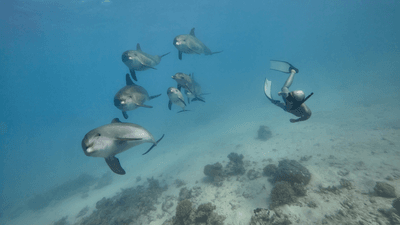


Dolphins look as if they have a permanent smile, their long jaws dotted with teeth, but don’t be fooled by their “grin” – they’re still top ocean predators. For this reason, among many others, it’s important to keep your distance should you encounter dolphins in the wild, as they have been known to attack people, and in one very rare case, such an attack even proved fatal.
The dolphin involved in the fatal encounter was known as Tião, a curious cetacean who was famous in 1994 for his unusual ease around humans. He'd regularly interact with people and stopped by the pier in São Sebastião, Brazil, almost daily.
Unfortunately, some took it upon themselves to abuse Tião’s apparent trust of humans. According to a report from the BBC, swimmers would grab onto his fin and try to hitch a ride, and there were even attempts to stick ice cream sticks into Tião’s blowhole.
It seems that eventually, Tião’s patience ran out.
“The dolphin reacted aggressively when repeatedly harassed and injured about 29 bathers, who were sent to the hospital with minor injuries,” reads a 1997 paper published in Marine Mammal Science. “On 8 December, 1994, 'Tião' struck a 30-year-old bather who died several hours later from internal bleeding due to a stomach rupture, according to 'Casa de Saúde Stella Maris,' the local hospital.”
According to the Los Angeles Times, another swimmer was injured at the time. They had reportedly been trying to ride Tião and attach objects to the dolphin’s tail shortly before the incident occurred.
The death triggered a management program to be put together to prevent further injuries or fatalities by improving public awareness of harmful interactions, and how they could have grave consequences for humans, as well as wild animals. The program seemed to be effective as no further injuries were reported, and sometime in 1995, Tião left São Sebastião and wasn’t seen again.
Dolphin attacks aren’t all that rare, and have been seen in a range of dolphin species, from bottlenose dolphins like Tião to the peculiarly pink river dolphins found in freshwater environments across South America. Weirdly, those murderous dolphins, the killer whales (yes, orcas are the largest of the dolphins), are seemingly one of the more reticent species when it comes to attacking humans, with interactions in the wild being very rare (although not unheard of).
Much as we love a joke about Echo the dolphin needing a PR crisis meeting, the message behind these negative encounters with wildlife is a serious one. Even the animals we like to anthropomorphize as happy and gentle can unleash defensive or aggressive behaviors when we bald apes get too close, and if morality and self-preservation aren’t convincing enough to keep people from harassing wildlife, there’s always the hefty fines.