Nature
 PUBLISHED


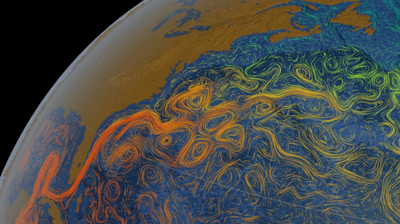


The Gulf Stream, that vital ribbon of warmth surging across the North Atlantic, appears to be drifting northward. If this trend continues, it could provide further evidence that the Atlantic Meridional Overturning Circulation (AMOC) is losing strength and nearing collapse as global temperatures rise.
The Gulf Stream is just one piece of the AMOC, although the two terms are often used interchangeably in casual conversation. The latter is the mother of ocean current systems in the Atlantic, sometimes known as the "conveyor belt of the ocean," that transports warm, salty water from the tropics northward towards Europe. Meanwhile, the Gulf Stream is a western boundary current system that’s part of the upper and northward-flowing branch of this oceanic engine.
Scientists are becoming increasingly concerned that warming ocean temperatures and melting ice from Greenland could be pushing the AMOC toward a catastrophic standstill. Evidence already indicates a 15 percent reduction in the circulation's strength since the 1950s, fueling fears of a total collapse. While this collapse wouldn't instantly trigger the frozen apocalypse depicted in The Day After Tomorrow, it would starve Europe of heat, leading to plummeting temperatures and shifted weather patterns across the hemisphere.
However, researchers have not been certain how the Gulf Stream, one arm of this beast, might play a role in the AMOC collapse. To find out, climatologists at Utrecht University in the Netherlands used computer modeling and real-world data to study how two ocean current systems interact.
The findings indicate that the movement of the Gulf Stream could be a "canary in the coal mine" for the AMOC’s collapse. According to their analysis of satellite data, the Gulf Stream has already been nudged northwards from the coast near Cape Hatteras, North Carolina, since the early 1990s. This is likely to be the result of the AMOC dwindling and losing its grip.
Looking ahead, the models forecast that further weakening of the AMOC will shift the Gulf Stream even further. At one key longitude (71.5°W), the current slowly drifts north by about 133 kilometers (83 miles) over several centuries, followed by a sudden jump northward of about 219 kilometers (136 miles) within just two years in the model. This abrupt change is much larger than the normal year-to-year variation in the current’s position.
In a punchline: the study concludes that a noticeable shift in the Gulf Stream’s position could signal that the AMOC is approaching a tipping point. While the scientific community remains divided on whether a total collapse is imminent, monitoring the movement of the Gulf Stream could be an invaluable way to predict a terminal decline in the AMOC and our planet's climate.
The study is published in the journal Communications Earth & Environment.