Nature
 PUBLISHED
 35
35


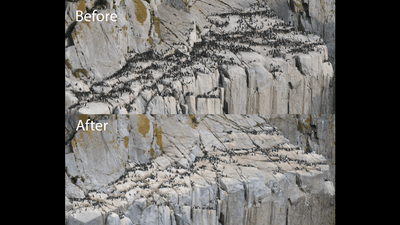


An unprecedented die-off has been declared in Alaska, where as many as four million murres are estimated to be missing from colonies across the state. According to a new study, it’s the worst single species die-off in modern history and was triggered by "The Blob", a mass of warm water in the north Pacific Ocean that has had a lasting and devastating impact on marine and coastal species.
Common murres (Uria aalge) are a conspicuous species, living in massive colonies where birds are packed shoulder to shoulder like penguins along coastal cliffs. They are loud, odorous, and a sight to behold when in their prime – which made the sudden dip in birds between 2014 to 2016 very noticeable.
"At first we thought, the birds didn't show up to breed, but they'll be back next year,” said seabird biologist for Alaska Maritime National Wildlife Refuge and study co-author Brie Drummond in a statement. “The refuge biological team had to adjust our protocols based on the low attendance and breeding failure. Hardly any of the birds had laid eggs.”
Something significant had happened out in the ocean in 2014. An area of unusually warm water (aka The Blob) had developed, spreading its deadly heat from the Eastern Bering Sea to the Gulf of Alaska.
The Blob's legacy
The Blob endured for two years, throttling ecosystems as it killed off marine species and disrupted food webs. Its effects were far-reaching, extending even to the murres as these deep-diving specialists could no longer find enough food to survive.
Carcasses began washing up on beaches across the Gulf of Alaska, with more than 62,000 reported by the end of 2016. The counts continued and the teams widened the search year-on-year, all the while aware that dead birds on beaches are only the tip of the iceberg – most that die at sea don’t make it back to land.
The same story was unfolding at sites separated by thousands of kilometers, and a widespread reduction in birds became apparent in every site monitored. It seems the lack of food had a double whammy effect, both killing off malnourished birds and leaving those that survived too exhausted to reproduce.
“We knew right away this was a big, unprecedented die-off,” said Heather Renner, study co-author and supervisory biologist, Alaska Maritime National Wildlife Refuge. “We just didn’t know how big.”
Can Alaska's common murres recover?
Seven years after the 2014–2016 reign of The Blob, none of the colonies monitored were showing signs of recovery. Following years of population counts, researchers have now published their findings on the mortality event. By their estimates, approximately four million murres starved to death as a result of The Blob, accounting for 50 percent of the population in Alaska.
“To put this in perspective,” added Renner, “the common murre die-off was approximately fifteen times larger than the number of seabirds killed during the Exxon Valdez oil spill, an environmental disaster of epic proportions.”
The future looks bleak for these charming coastal birds, as with reduced numbers they become more vulnerable to predators and environmental stresses, and we’ve seen little improvement since The Blob petered out in 2016.
“We hoped to see more of a recovery to previous population numbers by now,” said Renner.
The study is published in the journal Science.