Nature
 PUBLISHED


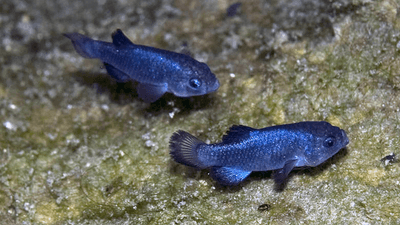


To say the world’s rarest fish has had a rough time would be an understatement. The Devil’s Hole pupfish has been at the heart of controversies that saw angry Nevada residents brandish “kill the pupfish” bumper stickers and stamp on their eggs. Now, under pressure from US government cuts, scientists have lost track of it.
It seems a strange thing to say about a species known only from one pool in a cave in Death Valley National Park, Nevada, USA. The issue isn’t that we don’t know where the fish are. It’s that we don’t know who’s who.
In 2025, the Devil’s Hole pupfish (Cyprinodon diabolis) reached a crisis point when the population plummeted to just 20 individuals. It was a blow to scientists who had observed a 25-year high in the population only a year earlier.
A fatal combination of paired earthquakes hitting during the winter triggered the crash. As sloshing waves wiped out their food source – a kind of algae – the lack of sunlight meant it couldn’t grow back. The fish were starving, but another crisis was looming.
As SFGate reports, it was around this time that Elon Musk’s Department of Government Efficiency was chipping away at federal agencies – many of which were environmental. Fearing they could be next, scientists decided to release some Devil’s Hole pupfish that had been bred in captivity as a last-ditch effort to save the species.
Releasing captive animals to support a wild population is something that has achieved great success among endangered animals. Just look at the Bermuda snail, which was declared saved from extinction earlier this year. However, there are advisable steps to take before mixing captive populations with wild ones.
Genetic samples were not taken from the captive-bred fish before they were introduced into the pool in Nevada. As such, we can no longer distinguish between the pupfish that were there before and those that were introduced.
As University of California, Berkeley, geneticist Christopher Martin told NPR, the scientists "made the best decision that they could under the extreme pressure of 'I'm going to be fired at any second’.”
Unfortunately, it means we “cannot distinguish the introduced captive fish from wild fish. Nor can we track how these introduced captive fish will contribute to future wild generations,” Martin said.
“There's scientific questions we can't answer now, because there's just no genetic data on which fish were released.”
As reported by NPR, the most recent count this spring documented 77 fish within the Devil’s Hole pupfish pool. We might not know which of these are the wild versus captive fish, but as aquatic ecologist and conservation biologist at the University of New Mexico, Megan Osborne, told SFGATE, whatever number we have left is surely better than zero.
“It’s possible that some scientific question can’t be addressed without samples, but I think this is the wrong thing to focus on,” she said. “Biologists released fish using the best information that they had on hand in trying circumstances, and likely prevented extinction of Devils Hole pupfish and probably minimized further losses of diversity that would have occurred during the recent population decline.”