Nature
 PUBLISHED


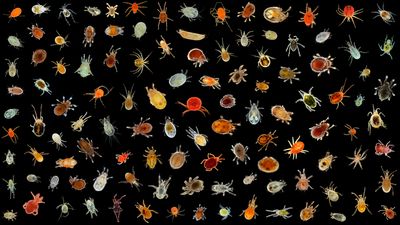


The length of a single animal’s life can vary massively within the natural world, from Greenland sharks that can live to 400 years or more, to flies that last just 24 hours on Earth. For Adactylidium mites, a life cycle is only around four days long, but that doesn't mean they aren’t packing more life events – some very bizarre ones, in fact – into a short time than most other creatures.
At first glance, the lives of the male mites in particular seem a bit pointless; neither sex appears to breed once they’re born, but the females at least get to snack on a thrip egg. The males don’t feed or breed, simply dying a short time later. Why would a species bother with males in the first place if that’s the case?
Then, a study published in 1966 uncovered the mite’s life cycle in further detail, and found that something downright weird was going.
Adult females first attach to a thrip egg, of which they’ll only feed on one for their entire lives. Those that fail to find one shortly after emerging from their mothers are known to die not long after.
The researchers found that around 84 hours after this attachment occurred, roughly six to nine nymphs had formed inside the female, only one of which was male. At 96 hours after attachment, the nymphs inside the mother reached maturity.
After this point, the hatchlings then ate their way out of the mother. In some species, the males don’t emerge, while in others, they emerge but die shortly after, never seeing beyond the inside of the mother’s body. The team found that it took 4 days for this entire life cycle to be completed.
This meant that female mites had to have emerged with their eggs already fertilized, suggesting that mating was going on while they were still inside their mother. That means sibling mating; in other words, while within the mother’s body, the male hatchling breeds with all of his sisters. So just a case of incest, cannibalism with a side of matricide, and death, then – sounds like an episode of Game of Thrones.
Quite why this mechanism for such a surprisingly and frankly gross lifestyle has evolved could be related to the diet of the mites. Since adult female Adactylidium feed on one thrip egg for their entire life, this could be an adaptation to the limited amount of resources available. Mating in utero also saves valuable time trying to find a mate, which handy when your life cycle is only four days long.