Nature
 PUBLISHED
 3
3


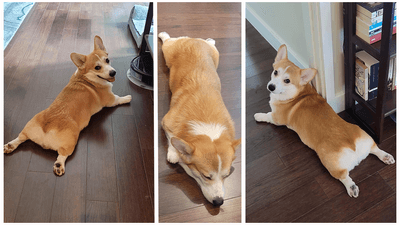


Front paws forward, stomach on the ground, and most importantly, back legs kicked back. This is the full sploot position. And it is very cute.
The sploot. Although the first use of the word is unknown it has gained increasing popularity over the last seven years. Its origins are in DoggoLingo, a cutesy internet language to describe all things dogs. Splooting is a dog specialty. Corgis, in particular, are exceptionally good at it.
Splooting raised alarm in the summer of 2022 when squirrels were seen splooting in New York City parks. After that, Collins English Dictionary (coincidentally?) called “splooting” one of the top 10 words of 2022. Together with “permacrisis”, which says a lot about how the post-pandemic world was going.
So why were squirrels splooting? To date, no scientific article has reported on the usefulness, efficacy, or prevalence of splooting, but theories abound. The dominant one relates it to heat dispersion. The behavior in squirrels was reported during a heatwave, and the US National Park Service calls summer “sploot season”. Could this be a way in which furry animals keep cool?
Humans predominantly disperse heat by sweating. When the moisture on our skin evaporates it cools us off. We are not alone in the animal kingdom in using this strategy (horses and monkeys do it too). Dogs pant. So do birds. This keeps them cool by evaporation of internal moisture.
What if panting is not enough? Or too much water is being lost to evaporation? Time to sploot down on shaded ground, a cool rock, or the kitchen floor. Some furry animals like squirrels have relatively less fur on their abdomen. By lying down and spreading their body out on a cool surface, they might be able to lower their body temperature.

The behavior uses the environment to regulate temperature, in some ways similar to ectotherm animals. Also known as “cold-blooded” these animals rely predominantly on environmental heat sources to control body temperature. Think of a lizard sunbathing and then hiding on cool rocks in the shade.
Or maybe it’s just comfortable. It sure looks very relaxing.
More research is needed to fully understand the mechanisms underlying this phenomenon.