Nature
 PUBLISHED


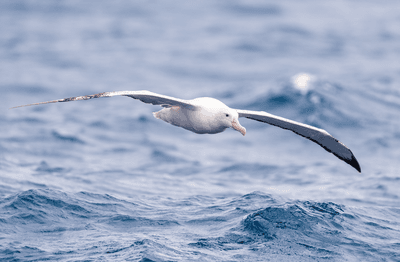


The largest flying bird by wingspan is the snowy albatross, better known as the wandering albatross, with an impressive spread of up to 3.5 meters (11 feet) from wing tip to wing tip. However, this ocean-roaming species has some competition for the title of “largest flying bird” when other metrics are considered.
The wild life of wandering albatross
The snowy albatross spends most of its life gliding over the vast Southern Ocean, returning occasionally to breed on remote subantarctic islands such as South Georgia and the Antipodes. Its enormous wingspan is perfectly adapted to this free-wheeling lifestyle, allowing it to cover immense distances across some of the most unforgiving waters on Earth.
Remarkably, studies have shown that some populations can circumnavigate Antarctica two or even three times in a single year, traveling more than 120,000 kilometers (75,000 miles) in the process. They are capable of reaching impressive speeds, jetting through the air at approximately 20 meters (65 feet) per second.
These journeys are sustained on a diet of fish, as well as crustaceans and squids, which are caught by shallow dives into the sea and scavenging. They’re known to follow far-flung sailing bots, often for days at a time, hoping to catch some stray fish lost overboard.
Its scientific name is Diomedea exulans, inspired by the Greek myth of Diomedes, whose companions were transformed into birds. Some researchers argue they can be divided into four distinct species: D. antipodensis, D. dabbenena, D. exulans, and D. gibsoni.
Whatever way you split it, the species is considered to be vulnerable to extinction under the IUCN Red List of Threatened Species. With around 20,000 individual left in the wild, their global population is predicted to be on the decline.
By wingspan, snowy albatross are the largest living bird that can take flight, closely followed by the Great white pelican (Pelecanus onocrotalus) and the Southern royal albatross (Diomedea epomophora). It’s a different story when you consider weight, however.
Kori bustard: the heaviest flying bird by weight
The heaviest flying bird extant today is the kori bustard (Ardeotis kori), which inhabits two distinct ranges in South and East Africa. The largest confirmed specimen weighed 18.14 kilograms (40 pounds), but males are known to regularly weigh well over 11 kilograms (24 pounds) with a wingspan of up to 2.75 meters (9 feet).
That said, they don't tend to stay airborne for very long. The kori bustard spends most of its life on the ground and will only fly (a relatively short distance) if absolutely necessary to avoid predators and other annoyances.
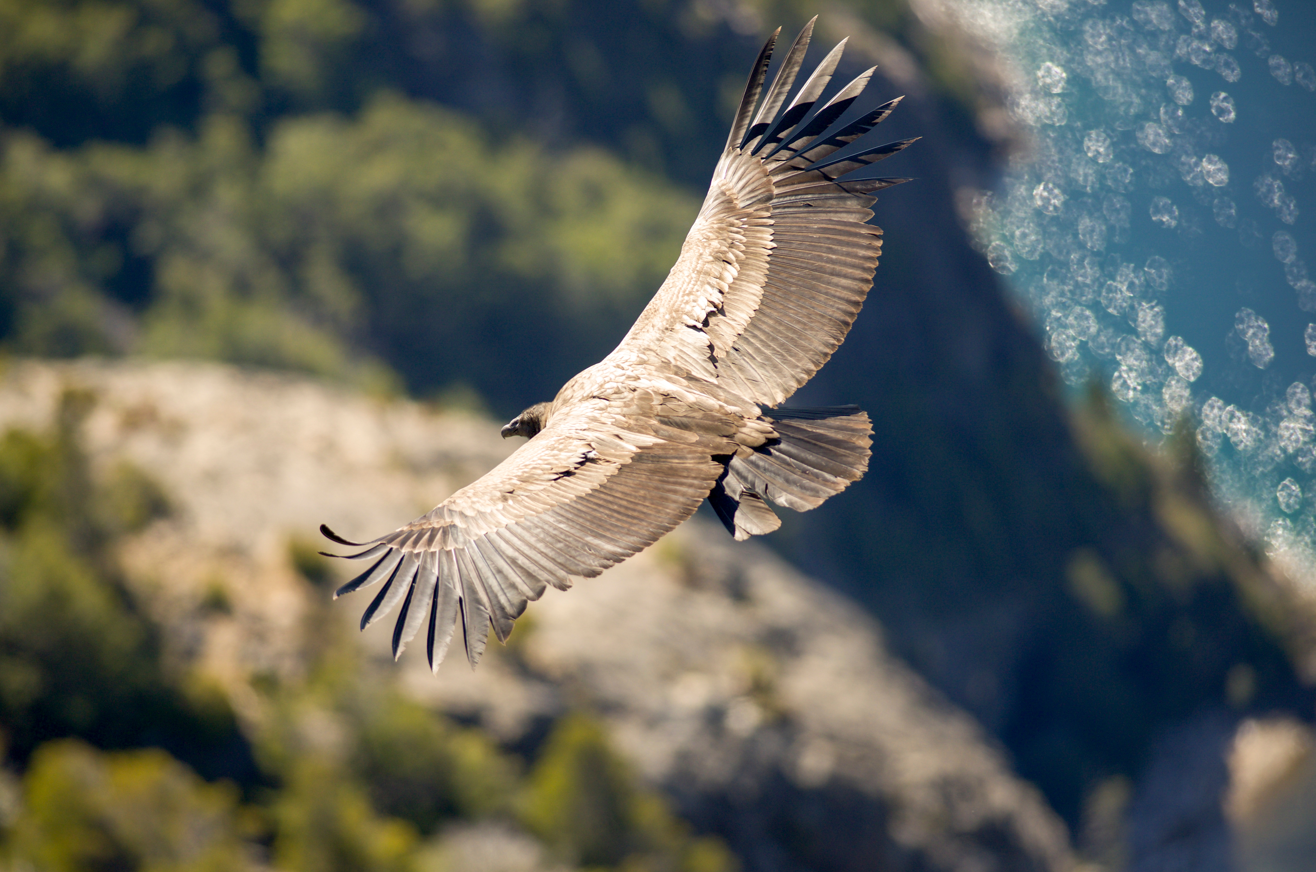
Andean condor: Another contender for the world's largest flying bird
Any discussion of larger flying birds needs a mention of the Andean condor, the largest bird of prey and the largest flying land bird in the Western Hemisphere (if not the world, depending on how you measure it). With a wingspan of up to 3.2 meters (10.5 feet) and a whopping weight of 15 kilograms (33 pounds), it's also the world’s heaviest soaring bird.
The Andean condor (Vultur gryphus) is a master of cruising. Research has found that they flap their wings for only 1 percent of their flight time. In one instance, scientists documented that one bird managed to fly for five hours without flapping once, covering 172 kilometers (just under 107 miles) in that time.
Such is its imposing presence that this giant species serves as the national bird of several South American countries along the Andes, including Bolivia, Chile, Colombia, and Ecuador – and who can blame them?