Nature
 PUBLISHED


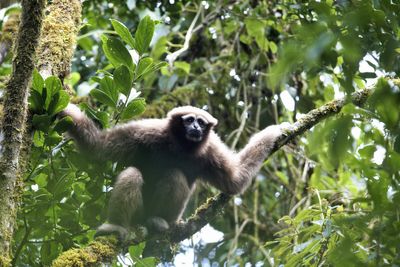


Previously only found in China, researchers have now discovered the world’s largest known population of endangered Skywalker gibbons in Myanmar – and they were led to them by the creatures’ love songs.
Named after that bloke from the space films, Skywalker gibbons had only been confirmed as a distinct species in 2017 and only found in China, with only a small population of 150 at that. However, scientists had suspected that the species could be found elsewhere; the gibbons cannot swim and so rivers often demarcate where they can live. This suggested that there could be Skywalker gibbons in nearby Myanmar.
To try and find evidence for this theory, a field research team set up acoustic monitoring systems in regions between the N’Mai Kha and Ayeyarwaddy Rivers to the west, and the Salween River to the east.
Why did the team do this? Unlike their Jedi namesake, Skywalker gibbons belt out a song to their partners each morning (although we’d love to see a Star Wars musical). Listening out for these calls, therefore, is a solid way to find evidence of their presence.
Maybe turn your speakers down for this one, unless you want to annoy everyone else in the room.
Having heard these love songs, the researchers also collected chewed up plants and fruits that the gibbons had thrown away and conducted DNA analysis on them to confirm that the species was indeed the Skywalker gibbon.
"We were able to genetically identify 44 new groups of Skywalker gibbons in Myanmar," said senior author Tierra Smiley Evans in a statement. Though it’s not known how many individuals are within those 44 groups, previous estimates in 2013 when it was thought these areas were occupied by Eastern hoolock gibbons suggested there could have been up to 65,000 of them.
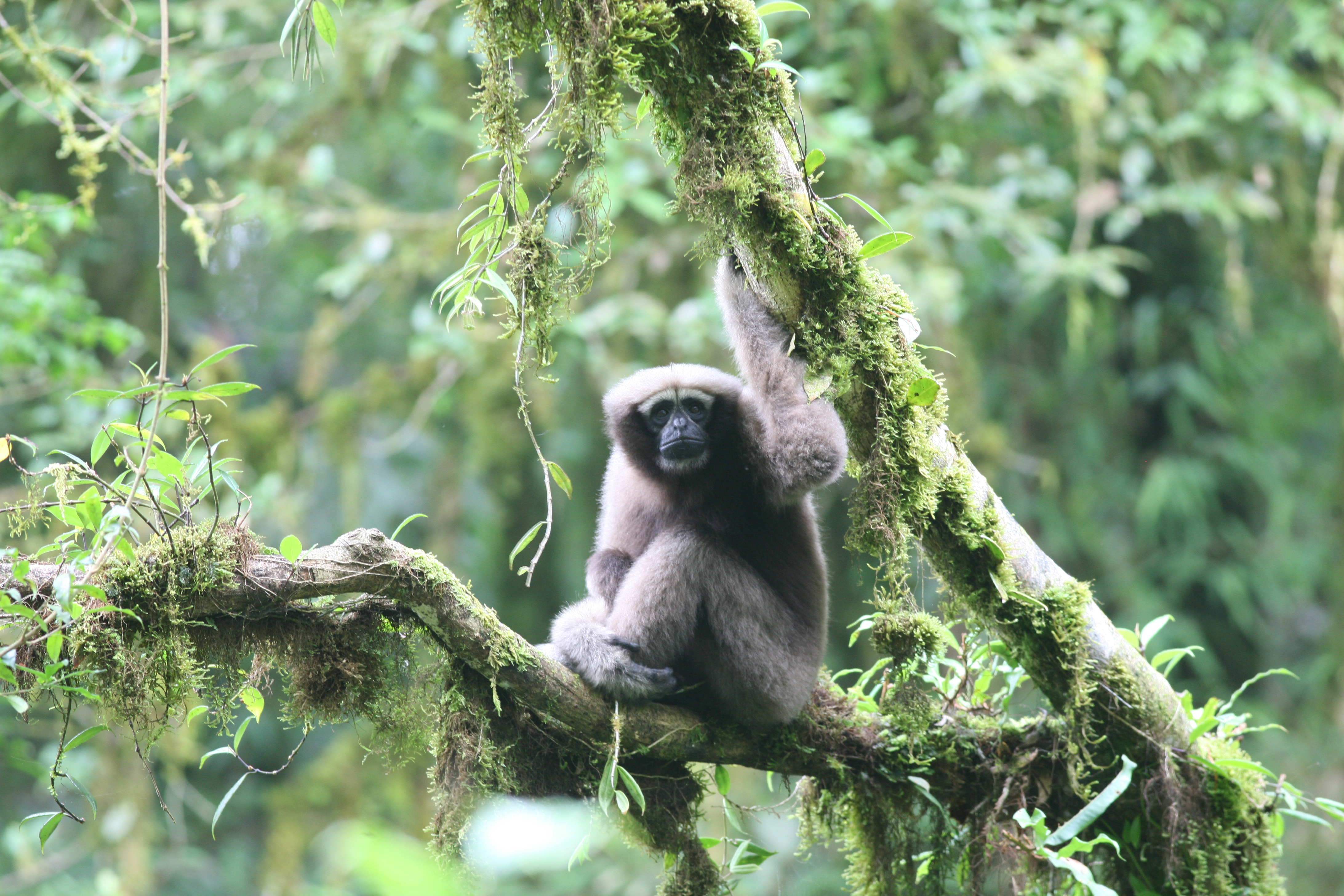
However, those numbers may be rapidly decreasing. Researchers assessed the potential threats to the Myanmar Skywalker gibbon population by surveying people in 12 surrounding villages. They discovered that the gibbons face dangers ranging from hunting to habitat loss; only 4 percent of their habitat exists within a protected area.
As a result, those involved with the research have recommended that Skywalker gibbons remain classified as endangered and called for their habitat to be brought within the protected area.
“With the new data collected during this study, we hope to continue working with the government and local communities to establish better protection for areas inhabited by gibbons; benefiting multiple fauna and flora species, and the communities that rely on these forests too,” said Ngwe Lwin, who led the field research team, in a statement sent to IFLScience.
“Now more than ever, it is recognised that the collective efforts of stakeholders, including governments, communities and Indigenous Peoples’ groups, are the only effective way to protect and save our closest living relatives.”
The study is published in the International Journal of Primatology.