Nature
 PUBLISHED
 5
5


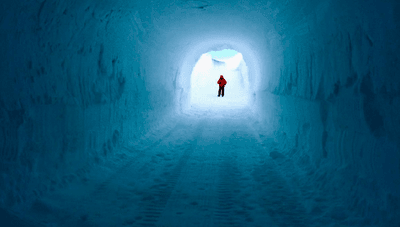


The world’s first sanctuary for ice cores has officially opened its doors in Antarctica. By safeguarding these natural "time capsules," scientists are preserving essential data needed to understand our planet’s past and better predict its future. However, time is very much of the essence.
The Ice Memory Foundation is currently in a race against time to collect and store ice cores from the world’s rapidly disappearing glaciers.
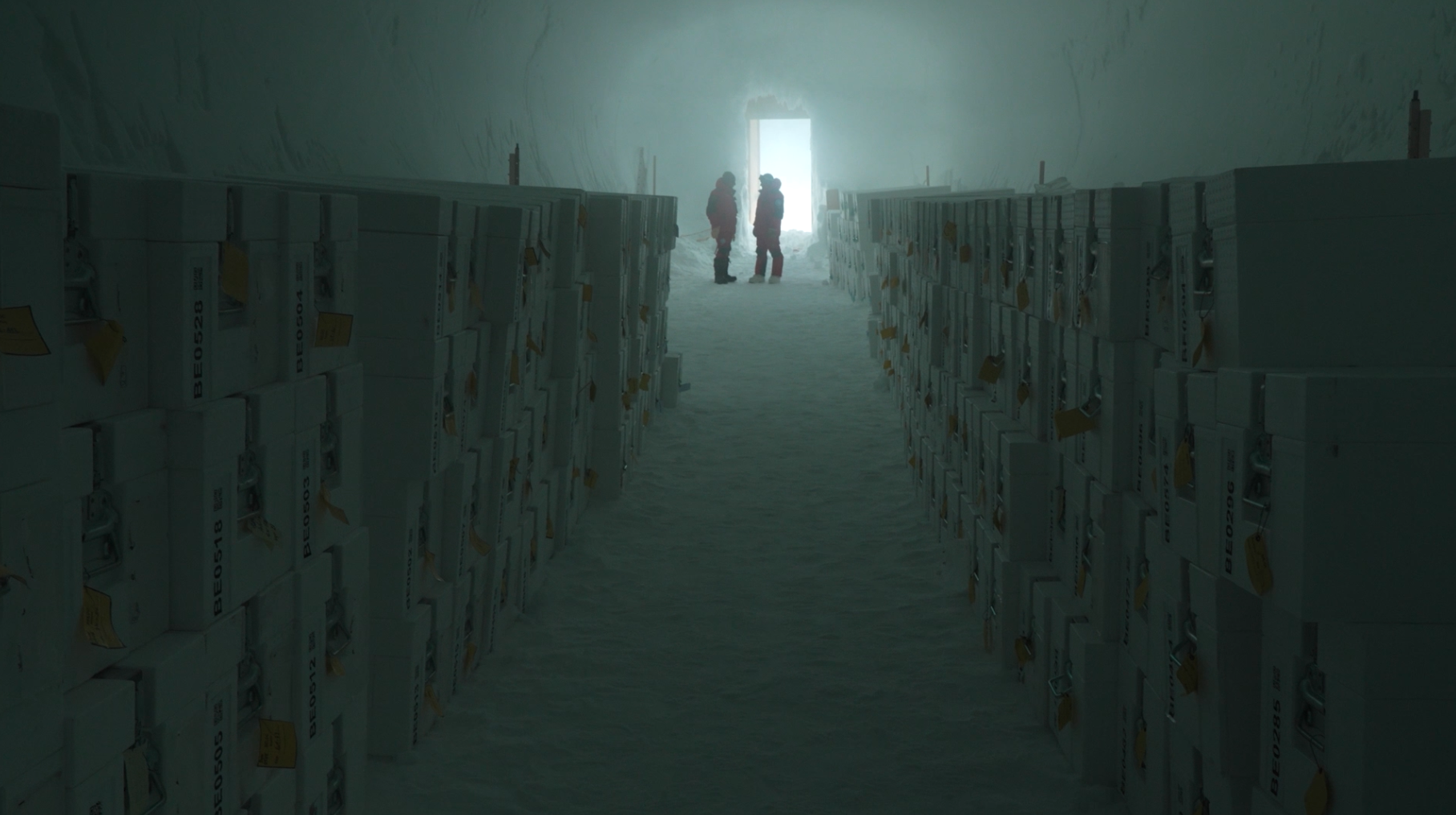
Their newest storage facility is a giant dugout ice cave located 5 meters (16 feet) beneath the snow surface at the Concordia Research Station on the East Antarctic Plateau. This location serves as a natural deep freeze, maintaining a stable temperature of -52°C (-61°F) year-round without the need for artificial refrigeration.
In January 2026, the project received its first major shipment: a 2016 ice core sample from Mont Blanc in France and a more recent 2025 extraction from Grand Combin in Switzerland.
 © Rocco Ascione _ PNRA _ French Polar Institute 20191216_104640.jpg "Excavation of the Ice Memory Sanctuary in Antarctica.")
They arrived in Antarctica aboard the Italian research icebreaker Laura Bassi in a giant freezer held at -20°C (-4F°) throughout the entire route. After departing from Europe in mid-October 2025, the frozen samples crossed the Mediterranean, the Atlantic, the Pacific, then the Southern Ocean and the Ross Sea before docking in Antarctica on December 7, 2025.
These cores are long, cylindrical tubes drilled directly down into the ice. They serve as a physical record of the past; by analyzing the chemistry of trapped air bubbles and microscopic particles, researchers can reconstruct atmospheric conditions dating back thousands of years.
“By safeguarding physical samples of atmospheric gases, aerosols, pollutants and dust trapped in ice layers, the Ice Memory Foundation ensures that future generations of researchers will be able to study past climate conditions using technologies that may not yet exist,” Carlo Barbante, vice chair of the Ice Memory Foundation, said in a statement.
In the years ahead, the Ice Memory Foundation hopes to receive more ice samples from elsewhere in the world, including the Andes in South America, the Pamir in Central Asia, the Caucasus mountains between Eastern Europe and Western Asia, and Svalbard in the Arctic.
The race to secure these frozen archives is on. Since 2000, around 5 percent of glaciers have been lost globally, with some hard-hit regions facing losses as high as 39 percent. As these glaciers thaw, centuries of irreplaceable scientific information are at risk of vanishing forever.
“We are the last generation who can act. It’s a responsibility we all share. Saving these ice archives is not only a scientific responsibility – it is a legacy for humanity,” noted Anne-Catherine Ohlmann, Director of the Ice Memory Foundation.
But the Ice Memory Foundation isn't just building a warehouse for ice. It also proposes a new model of global scientific cooperation, one in which these frozen samples do not belong to any single nation, but to humanity as a whole.
“For these cores to serve science in a century's time, they must be managed as a global common. The creation of such a governance model would be a major achievement of the United Nations Decade of Action for the Cryospheric Sciences,” said Thomas Stocker, Chair of the Ice Memory Foundation.