Nature
 PUBLISHED




What you’ll discover in this article
- A study has become the first of its kind to demonstrate a physiological change in clownfish exposed to artificial light at night that alters their response to predators.
- Since a healthy predator response is critical to survival, the findings have broad implications for the conservation of wild species, both on land and in the sea.
- Professor Shaun Killen and Izzy Tiddy, authors of the study, told IFLScience, “If this is happening repeatedly across a reef, it could ultimately have consequences not just for individual survival, but for predator–prey interactions more broadly.”
Humans have biohacked our way into having such a thing as “nightlife” by creating artificial lights that can shine all night long. The advent of this unnatural resource changed a day-night cycle of light and dark that had existed since life began on Earth, so it’s with some trepidation that scientists have questioned how it’s affecting the lives of wild animals.
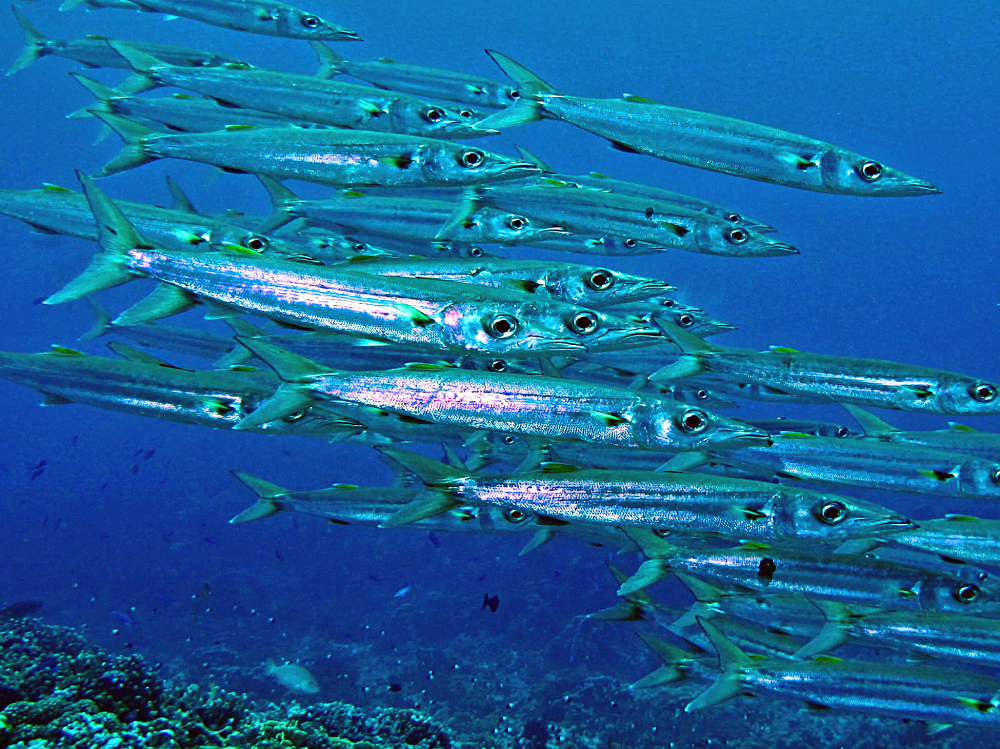
A recent study sought to investigate if wild clownfish are affected by artificial light at night by effectively dunking them into the middle of a barracuda horror movie brought to life through virtual reality (VR). Not only did the clownfish fall hook, line, and sinker for their scary movie, but they revealed a curious impact of humans’ light pollution.
Raising clowns
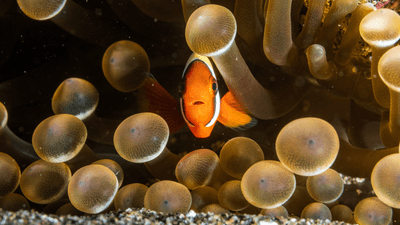
For the study, the researchers caught juvenile, 2-month-old clownfish known as Polynesian anemonefish (Amphiprion maohiensis) from the wild and divided them into two groups.
One group was raised in natural ambient light conditions around the island of Mo’orea, French Polynesia. The other was raised in a similar location, but crucially, their anemone homes were exposed to artificial light at night from coastal hotels.
Once they were all grown up, it was time to head to the VR cinema for a highly specific horror flick.
A night at the movies
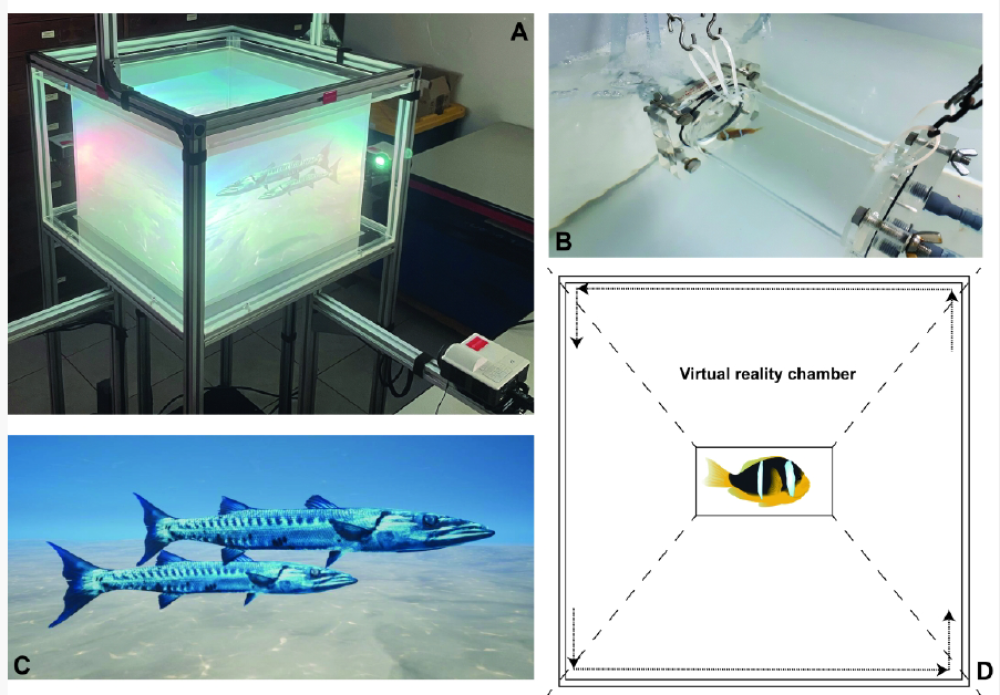
The experimental tank was an upgraded version of a previous study design made of Plexiglass coated with a translucent projection film so that the VR images could be projected onto the walls. The images projected depicted the clownfish’s natural predator, a barracuda (Sphyraena helleri).
The tank's water level was then filled to mirror that on the project movie, and the clownfish were introduced to their new digs. By all accounts, they were quite convinced by their new virtual reality.
The fish responded just like a juvenile fish would to a real predator, either attempting to flee or freezing in place.
Professor Shain Killen and Izzy Tiddy
“It was really surprising to see just how reactive the fish were to the VR setup,” Professor Shaun Killen and Izzy Tiddy, both from the University of Glasgow’s School of Biodiversity, One Health & Veterinary Medicine, told IFLScience.
“Even though the predator was only being shown on a screen, we had programmed it to approach the fish in a realistic way, including its movement, speed, and size as it approached. The fish responded just like a juvenile fish would to a real predator, either attempting to flee or freezing in place.”
Fight, flight, freeze
Fish are known to use smell and senses other than vision to detect predators. As such, it was a pleasant surprise to see such a natural anti-predator response to a virtual threat.
The next step was to explore if – and how – the clownfish’s predator response differed between the control group and those exposed to artificial light at night. The results revealed a concerning physiological difference in the clownfish that had been living in view of the coastal hotels.
If artificial light interferes with that response, even quite small changes in activity at the wrong moment could make a fish easier to detect or catch.
Professor Shain Killen and Izzy Tiddy
A healthy predator response in a clownfish involves dialling down your metabolism to reduce the risk of detection. This reaction was seen in the clownfish raised under natural light conditions.
By contrast, the clownfish raised with artificial light showed the opposite response, instead increasing their metabolic rate when faced with the toothy stare of a barracuda. Suffice to say, this is not good news.
No second chances
“In the wild, getting a predator response wrong even once can be enough to get you eaten,” said the authors.
“Metabolism is closely linked to energy use and activity, so the drop in metabolic rate we normally see when a predator appears may reflect fish becoming still and trying not to be noticed.”
“If artificial light interferes with that response, even quite small changes in activity at the wrong moment could make a fish easier to detect or catch. If this is happening repeatedly across a reef, it could ultimately have consequences not just for individual survival, but for predator–prey interactions more broadly.”
The study marks the first of its kind to demonstrate a physiological difference relevant to predation risk in fish exposed to artificial light at night. As artificial light becomes an increasingly common feature along global coastlines, the authors urge that now is the time to figure out just how significant exposure is to wildlife, both above and below the waves.
The study is published in the journal Conservation Physiology.