Nature
 PUBLISHED


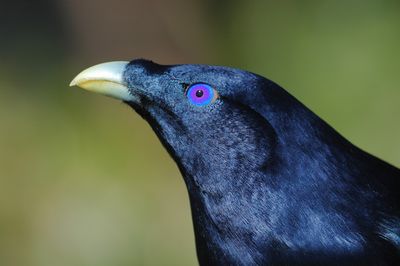


The animal world is full of fascinating colors, from bright features, to camouflage coats, and all manner of iridescent insect wings. Just one wild creature, though, is said to possess startling purple eyes: meet the satin bowerbird.
The satin bowerbird (Ptilonorhynchus violaceus) lives on the east and south east coasts of Australia, in wetter forest and woodland habitats. The Latin name violaceus, meaning "violet-colored", refers to the shiny feathers of the adult males.
Young males and females are similar in having a greenish coloring with a brown bill, however the males begin to change as they get older. Once they reach 5 years old, the male bowerbirds begin to get their adult plumage, changing from greenish brown to a beautiful glossy purple sheen with a yellow bill; they are said to not be fully dressed until they are 7 years old.
.jpg "A greenish brown bird of medium small size with bright violet eyes.")
The younger birds often gather in flocks, but the older shiny males are solitary outside of the breeding season. The birds feed on fruits throughout the year, but may also take insects and leaves.
The most famous facet of their behavior comes from the building and decorating of a bower to impress the females. This is a courtship area made up of two parallel walls of sticks that the male collects. The area is also decorated with bright blue finds, from petals and snail shells to buttons and even bottle caps.
When the female arrives, the male shows off his dance moves and voice within the bower, hoping to impress her so that she will breed with him. There is also some suggestion that the bright purple eyes are an indicator of fitness along with the glossy feathers, suggesting the male will be a strong partner for the female. Nests are made by the females and contain 1-3 unusually large cream eggs with brown stripes.
Many other birds have different colored eyes. The bank cormorant has multiple colors within its iris, while rockhopper penguins have bright red eyes and the king penguin has a square-shaped pupil when constricted. Outside of the bird world there is plenty more variety, with wavy pupils in cuttlefish and reindeer that change the color of their eyes.