Nature
 PUBLISHED


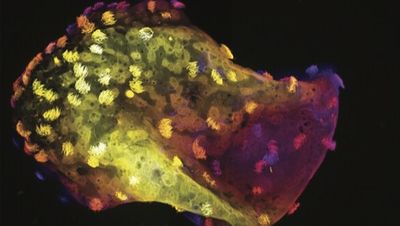


Developmental biologists at Tufts University in Massachusetts have produced what they call “neurobots”, small clumps of cells that can swim through water and are made from a combination of embryonic cells and neural tissue from frogs.
The research builds on previous work by the group, led by Michael Levin, which in 2020 first reported that they had made “biological robots” out of cells from the African clawed frog, Xenopus laevis.
These earlier creations could perform several tricks, including crawling along surfaces and replicating themselves by shunting free-floating cells to form new biobots, repeating this for up to four generations. Now the researchers have added neural cells into the mix to see what new behaviors they unlock.
“This all plays into very fundamental questions […], namely can a nervous system develop at all in a completely novel context that is not the product of millions of years of natural selection and, if yes, how does it relate to and function within this synthetic biological environment, or even change and augment its responses and behaviors,” said Levin in a statement.
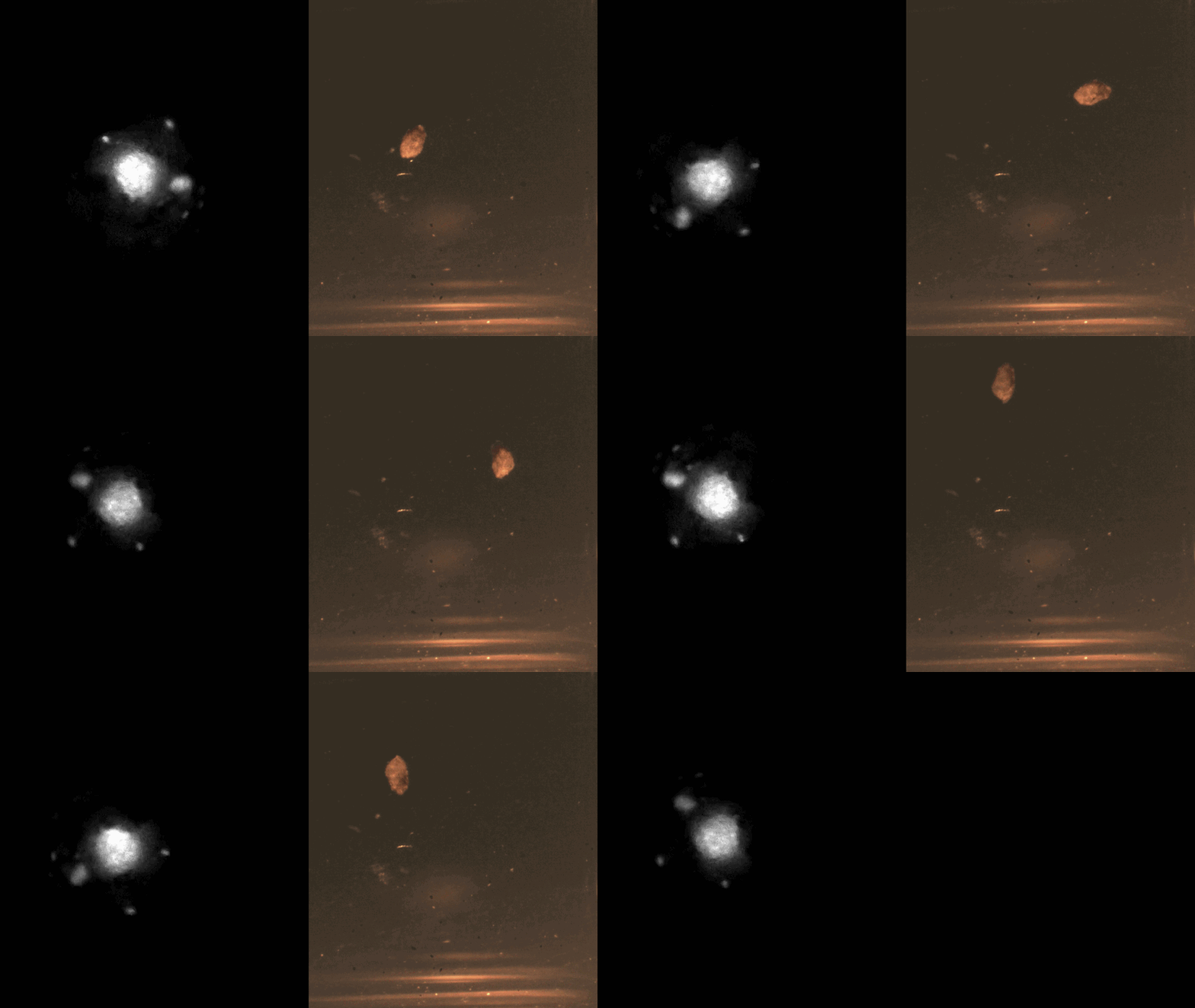
To construct the neurobots, the researchers took developing skin tissue from frog embryos and added neural precursor cells from a separate set of embryos. Shortly after, the skin cells formed a spherical shape around the neural cells.
The resulting structure then produced a kind of cell on its surface called a multiciliated cell (MCC). These naturally occur on the surface of Xenopus embryos and are covered with fine “hairs” made of protein that wave to propel the neurobot around.
“Integration of a nervous system reshapes neurobot shape (morphology) and function,” said first author Haleh Fotowat in the same statement. “Relative to biobots, neurobots are more elongated, exhibit distinct MCC expression patterns, display increased activity and more complex spontaneous behaviors, and undergo substantial changes in global gene expression.”
The researchers also found that neurobots made more complex movements compared with standard biobots, and that the movement complexity increased when they were treated with a drug that boosts neural activity.
Levin thinks of neurobots, and biobots more generally, as a new paradigm for life, potentially showing how, despite having the same genetic code as a frog, the same cells can be made to display quite different behaviors when placed in a new context.
He also hopes they might one day have medical uses, and indeed a previous experiment by the group has shown that the presence of biobots made from human cells can improve the rate at which neural cells regrow across a gap after being scratched.
Others have been somewhat less effusive in their praise in the past, however, particularly in regard to whether you can really consider clumps of cells that move around like this to be “robots”.
For some, it isn't particularly surprising that structures derived from frog embryos can do this. In 2023, developmental biologist Jamie Davies at the University of Edinburgh in Scotland summed it up for Scientific American by saying: “By and large, the Xenopus embryo community who know these cells could not really see what the fuss was about.”
The study is published in the journal Advanced Science.